
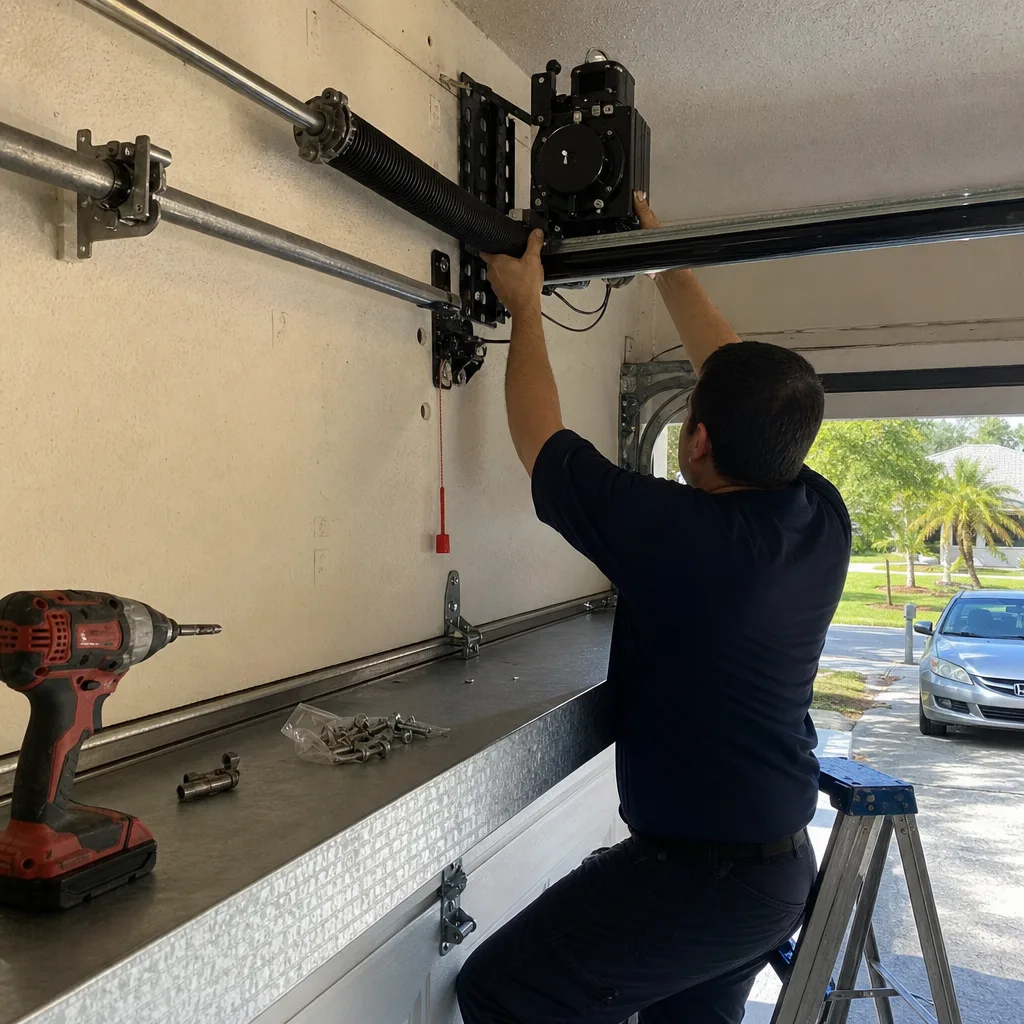
Last updated November 21, 2026
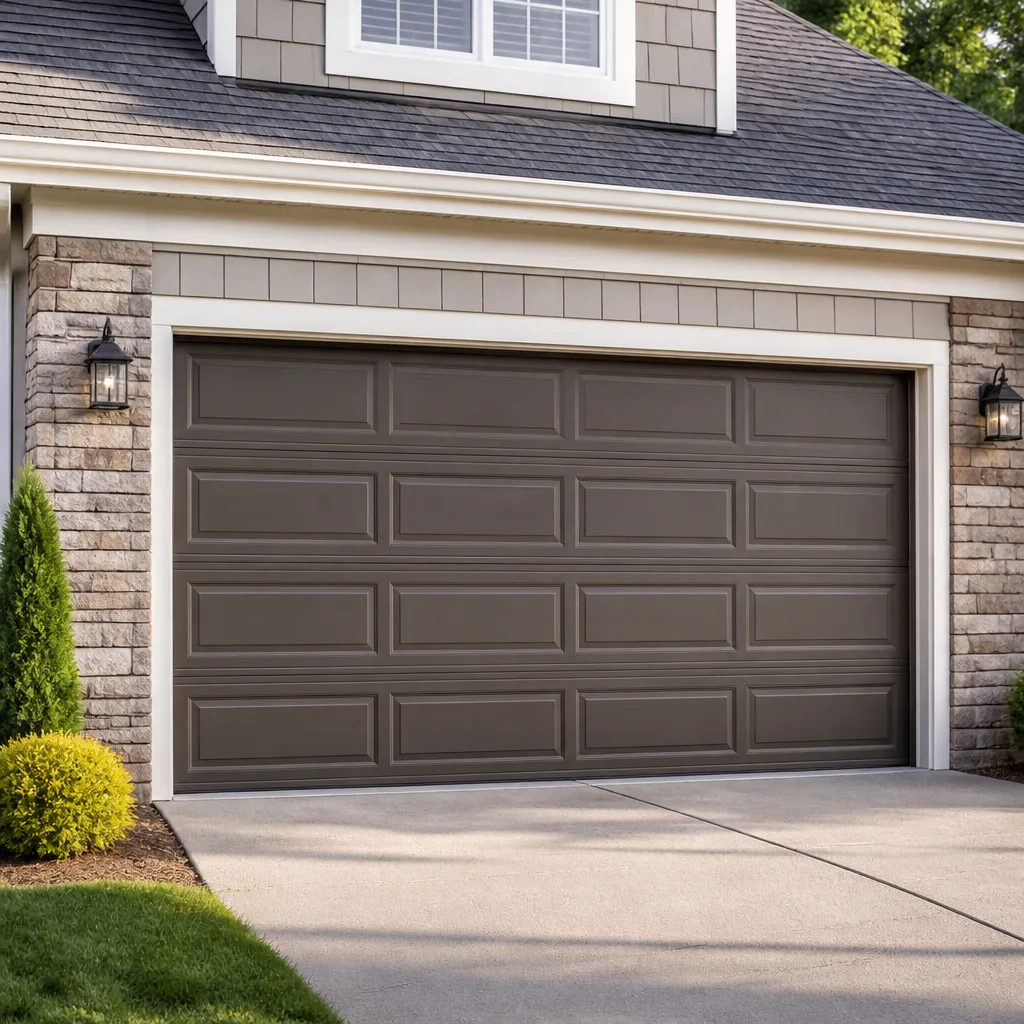 Raised-panel steel
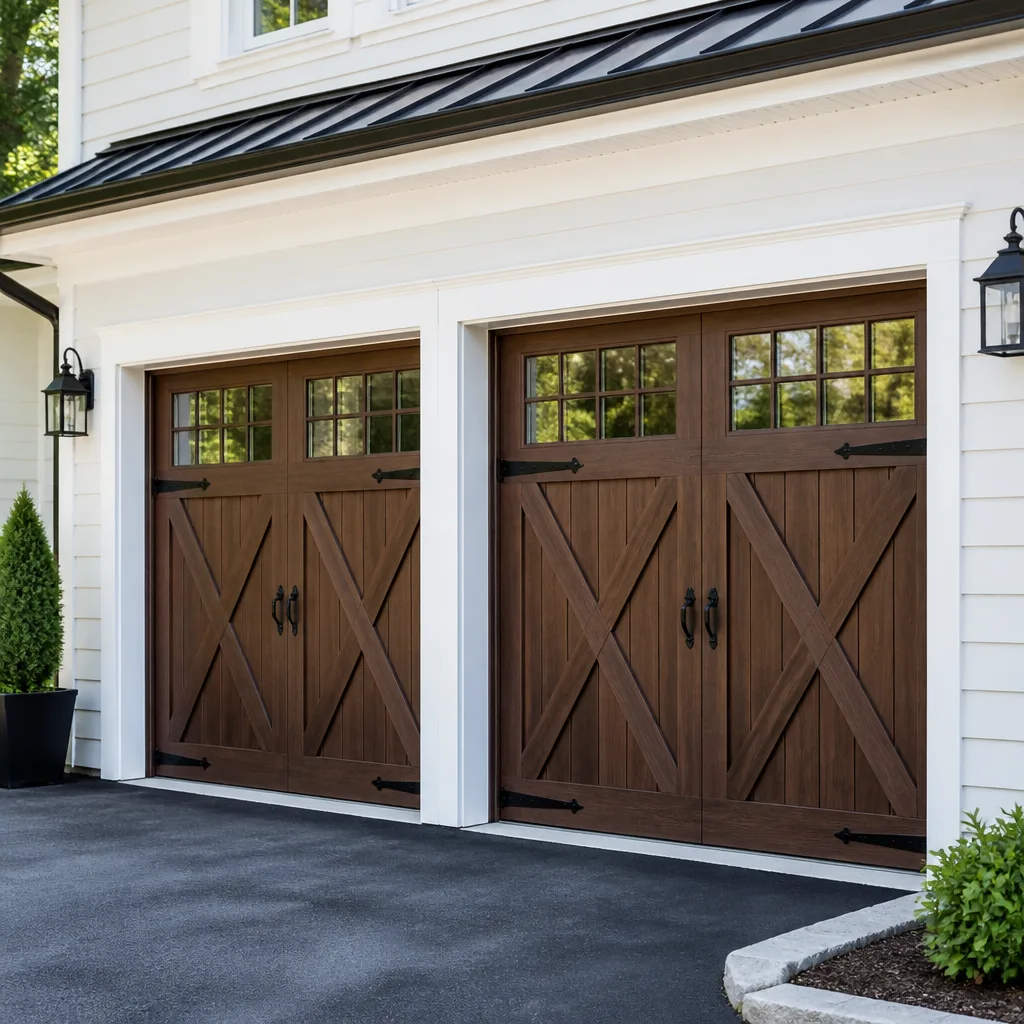 Carriage house
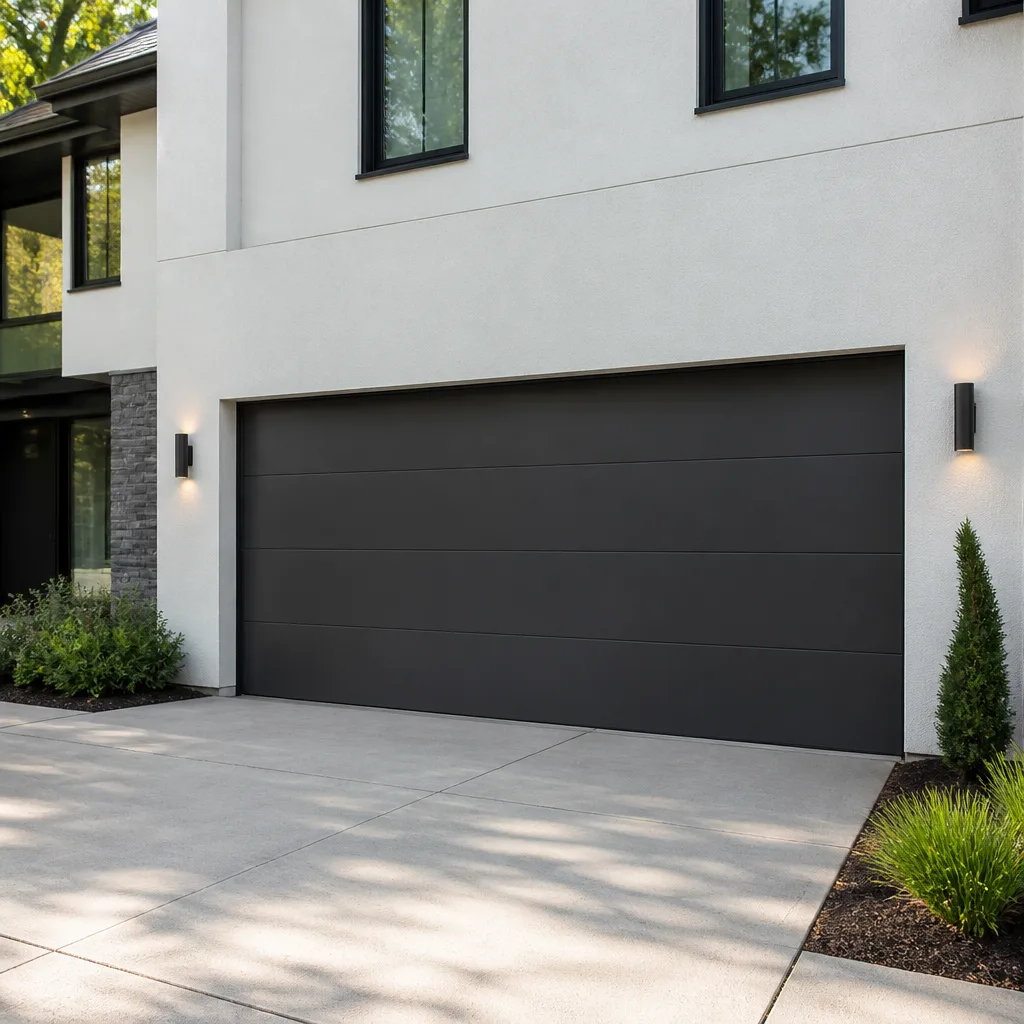 Modern flush
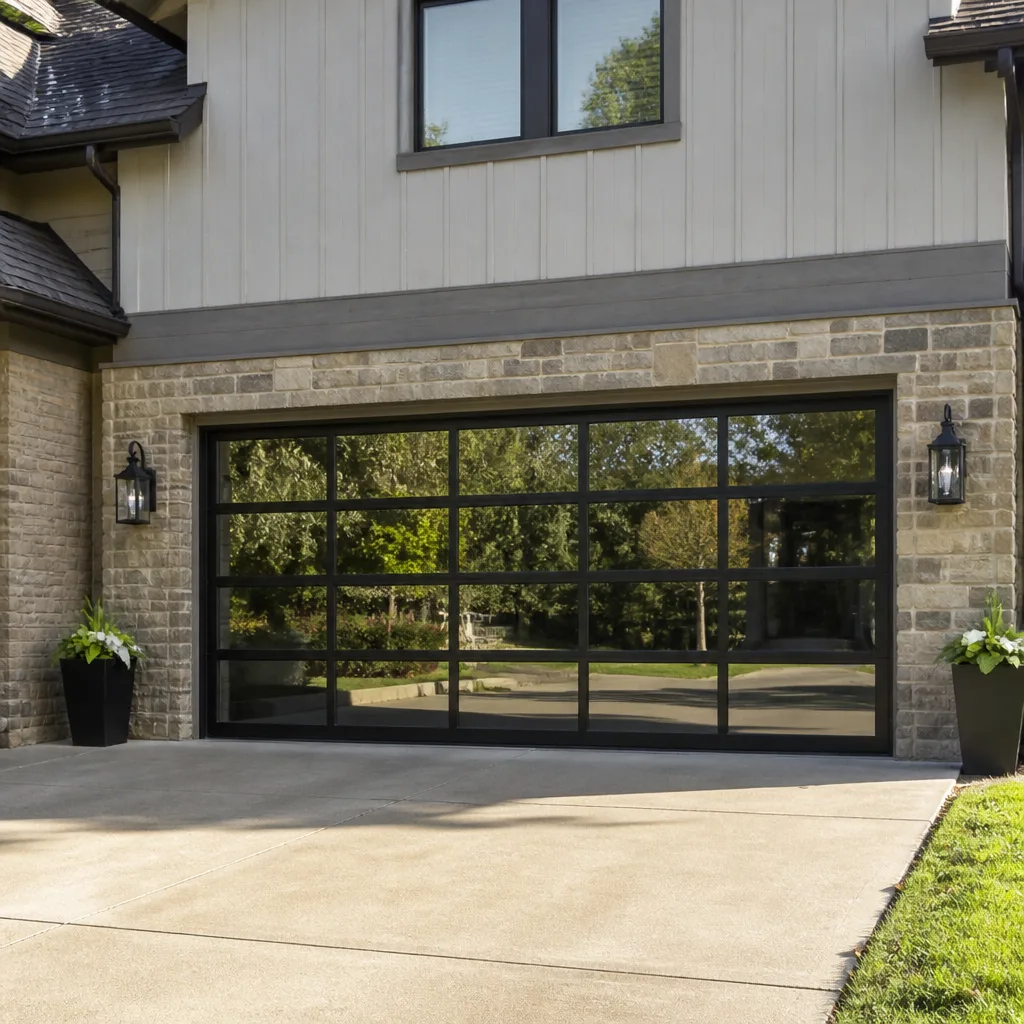 Full-view glass
 LiftMaster openers
 Chamberlain openers
Full 25-point door and opener safety check with every visit - springs, cables, rollers, tracks, and your LiftMaster or Chamberlain opener included
You get a price before we start. It does not change when the pro arrives.
Get your free estimateSeasonal Garage Door Care for Weston: Year-Round Homeowner’s Guide
Every garage door care guide you’ll find online tells you to tune up in spring and again in fall. That advice was written for places with four distinct seasons, and it doesn’t fit Weston. Here, the calendar that matters starts June 1 and ends November 30. What you do between those dates, and what you do in the dry months after, determines whether your door and opener hold up through heat, humidity, rain and storm season. This guide walks through the two-season approach: what to inspect before hurricane season, what humidity does to wood and seals, why the dry season is the smart window for spring and opener work, and how to check your door after a storm.
Quick Answer
Garage door care in Weston runs on a two-season schedule, not four. Before June 1, inspect and tighten hardware, test the opener’s safety reverse, and clear the tracks; the dry season from November through May is the right time for spring replacement, cable work and opener upgrades because the work isn’t competing with storm season. Year-round, the two biggest local wear factors are UV on the weather stripping and humidity on wood panels and seals. If you’re not sure what your door needs, call (844) 930-4137 and we’ll walk you through it.
Styles & brands we work with
- Raised-panel steel
- Carriage house
- Modern flush
- Full-view glass
- LiftMaster openers
- Chamberlain openers
Table of Contents
- Why Weston’s Garage Door Calendar Looks Nothing Like a Standard Seasonal Guide
- Pre-June 1 Hurricane Prep: What to Inspect, Tighten and Fix
- What Summer Humidity Does to Wooden Panels and Seals
- Dry Season (November-May): The Right Window for Springs, Cables and Openers
- UV and Weather Stripping: The Wear Factor Most Guides Miss
- Post-Storm Inspection: What to Check Yourself and What to Leave Alone
- A Weston Month-by-Month Care Schedule
- Lubrication and Hardware Care in a Humid Climate
Why Weston’s Garage Door Calendar Looks Nothing Like a Standard Seasonal Guide
Most garage door maintenance advice is built around temperature swings: freeze and thaw in winter, dry heat in summer. Weston doesn’t have that pattern. We have a wet, humid season that runs roughly June through October, and a dry season from November through May. Those two blocks put opposite stresses on a garage door system, and the maintenance you do should follow them.
During the wet season, humidity is the dominant force. Wood panels absorb moisture, seals soften and swell, and metal hardware collects condensation. During the dry season, the air dries out, wood shrinks back, and the door settles into the more predictable conditions that are actually ideal for mechanical work like spring and cable replacement.
And then there’s storm season, which is its own layer on top of the wet months. A garage door is a large moving surface that has to withstand wind and driven rain, so it makes sense to have it inspected and tightened before that window opens rather than after something fails.
The practical takeaway:
- May is prep month. Get the door ready before June 1.
- June through October is watch-and-wait. Monitor for humidity effects and storm damage; fix small things quickly.
- November through May is work season. Schedule spring replacement, cable work and opener upgrades here.
In our experience, homeowners in Weston who follow a spring-and-fall checklist end up doing the same work in the wrong window. If you’re not sure where your door stands, our team handles garage door repair across the area and can tell you what actually needs attention right now versus what can wait.
Pre-June 1 Hurricane Prep: What to Inspect, Tighten and Fix
By the last week of May, your garage door should be tight, quiet and balanced. That’s the standard. Here’s what to actually do before June 1, in the order that matters most.
- Test the opener’s safety reverse. Place a piece of wood or a brick in the door’s path and close it. The door should reverse on contact, and the photo-eye safety sensors at the floor should stop the door if the beam is broken. If either test fails, that’s a call-first item, not a “we’ll get to it” item.
- Tighten hinge and bracket bolts. Vibration loosens them slowly through the dry season. Check every hinge plate, the bottom brackets and the opener’s rail mounting hardware.
- Inspect the weather stripping at the bottom and sides. Look for gaps where it’s pulled away from the door or the frame. A seal that doesn’t touch is letting wind-driven rain in, and once water gets behind the door, it gets into the wall.
- Check the rollers and tracks. Rollers should turn freely; tracks should be straight and clear of debris. A bent track is a real concern going into storm season.
- Look at the door panels themselves. Loose panels, popped rivets, or a panel that’s starting to delaminate (on steel-backed doors) all need attention before the wind and rain arrive.
- Confirm your opener’s battery backup. If you have a LiftMaster or Chamberlain opener with a battery backup, test it before storm season and replace the battery if it doesn’t hold.
What can wait until after storm season: cosmetic paint touch-ups, a slow opener on a rarely used second door, or a squeak that hasn’t gotten worse. Don’t let the cosmetic stuff crowd out the structural and safety items. If anything in that list turns up a failing spring, a frayed cable or a bent track, that’s not a May DIY job. Springs and cables are under high tension and can cause serious injury, so they should be evaluated and replaced by a trained technician.
What Summer Humidity Does to Wooden Panels and Seals
If your garage door has wood or wood-composite panels, the wet season is when you’ll see the effects first. Wood absorbs moisture from the air, which makes panels swell slightly. That swelling is usually harmless on its own, but it puts pressure on the frame and the seal. Over a few wet seasons, a swollen door can start to stick, drag or sit unevenly in the opening.
A swollen panel is also a signal about seal integrity. When the bottom seal and side seals are working, the interior of the door sees less moisture than the exterior. When they start to go, the door is exposed to humid air on both faces, and it swells faster. If you notice a wooden door sticking in June or July, the seal is often the first place we look.
What to do during the wet months:
- Wipe down the bottom seal and check that it isn’t pulling away.
- Keep the door closed in heavy rain; an open door in a downpour exposes the interior face.
- Watch for water pooling along the bottom threshold.
- If a wooden door starts to stick, don’t force it repeatedly; have the seal and balance checked. Forcing it puts extra strain on the opener and springs.
What not to do: don’t seal or caulk a swollen panel yourself mid-swelling. It will shrink back in the dry season and the caulk will crack. Wait until the door settles, then have a technician assess the seal as a package. Our garage door repair work covers panel and seal issues, and it’s the kind of thing that’s cheaper to fix before it becomes a balance problem. During the wet season, monitor. During the dry season, repair.
Dry Season (November-May): The Right Window for Springs, Cables and Openers
This is the most important scheduling advice in this guide. If your door needs spring replacement, cable work, or an opener upgrade, the dry season from November through May is the right window.
Why? Three reasons. Spring tension and door balance behave more predictably in stable conditions. Wear on rubber and seals is slower, so the door holds its adjustment longer between visits. And you’re not trying to schedule a spring or opener job in the middle of storm season when the door is more likely to be needed for daily use and storm readiness. Doing a spring job in December means it’s set and settled well before June 1.
Here’s how we think about the timing:
- November to January: spring replacement. If your door is slow, heavy, or one spring looks stretched compared to the other, this is the window. A torsion spring pair is usually replaced together, and we always do high-tension spring repair with proper tools and safety gear. Springs can cause serious injury if handled wrong, so it’s not a homeowner job.
- January to March: opener evaluation and upgrade. If your opener is a LiftMaster, Chamberlain, Genie or Craftsman unit that’s starting to struggle, the dry season is when we can diagnose it without the urgency of a failure. We work with all of those brands and know the failure points specific to each. Our garage door opener repair handles both the electronics and the motor drive.
- March to May: cable and hardware inspection. Cables fray and stretch over the dry months. Get them checked before storm season, and replace them now if they show any wear.
This is also when you should have the door’s balance checked. It’s a five-minute test: pull the opener release, lift the door halfway, and see if it stays there. It should. If it falls or rises on its own, the springs need attention. When the balance is off, schedule a garage door spring repair in the dry season, not when the door stops working in July.
UV and Weather Stripping: The Wear Factor Most Guides Miss
South Florida gets sunlight year-round, and the UV exposure is steady. For your garage door, the single component most affected by UV is the weather stripping. Rubber and foam seals break down under UV faster than almost anything else on the door, and they break down here faster than in most of the country. A seal that looks fine on a visual check can have hardened, cracked or lost its shape within a few warm seasons.
What to look for:
- Cracks or a chalky, faded surface on the bottom seal.
- Side seals that have pulled away from the frame or hardened.
- A bottom seal that doesn’t touch the floor evenly across the width of the door.
- Light visible under the door when it’s closed.
Our replacement interval guidance: check the seals at the start of both dry and wet seasons, and plan to replace the bottom seal roughly every two to three years if it starts to show UV wear. Side seals can last a bit longer but are worth replacing at the same time. Steel and aluminum doors don’t degrade the way rubber does, but the finish on any door will dull with UV over time, and on a wooden door UV fades the finish and dries the surface, which makes the wood more vulnerable to moisture the next wet season. That’s why we recommend checking the finish before June 1.
If a seal is failing, that’s not a safety hazard and it’s not urgent, but it does affect how much water and heat the door lets in. Our team can check the seals on any door – Clopay, Amarr, Wayne Dalton or Raynor – and give you a written price before anything starts. The price is set per job by the written estimate, so there’s no surprise once the work begins.
Post-Storm Inspection: What to Check Yourself and What to Leave Alone
After a storm passes through Weston, a garage door deserves a look. Some checks are safe for a homeowner to do. Others are not, and the difference matters. Start with what you can see from the outside, with the door closed and the opener off.
Safe for you to check:
- From outside, look for bent, dented or misaligned panels.
- Look for debris lodged in the tracks.
- Check that the door sits flush in the frame with no obvious gaps.
- Check the seal along the bottom and sides for tears or separation.
- Look at the opener rail for visible sagging or loose brackets (visual only, no climbing).
Do not operate the door if: you see a bent track, a panel that’s hanging loose, a cable that looks slack or frayed, or anything that suggests the door isn’t on its tracks correctly. Don’t force the opener to lift it. A door that has come off its tracks can fall, and a failing spring with a jammed door is genuinely dangerous. Leave the door down, keep the opener unlocked from the door if you can do so safely, and call a technician.
The order to call: if the door won’t move at all after a storm, that’s an emergency. If the door moves but is noisy or unbalanced, it’s urgent but not an immediate hazard. We answer 24/7. A call outside dispatch hours is booked into the next opening, Sunday through Friday, 7am to 7pm. Our Garage Door Repair Weston Pros team handles post-storm inspections along with routine repair, and we test the full system – springs, cables, tracks, rollers and opener – before we sign off on a door.
A Weston Month-by-Month Care Schedule
Here’s a practical calendar, built around the two-season cycle rather than the standard four. Pin it to your fridge or set reminders on your phone.
- November: Have spring tension checked. Book spring replacement if the door feels heavy or the springs look uneven.
- December: Replace the bottom seal if it shows UV wear. Lubricate hinges, rollers and the opener rail.
- January: Test the opener’s safety reverse and photo-eye sensors. If the opener is struggling, plan an upgrade or repair.
- February: Check the door’s balance (release the opener, lift halfway, test whether it stays). If not, book a spring inspection.
- March: Inspect cables for fraying. Tighten any loosened hardware.
- April: Check the finish on any wooden or painted door. Plan touch-ups.
- May: Full hurricane prep inspection. Tighten hardware, check seals, test the opener backup battery, clear the tracks.
- June through October: Monitor. Watch for sticking doors, seal gaps and water intrusion, and keep the door closed in storms. Make small fixes quickly; hold major work until November.
If you want a general grab-bag: in the wet season, look for the small things; in the dry season, do the big things. Our garage door repair team can run a full check at any point in the year and tell you what’s urgent, what’s seasonal and what can wait.
Lubrication and Hardware Care in a Humid Climate
Lubrication matters in Weston more than in dry climates because humidity speeds the wear on hinges, rollers and the opener rail, and driven rain pushes moisture into places it wouldn’t otherwise get. The right approach is a light application of a garage-door-specific lubricant, repeated during the dry season and again mid-wet-season. Don’t over-lubricate: excess lubricant collects dust and grit, which does more harm than a dry hinge.
What to lubricate and how often:
- Hinges: a small drop on each pivot point, at each dry-season check and again in July or August.
- Rollers: a light spray on the bearing, not the tire. Check them for wobble while you’re there.
- Opener rail: a small amount of the manufacturer’s recommended lubricant for your opener (LiftMaster, Chamberlain, Genie and Craftsman each have their own spec), applied lightly.
- Springs: a light coat on the spring itself to slow corrosion; don’t attempt to wind or service them.
Do not lubricate the tracks. If the tracks are noisy, the fix is usually alignment or cleaning, not lubricant. Our technicians have up to 8 years of experience with systems from all the major brands, including Wayne Dalton, Craft-man and Raynor, so they’ll know what each one wants and what it doesn’t. Our garage door opener repair technicians can also tell you if your opener is due for a service check.
Common Mistakes to Avoid
- Following a spring-and-fall tune-up calendar. It’s built for temperature swings that don’t happen here. Weston’s schedule is May prep and November-through-May work.
- Ignoring a swollen wooden panel in June. A panel that swells and starts to stick is telling you the seal is failing. Address it, or it will get worse and affect the door’s balance.
- Doing a spring or cable job in storm season. Springs and cables are high-tension components that should be handled by a trained technician. Scheduling them in the dry season also means the door is settled well before June 1.
- Never checking the weather stripping. UV degrades seals faster here than almost anywhere. Check them at the start of both seasons and replace the bottom seal when it shows wear.
- Forcing a door that came off its tracks after a storm. A jammed door with a bent track or a loose panel is a fall hazard. Don’t run the opener. Call a technician.
- Over-lubricating the tracks. Lubricant attracts grit. Hinges and rollers need a little; the tracks need them clean and aligned.
- Skipping the opener’s safety reverse test. It’s a five-minute check that prevents a real injury. Test it before June 1 and again in the dry season.
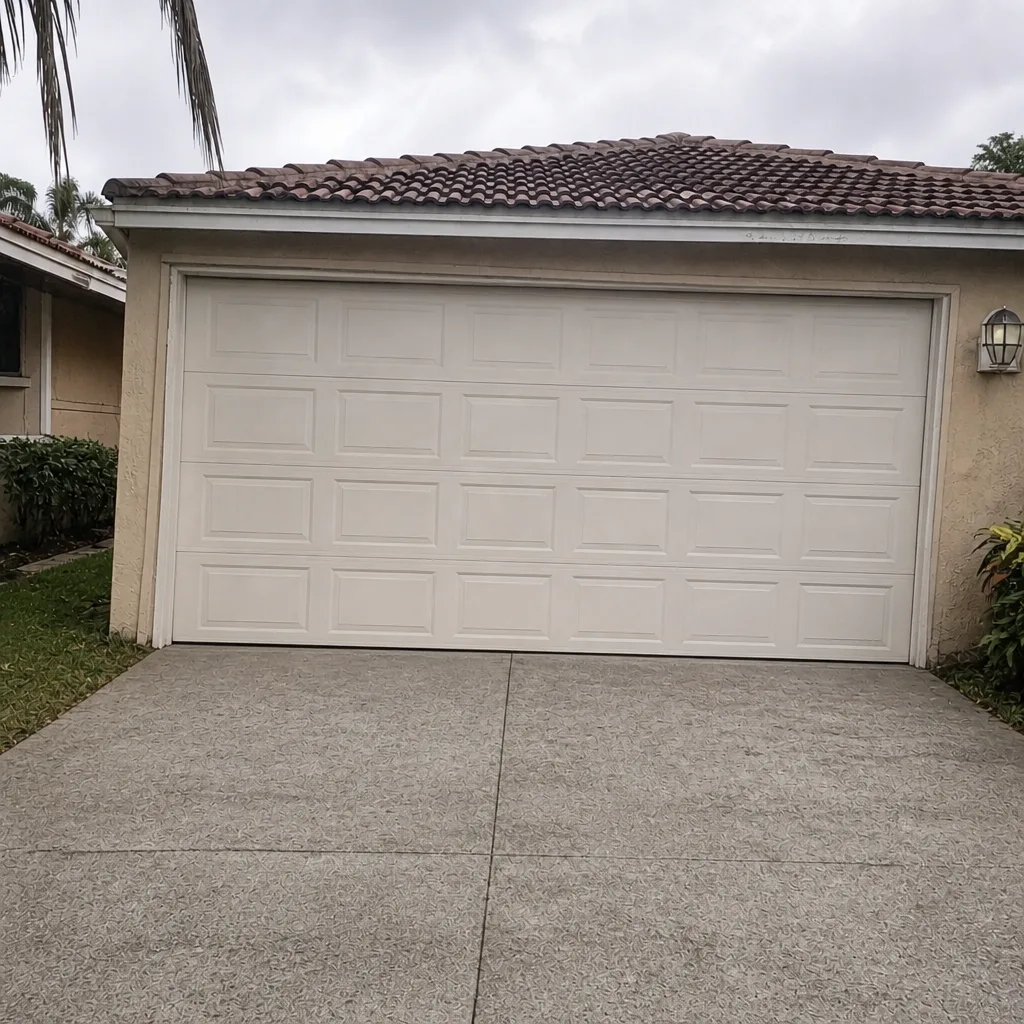
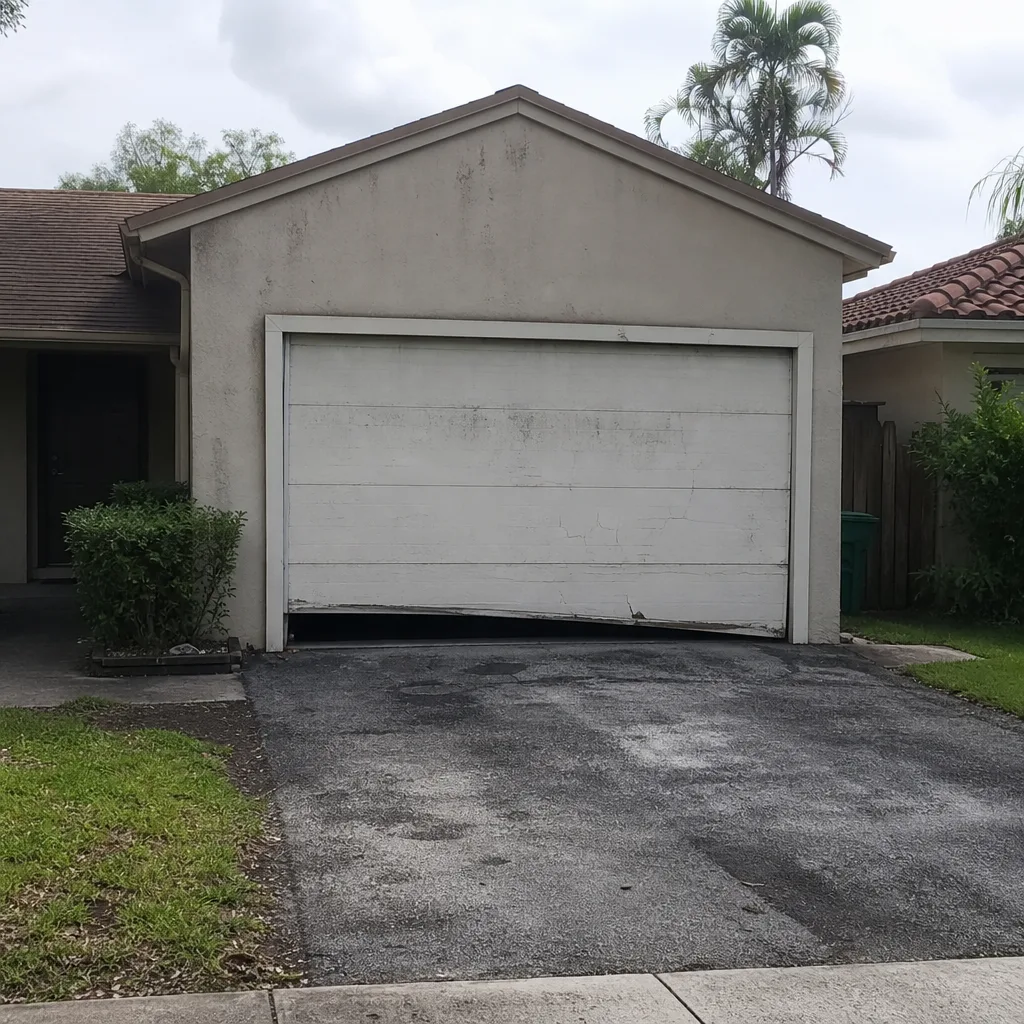
See the difference
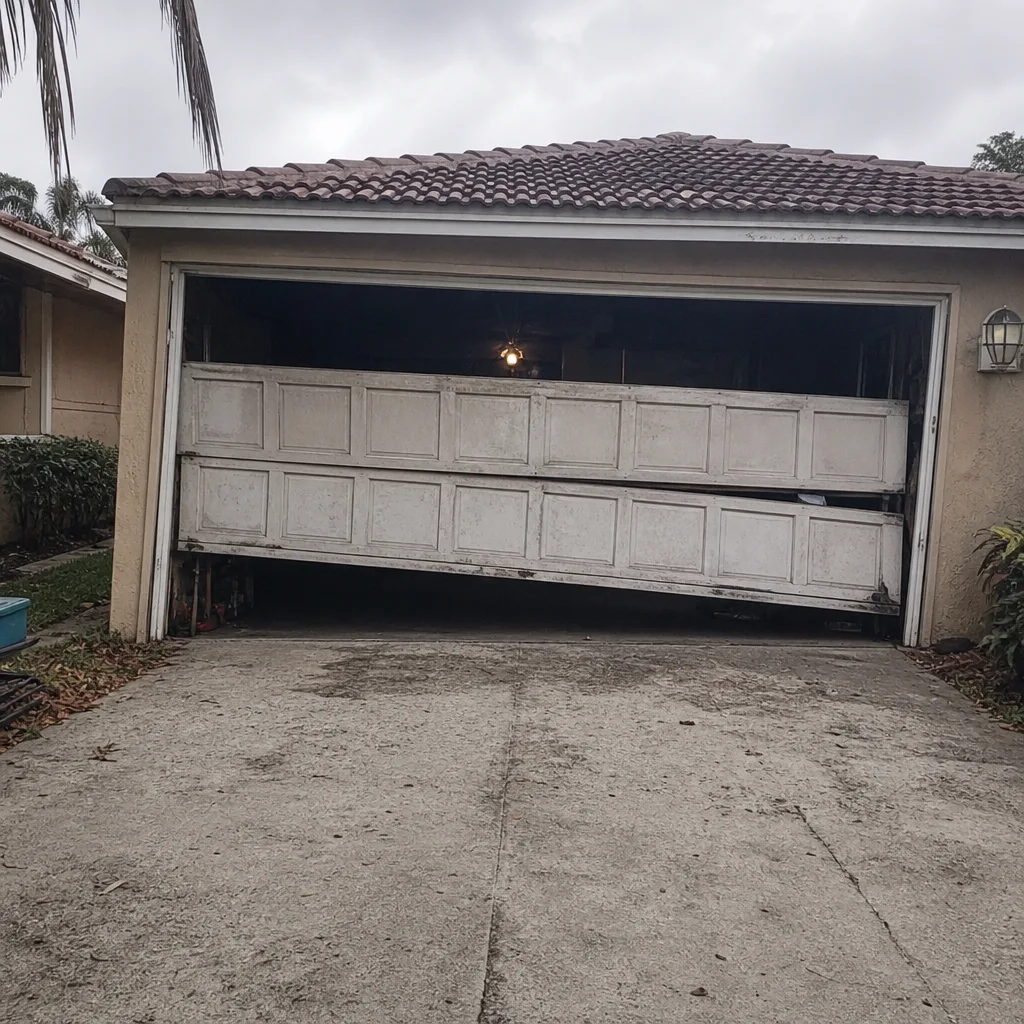 Before
 After
 Before
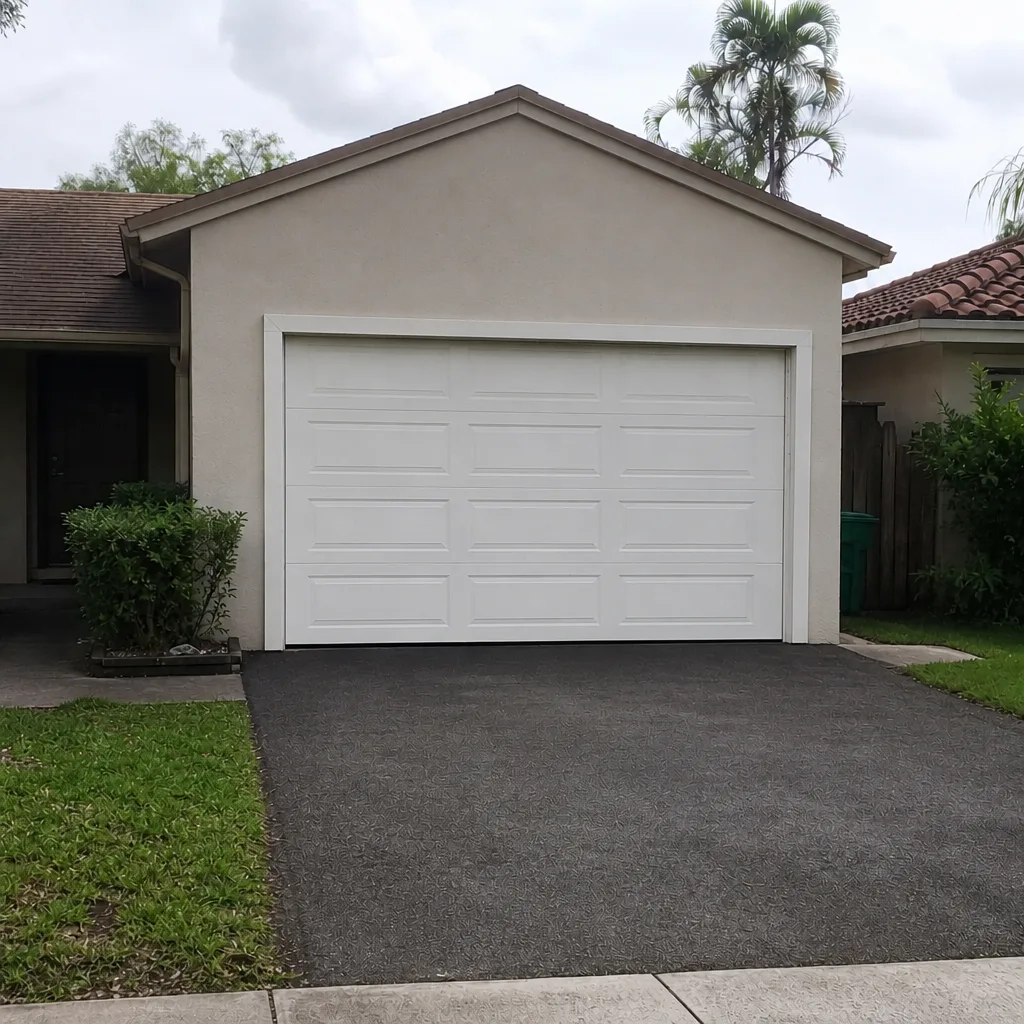 After
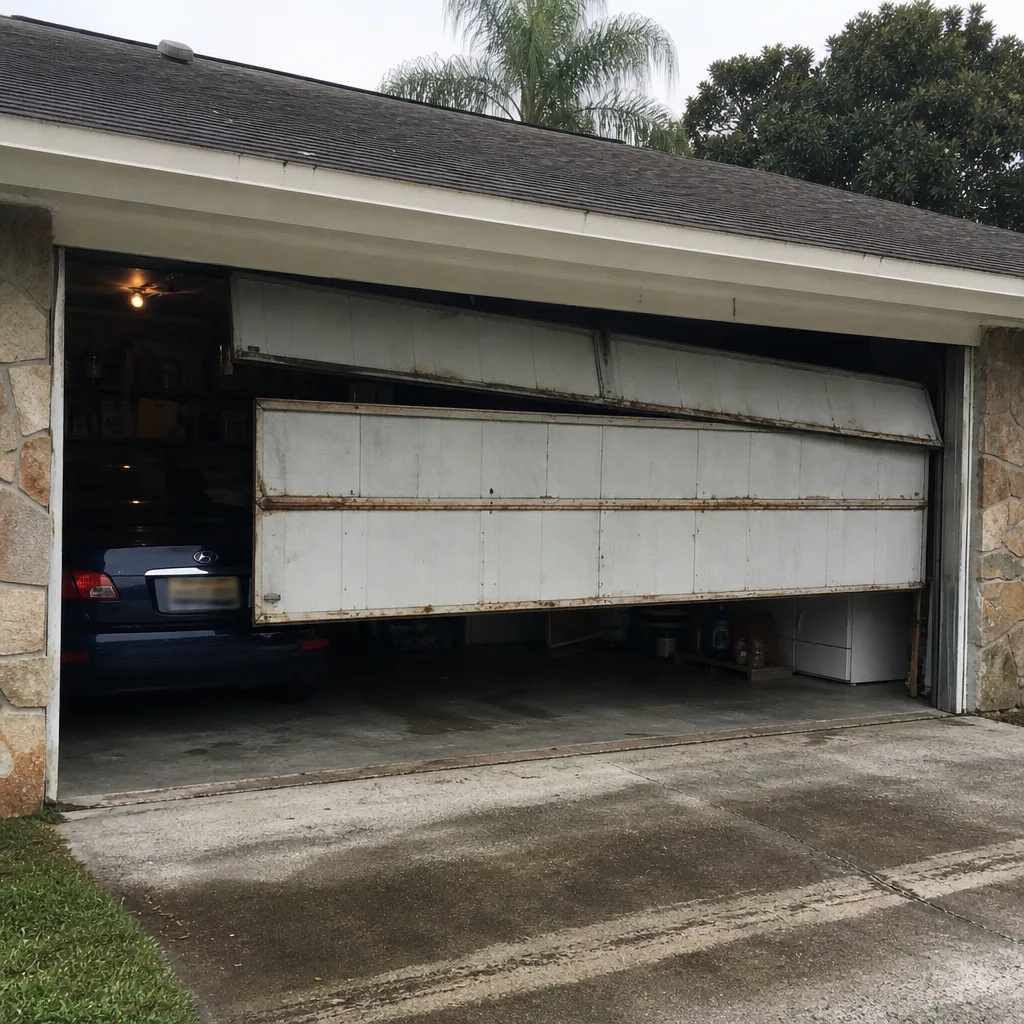 Before
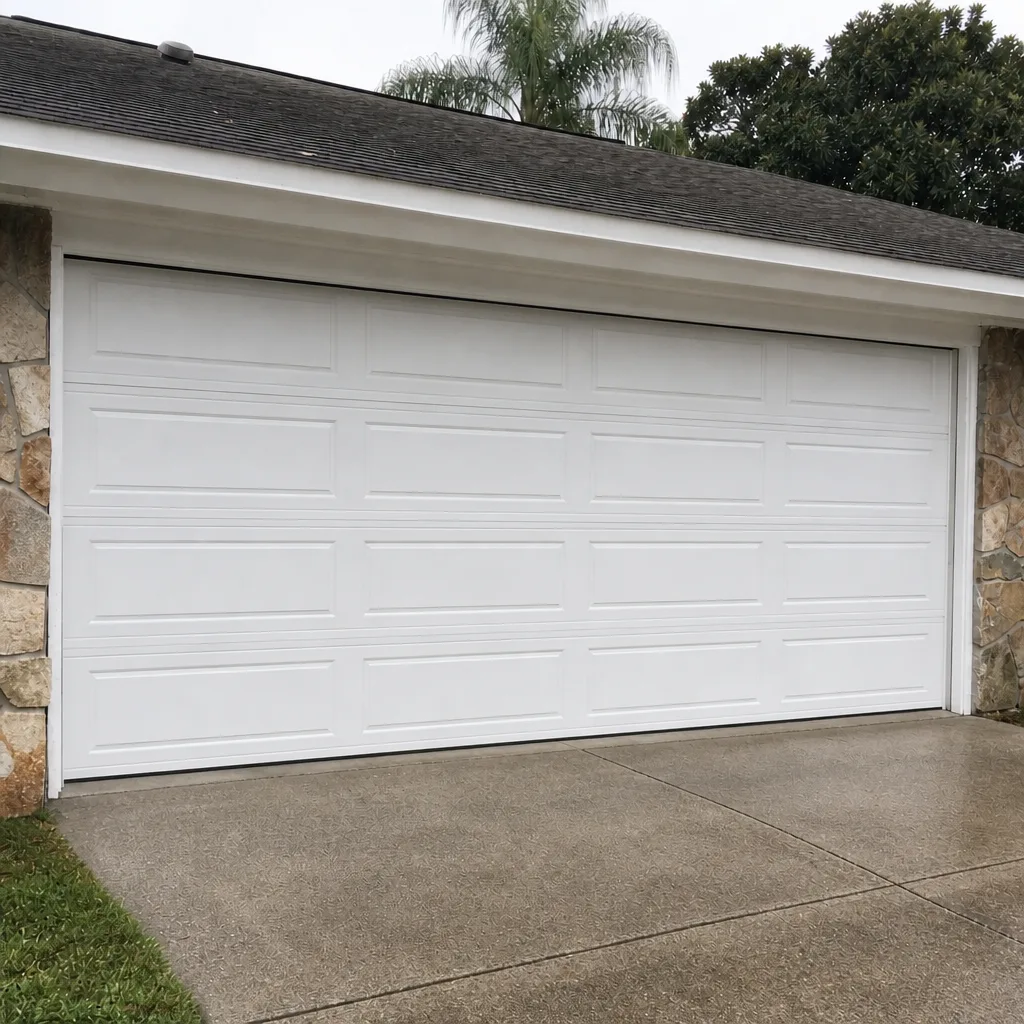 After
When to Call a Professional
Some issues are homeowner checks, and some need a technician. Call us for anything involving high-tension springs or cables, a door that’s off its tracks, a bent track, a panel that’s come loose, an opener that fails its safety reverse test, or a door that won’t open at all. Also call for a full pre-storm inspection if you haven’t had one this year. Spring and cable work should never be a DIY project – they’re dangerous, and proper tools and training make the difference. Garage Door Repair Weston Pros offers free estimates in Weston, and our technicians have up to 8 years of experience across all eight major brands – LiftMaster, Chamberlain, Genie, Clopay, Amarr, Wayne Dalton, Craftsman and Raynor. Call (844) 930-4137. We answer 24/7. Fast dispatch from 7am to 7pm, Sunday through Friday.
Frequently Asked Questions
The dry season, from November through May, is the best window for spring replacement in Weston because the door’s balance and wear behave more predictably and you’re not trying to schedule a spring job during storm season. Doing the work in December or January means it’s settled by the time June 1 arrives. Call (844) 930-4137 for an exact quote – estimates are free.
Check your seals at the start of both dry and wet seasons, and plan to replace the bottom seal roughly every two to three years if it shows UV wear. South Florida sun breaks down rubber and foam faster than most climates, so a seal that looks fine can be hard and cracked within a few warm seasons. Call (844) 930-4137 if you’re not sure whether yours needs replacing – estimates are free.
If the door won’t move at all, leave it closed and call a technician; don’t force the opener. If you see a bent track, a loose panel or a slack cable, don’t operate the door at all – a door that has come off its tracks can fall, and that’s a genuine safety hazard. Call (844) 930-4137. We answer 24/7, and a call outside dispatch hours is booked into the next opening, Sunday through Friday, 7am to 7pm.
No, the price is quoted and agreed before any work starts, and the written estimate sets the final price. We price per job, not per hour, so you’ll know what the work costs before a technician starts. Call (844) 930-4137 for an exact quote – estimates are free.
No. Torsion and extension springs are under high tension and can cause serious injury if handled without the right tools and training, and most hardware stores don’t sell the right springs anyway. Our technicians handle high-tension spring and cable repair as a core part of the service, not as an upgrade. Call (844) 930-4137 to schedule an inspection.
Yes. We work on Craftsman, Raynor, LiftMaster, Chamberlain, Genie, Clopay, Amarr and Wayne Dalton equipment, and we’re familiar with the failure points specific to each brand. An older opener isn’t automatically a replacement job – often a motor drive, capacitor or board repair gets it running again. Call (844) 930-4137 and we’ll tell you what’s worth fixing versus replacing.
The Bottom Line
Weston doesn’t have four seasons; it has storm season and dry season, and your garage door care should follow that calendar instead of a generic spring-and-fall checklist. Before June 1, tighten hardware, test the opener’s safety reverse, clear the tracks and check the seals. During storm season, monitor for swollen wood panels, failing seals and post-storm damage – and never force a door that came off its tracks. From November through May, do the mechanical work: springs, cables and opener upgrades. And year-round, keep an eye on UV wear on the weather stripping. If you’re not sure what your door needs, call (844) 930-4137. We answer 24/7. Fast dispatch from 7am to 7pm, Sunday through Friday.
Written by the team at Garage Door Repair Weston Pros.