
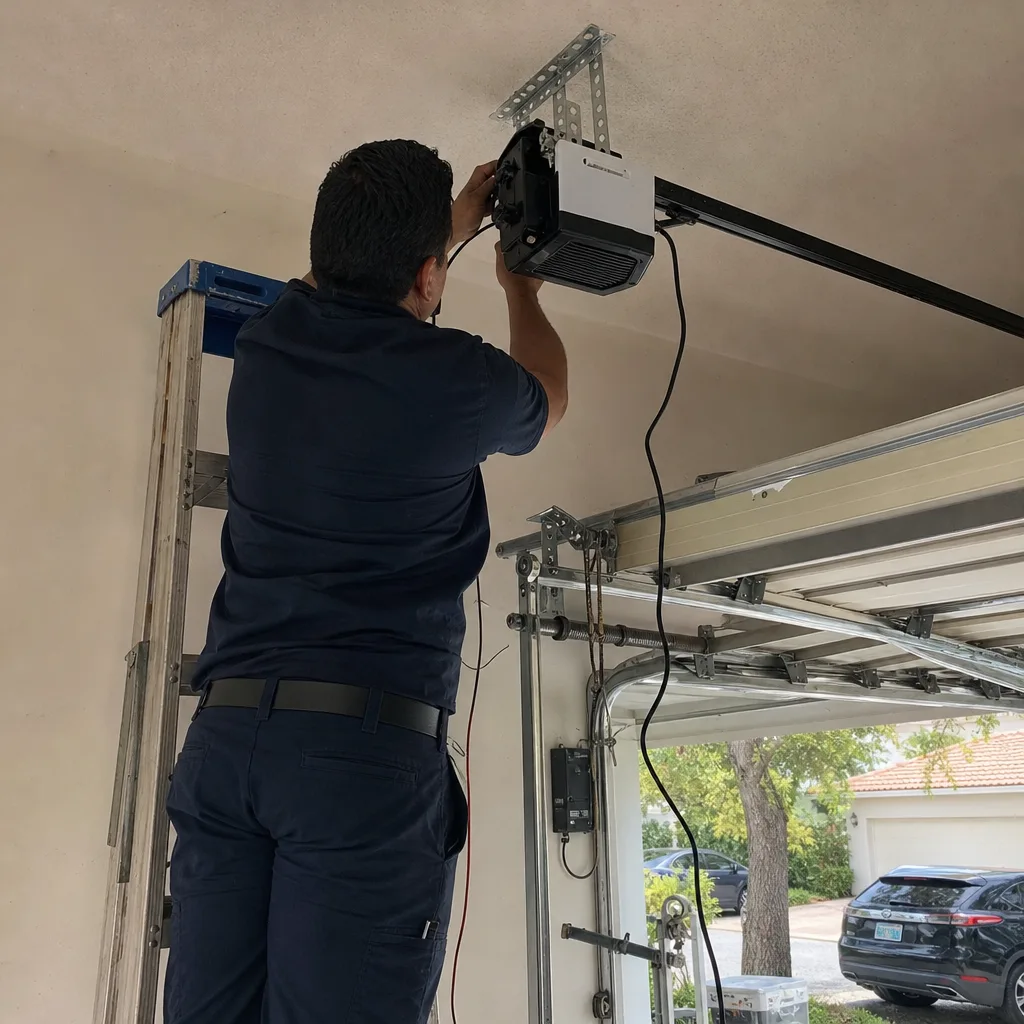
Last updated November 21, 2026
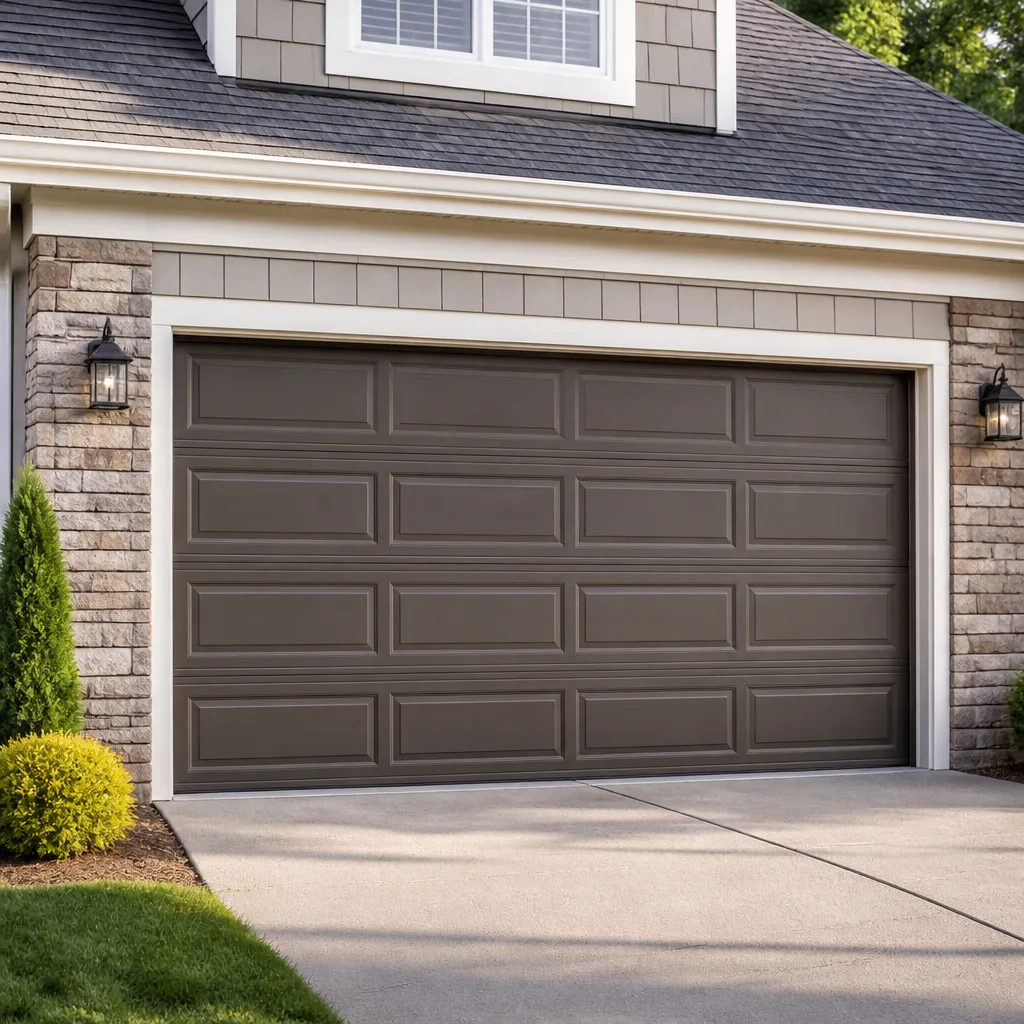 Raised-panel steel
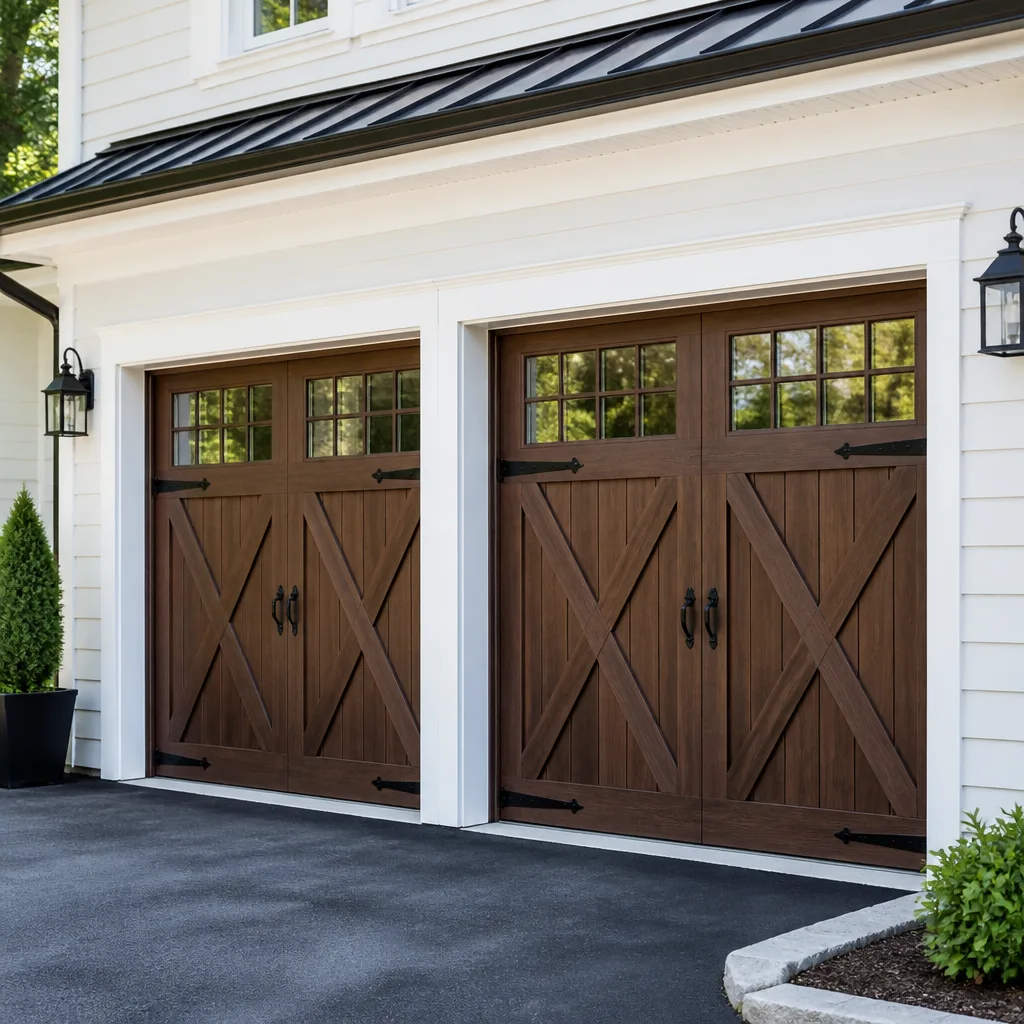 Carriage house
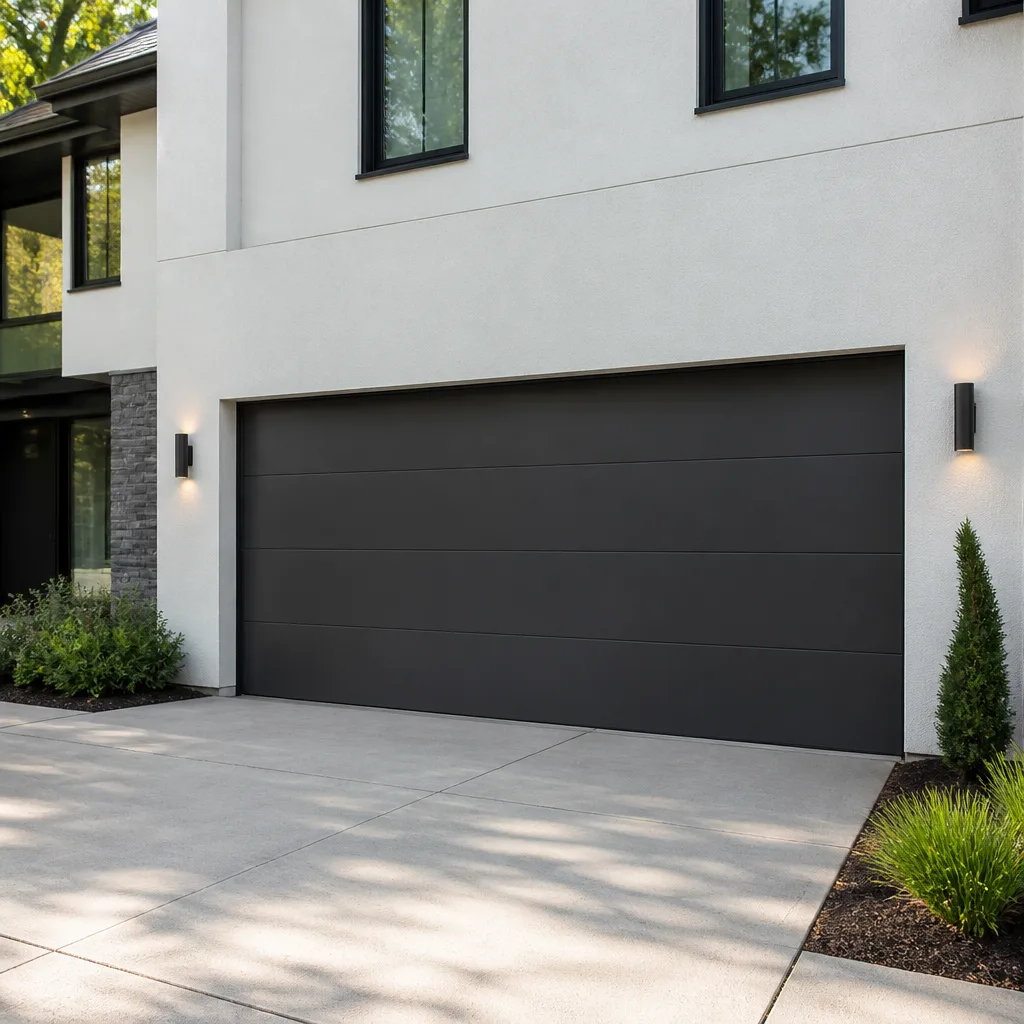 Modern flush
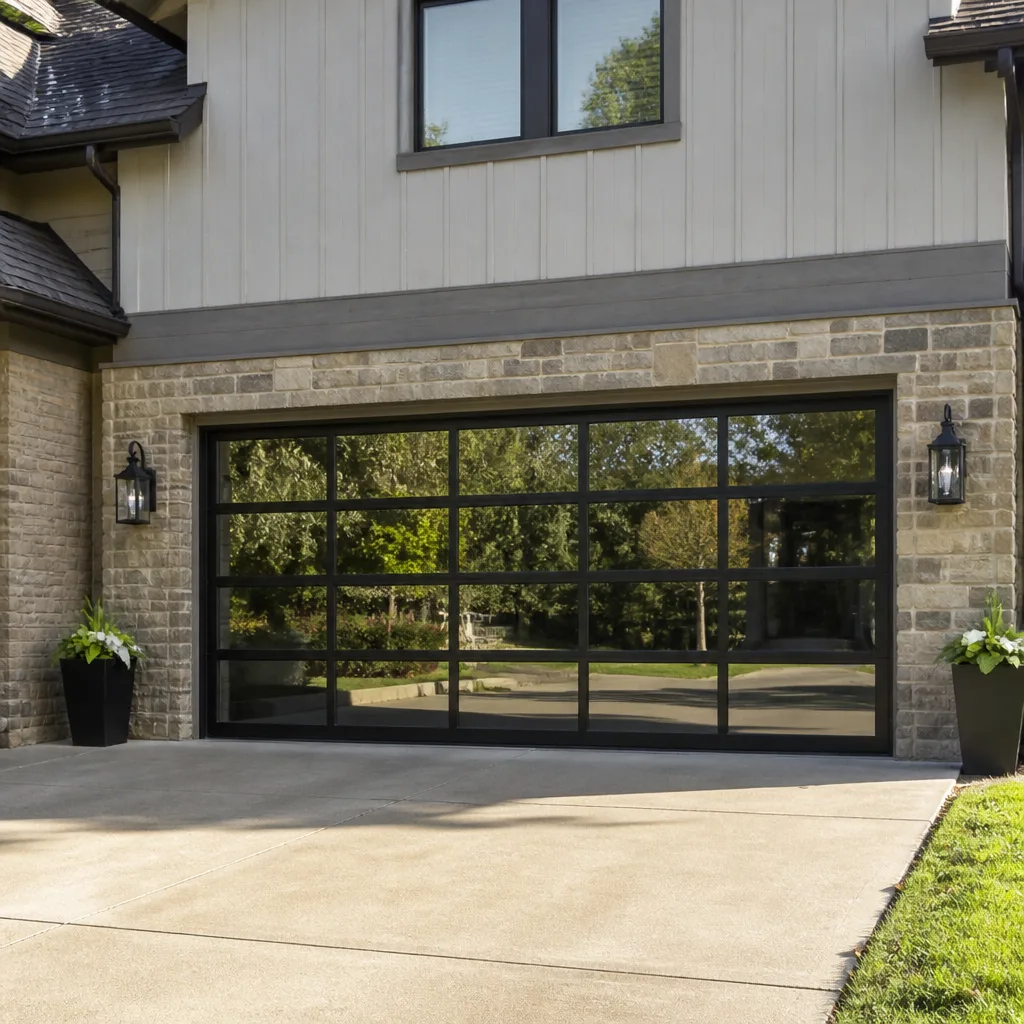 Full-view glass
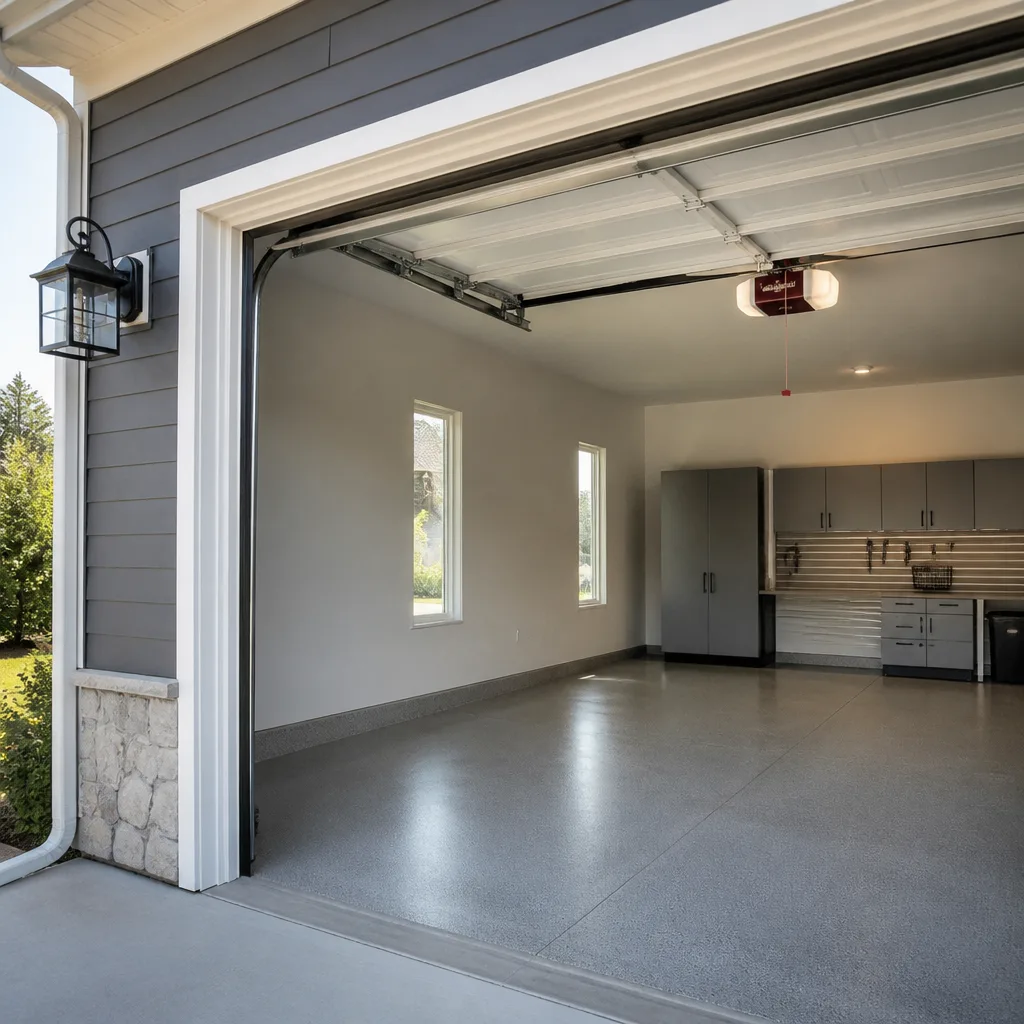 LiftMaster openers
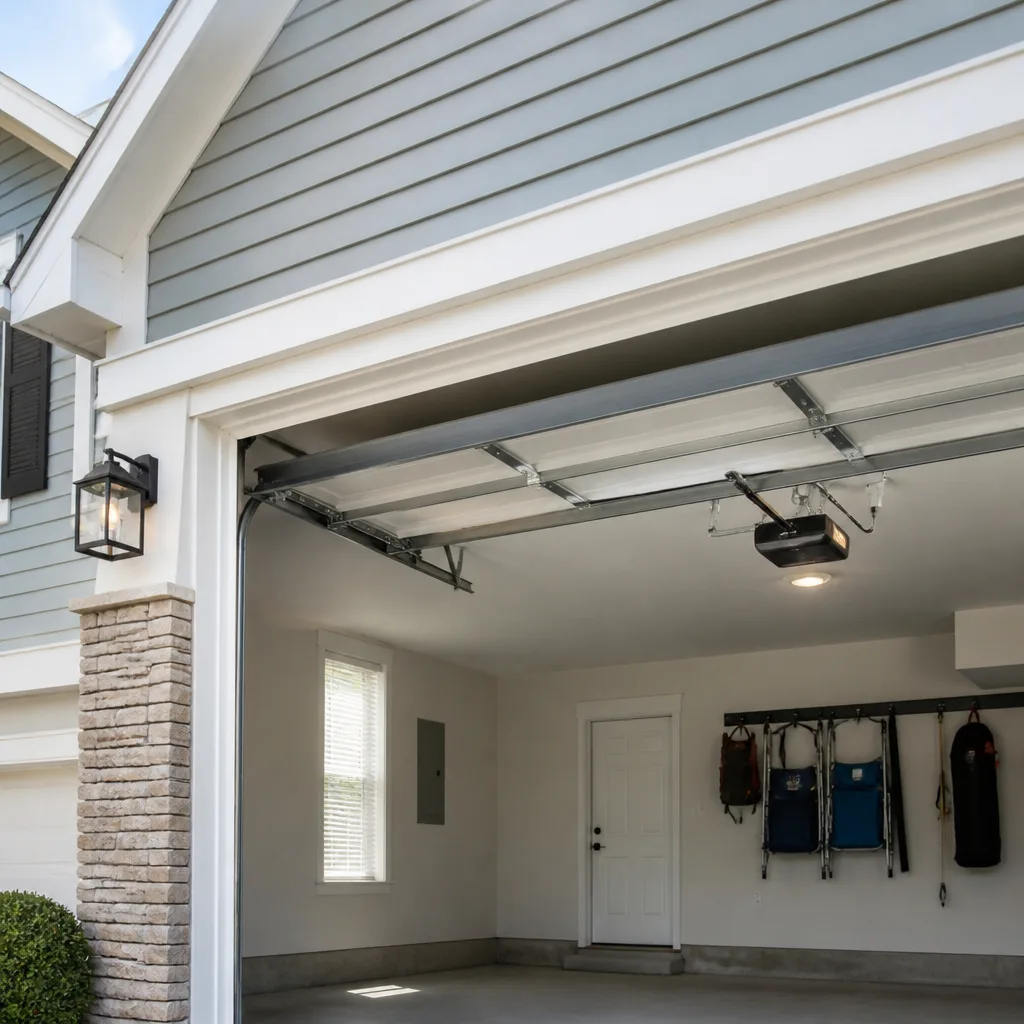 Chamberlain openers
Full 25-point door and opener safety check with every visit - springs, cables, rollers, tracks, and your LiftMaster or Chamberlain opener included
You get a price before we start. It does not change when the pro arrives.
Get your free estimateDIY vs Professional Garage Door: The Weston Homeowner’s Decision Guide
You can learn to hang a garage door panel. Plenty of homeowners do. But here’s the part that surprises people in Weston: the question that decides most of these jobs isn’t whether you’re handy. It’s who’s allowed to pull the permit, and whether your HOA will sign off on the finished install. Broward County doesn’t issue a garage door replacement permit to a homeowner acting as their own contractor, and your community association will want that permit number before the job counts as approved. This guide separates the repairs you can genuinely handle yourself from the work that runs into permit authority, HOA compliance, and stored-energy hazards that catch even experienced DIYers. By the end you’ll know exactly where the line sits.
Quick Answer
In Weston, the truly DIY-safe garage door tasks are limited to maintenance: lubrication, safety sensor alignment, weather stripping, and remote or keypad reprogramming. Everything involving torsion or extension springs, full door or panel replacement, track realignment, and opener motor work belongs with a licensed professional, because spring work is a stored-energy hazard and door replacement requires a licensed contractor to pull the Broward County permit and satisfy your HOA’s documentation requirements. When a repair needs a permit or a torque calculation, the professional is not a luxury; it’s the only legal and safe path.
Styles & brands we work with
- Raised-panel steel
- Carriage house
- Modern flush
- Full-view glass
- LiftMaster openers
- Chamberlain openers
Table of Contents
- Why the Permit Question Decides Most Weston Garage Door Jobs
- What’s Genuinely Safe and Legal to DIY in Weston
- Why Torsion Spring Work Isn’t a Skill-Level Question
- The HOA Compliance Dimension: NOA Documentation and Architectural Review
- What the Owner-Builder Exemption Covers, and What It Doesn’t
- Using a Pro for Diagnosis, Then Deciding the Follow-Up
- How Weston’s Climate and Housing Shape the Decision
- How to Choose a Garage Door Professional in Weston
Why the Permit Question Decides Most Weston Garage Door Jobs
Most DIY vs professional debates online are framed around skill. Can you do it? Should you do it? In Weston, the first question is narrower and it comes before any of that: are you legally permitted to do it? Under Florida law, permit authority for a garage door replacement sits with a licensed contractor. A homeowner can’t simply walk into Broward County’s building department and pull the permit for a full door swap the way they might for, say, a small interior project. That changes the whole calculus.
Why does the county draw the line here? A garage door is a large, heavy, spring-loaded assembly that opens and closes over a driveway where people and cars live. It carries real structural and life-safety weight, and the county treats replacement accordingly. The permit exists to confirm the install meets the current product approval standards, that the fasteners are right for the anchoring, and that the door and operator pair correctly. A licensed professional pulls that permit, schedules the inspection, and closes it out. You don’t have to think about it.
Here’s the practical upshot for a Weston homeowner eyeing a Saturday project:
- Full door replacement: permit required, licensed contractor required. Not DIY-eligible.
- Panel replacement on some assemblies: often perceived as DIY, but frequently caught by the same permitting and HOA rules once the door’s structural condition changes. Ask the building department before you buy panels.
- Opener replacement: permit requirements vary and are worth a phone call to the city; electrical connections are a separate safety line you shouldn’t cross.
- Routine maintenance: no permit, genuinely DIY-friendly.
The pattern tells you something. On the jobs that run into permits, the professional isn’t an add-on. The professional is the only route that ends with an approved, documented install. If you’re in a Weston community where the architectural review board wants paper before it approves anything, that documentation is what you’re really buying.
What’s Genuinely Safe and Legal to DIY in Weston
A confident no-permit, no-hazard set of garage door tasks exists, and it’s worth knowing so you don’t overpay for what you can do in twenty minutes. Lube the moving parts. Align the safety sensors. Replace the bottom weather seal. Reprogram a remote or keypad. Those four categories cover most of what a door actually needs on a routine basis, and none of them require a permit, a torque wrench, or a professional on site.
Here’s how each one works in plain terms:
- Lubrication. A garage door has hinges, rollers, and a torsion or extension spring assembly that all want periodic lubrication. Use a garage-door-specific lubricant on the hinges and rollers. Wipe the old grit off first; a dirty roller just grinds the grime in deeper. Avoid over-spraying near the opener’s photo-eye lenses or the door’s seals.
- Safety sensor alignment. The two photo-eye sensors near the bottom of the tracks should point at each other and see a clear line. If the door reverses the moment it closes, one sensor is likely nudged or dirty. Wipe the lenses, look for a steady indicator light on each, and nudge them back into line by hand. That’s it. No tools needed on most assemblies.
- Weather stripping. The bottom seal on a Weston door takes a beating from sun and humidity. A worn seal lets water and pests in and lets cool air out. Replacement seals are cut-to-length and push or slide into the retainer. This is a hand-tool job.
- Remote and keypad reprogramming. Lost a remote or changed the code? Reprogamming a LiftMaster, Chamberlain, Genie, or Craftsman opener is a matter of following the brand’s pairing sequence, usually printed on the opener’s housing or in the manual. No ladder work beyond reaching the opener, no wiring.
When in doubt about whether a task crosses into permitted work, the safest move is a two-minute call to the City of Weston or Broward County building department. They’ll tell you straight. And if a maintenance task turns into a discovery (“the cable looks frayed,” “the door is hanging unevenly”), stop and call us for garage door repair before you push further.
Why Torsion Spring Work Isn’t a Skill-Level Question
Torsion spring replacement is where a lot of “I’ll just watch a video” plans end, and the reason isn’t that homeowners are clumsy or inexperienced. It’s physics. A wound torsion spring on a standard residential door stores enough rotational energy to launch a winding bar across a garage, and it does not care whether the person holding the bar has twenty years of experience or twenty minutes. Even seasoned technicians treat spring work as a two-person, tension-controlled task with specific tooling. A DIYer with a pair of vice grips and a ladder is working outside every safeguard the trade uses.
We say this not to scare you into a service call. We say it because we handle high-tension spring systems as a named service, and we’ve seen what happens when someone tries a spring swap on their own. The injuries are real, and they’re not the domain of “people who don’t know better.” Torsion and extension springs are a stored-energy problem, and stored energy doesn’t grade on a curve. The correct approach is not a how-to; it’s a what-to-look-for. If you see any of the following, don’t touch the spring, don’t try to balance the door, and call for garage door spring repair:
- A gap or break in a torsion spring coil
- A visible stretch or break in an extension spring
- A door that slams down too fast or flies up too hard
- A loud bang from the garage followed by a door that won’t lift
- A door that sits crooked on one side with the tracks looking fine
Springs are one of the two things on a garage door (the other being the electrical side of opener wiring) where “leave it to a trained professional” is the whole answer. That’s not an upsell. It’s the safety caveat every garage door specialist in the trade would give you.
The HOA Compliance Dimension: NOA Documentation and Architectural Review
Weston is a planned community through and through. Many neighborhoods here – Weston Hills, Savanna, Bonaventure, and dozens of villages in between – run architectural review committees that care about more than curb appeal. When your garage door is visible from the street (and in most Weston communities it is), a replacement typically triggers an architectural review request. That review wants documentation: product specs, color and style matching the community standard, and, critical to this conversation, the Notice of Acceptance for the product you’re installing.
A Notice of Acceptance – NOA for short – is the Florida documentation that a particular product meets the state’s building code for its use. It’s the paper trail that proves the door you’re installing is code-compliant, approved for wind and impact standards where applicable, and legitimately the product you say it is. Your HOA will often ask for the NOA number before a replacement is considered approved. Your building department inspection will look for it too.
Here’s where DIY plans break in a specific way. Even a perfectly installed DIY door can trigger an architectural violation notice if the finished install lacks proper NOA documentation, and the HOA’s remedy is remediation, not a pat on the back. The door may be fine. The paperwork isn’t. And paperwork, unlike a door, doesn’t fix itself. This is a Weston-specific reason to route replacement work through a professional: the residential pro who installs Clopay, Amarr, or Wayne Dalton doors in this market knows which products carry the right NOA, and can hand you the documentation your HOA wants without a scavenger hunt. We’re factory-familiar with those brands for that exact reason – correct parts and correct paperwork on the first try.
Before you buy a door, read your HOA’s architectural guidelines. Then read them again. Then talk to a professional who installs into those guidelines routinely. That’s the order that gets an install approved.
What the Owner-Builder Exemption Covers, and What It Doesn’t
Florida Statute 489.103 is the exemption that lets a property owner do certain construction work on their own property without holding a contractor’s license. It’s real, and it has real limits. Homeowners hear “owner-builder exemption” and assume it covers every project on their own house. In practice, it’s narrower than that, and it comes with obligations that don’t match how most people want to spend a weekend.
Here’s what you need to understand about 489.103 for garage doors specifically:
- The exemption is for the owner of the property, doing work on the property they own and occupy, on a project where the owner is not selling or leasing the structure. It does not extend to a friend’s house or a rental.
- It does not override permit requirements. Even where an owner-builder exemption could apply, the local building department’s permit process still applies, and the department decides what it will accept for a garage door replacement. In Weston’s jurisdiction, that means the permit route for a door swap runs through a licensed contractor, not an owner-builder filing.
- It doesn’t override your HOA. HOA architectural review is separate from the statute entirely. A homeowner who fits within an owner-builder exemption still has to satisfy the community association’s rules, and those rules will still want NOA documentation and a permit number.
- It doesn’t touch safety-critical work. Spring systems, opener wiring, and structural anchoring are hazards regardless of who holds the property title.
The short version: whether or not you technically fit within an owner-builder exemption, garage door replacement in Weston almost always still requires a licensed contractor to pull and close the permit. If you’re unsure of your specific situation, ask the building department before you demo anything. They will answer. And it’s cheaper to ask first than to remediate after.
Using a Pro for Diagnosis, Then Deciding the Follow-Up
Here’s a middle path most DIY-vs-pro guides ignore: call a professional for the diagnosis, then make a decision about the follow-up work yourself. A stuck door, an opener that won’t respond, a door that reverses without hitting anything – these symptoms can come from a dozen underlying causes. A professional diagnosis narrows it fast, tells you exactly which part is failing, and gives you a specific part number for the brand you own. Whether you then ask a technician to handle the fix or handle the safe portion yourself is a conversation you can have after diagnosis.
That route makes particular sense for older branded openers. A homeowner running a Craftsman or LiftMaster opener from years past often worries nobody services that brand anymore. They fear an expensive replacement is the only answer. A diagnosis-first visit usually disproves that assumption. Most failing openers need a specific component – a gear, a logic board, a trolley, a travel limit adjustment – not a whole new unit. When the technician is factory-familiar with the whole installed drive system, the part is sourced correctly the first time and no universal workarounds get wedged into a brand-specific machine.
This is how we work when a homeowner calls for garage door opener repair. We diagnose, we tell you what’s actually failing, and we quote you the fix before any work starts. If the honest answer is “this portion is genuinely DIY-safe, here’s the part to order,” that’s the answer. If it’s “this needs the right torque spec and a permit,” you’ll know that too. Diagnosis is not a commitment to a repair invoice; it’s information.
When the diagnosis points to something a homeowner shouldn’t handle – springs, opener wiring, structural tracks – that’s the moment to stop. The cost of an honest evaluation is small; the cost of going in blind is not.
How Weston’s Climate and Housing Shape the Decision
Weston’s climate is a real factor in garage door wear, and it shifts the DIY-vs-pro line in ways a homeowner from a colder part of the country wouldn’t anticipate. Winters are mild, so freeze-thaw isn’t the story. Humidity and summer sun are. A garage door in Weston faces months of heat and moisture, and the parts that wear fastest are the ones most exposed to it: the bottom weather seal, the roller bearings, the paint and finish on steel doors, and the electronics that live in the opener housing.
What that means practically:
- Weather seal replacement is a routine DIY task, and in Weston it’s a recurring one. Sun and humidity break down the seal faster than in drier climates. Plan on replacing it more frequently than a manual suggests.
- Lubrication matters more here. Humidity accelerates roller and hinge wear. A garage-door-specific lubricant applied periodically extends the life of parts you’d otherwise replace. That’s a DIY job and one of the highest-return tasks on the whole door.
- Opener electronics live in a garage that gets hot. Logic boards and sensors fail more often in warmer climates. That’s a service-call category, not a DIY one, but it’s worth knowing so you diagnose symptoms cleanly.
- Paint and finish on steel doors degrade faster under strong sun. A finish that’s chalky or peeling is a candidate for refinishing – sometimes a DIY job, sometimes a door replacement call depending on the underlying corrosion.
Weston housing stock also leans toward larger garages with double doors, which means bigger spring systems and heavier panels than a single-car setup. Heavier doors put more stress on springs and openers, and they raise the stakes of a DIY mistake. Where a lighter single-wide door might forgive a sloppy panel alignment, a double-wide won’t. This is part of why we treat the door hardware side (Clopay, Amarr, Wayne Dalton, Raynor) and the operator side (LiftMaster, Chamberlain, Genie, Craftsman) as one connected system rather than two separate product categories.
How to Choose a Garage Door Professional in Weston
If you’ve decided a repair or replacement is beyond the DIY line, the next question is who to call. In a market with a lot of generalist handymen and call-center middlemen, that choice matters as much as the DIY-vs-pro decision itself. Here’s how to evaluate a garage door professional in Weston:
- Ask whether they handle springs in-house. Many general handymen decline high-tension spring work. Ask directly whether torsion and extension spring repairs are a named service. If the answer is a deflection, keep looking.
- Ask which brands they’re factory-familiar with. A specialist should be able to name the door brands (Clopay, Amarr, Wayne Dalton, Raynor) and the opener brands (LiftMaster, Chamberlain, Genie, Craftsman) they work on routinely. Named familiarity means correct replacement parts rather than universal workarounds that compromise a brand-specific machine.
- Ask about permits. A professional who handles garage door replacement in Weston will confirm they pull the Broward County permit and know what your HOA’s architectural review needs. If permits don’t come up in the conversation, that’s a warning sign.
- Confirm they handle both door hardware and opener systems. One call covering springs, panels, opener repair, and full installs beats juggling two vendors and being told each issue is the other guy’s problem.
- Get the price in writing before any work starts. The written estimate sets the price. That’s true for a small diagnostic visit and for a full door replacement, and it’s the number you should hold the professional to.
- Check that they respond to emergencies. A stuck-open door overnight is a security concern, not a next-week problem. A professional who treats emergency response as a core offering, not an upsell, is the one you want in your contacts.
And here’s the check that saves the most heartburn: ask whether the price is quoted before work begins. A garage door professional who gives you a written quote and sticks to it is telling you something about how they run their business. Unclear pricing is the single most reliable sign to walk away.
Common Mistakes to Avoid
- Buying a door before checking the NOA documentation. A door that meets the code but lacks the NOA paperwork your HOA wants can trigger a violation even when the install itself is fine. Confirm the paperwork before you buy.
- Assuming an owner-builder exemption clears the permit requirement. Under Florida Statute 489.103 you still have to satisfy the local building department, and in Weston’s jurisdiction a garage door replacement permit runs through a licensed contractor, not an owner-builder filing.
- Trying to balance or lift a door after a spring breaks. This is the single most dangerous DIY mistake on a garage door. A wound spring stores tremendous energy, and a door with a broken spring should stay put until a technician handles it.
- Skipping the diagnostic visit on an older opener. Homeowners often assume a failing LiftMaster or Craftsman unit needs full replacement. A diagnosis usually shows a specific failed component. Get the diagnosis before pricing a new opener.
- Ignoring the architectural review timeline. Weston HOA review takes documentation and time. Starting a DIY replacement without it can mean staring at an installed door while the association works through a violation notice.
- Using the wrong lubricant or over-lubricating. White grease or household oil on garage door rollers attracts grit and accelerates wear in Weston’s humid air. Use a garage-door-specific lubricant, and lubricate sparingly.
- Assuming all repair people handle springs. Many general handymen decline torsion and extension spring work. If you have a spring problem, make sure whoever you call actually services springs, or you’ll waste a trip.
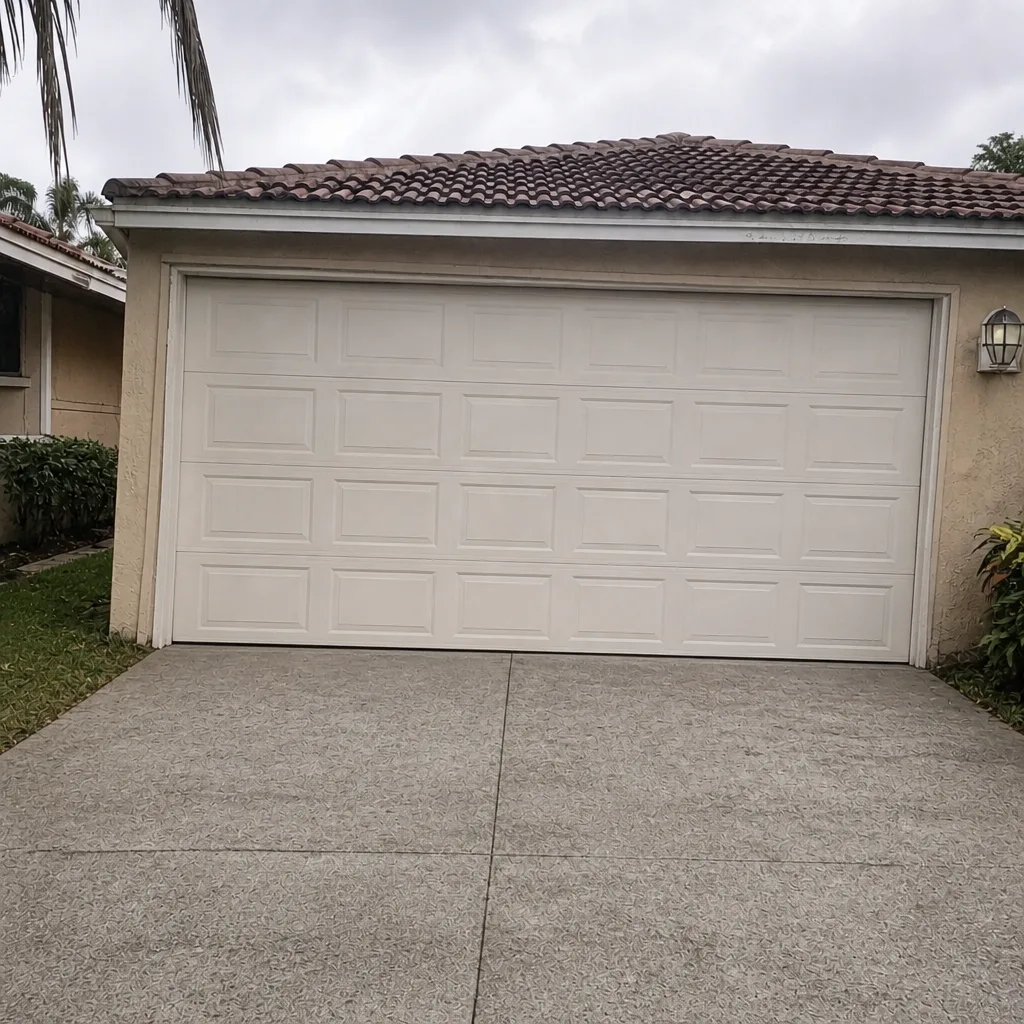
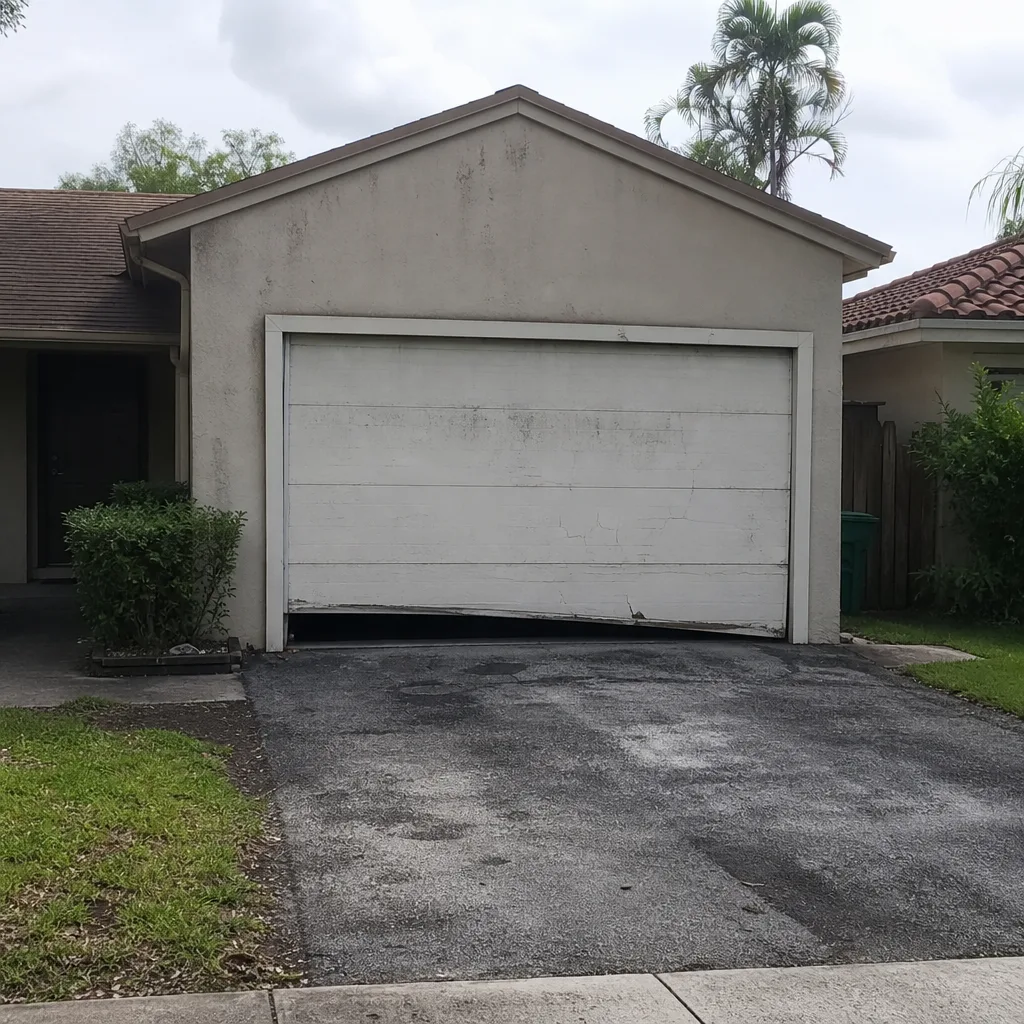
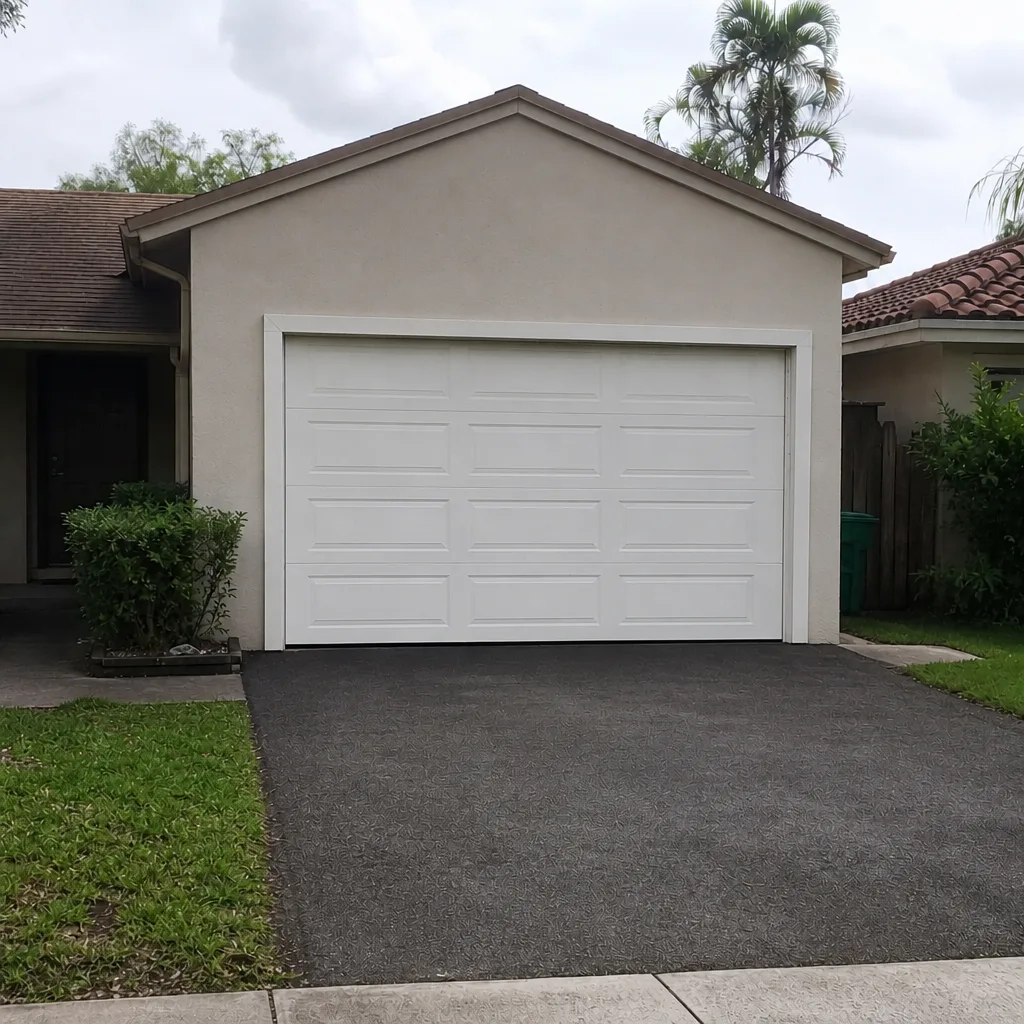
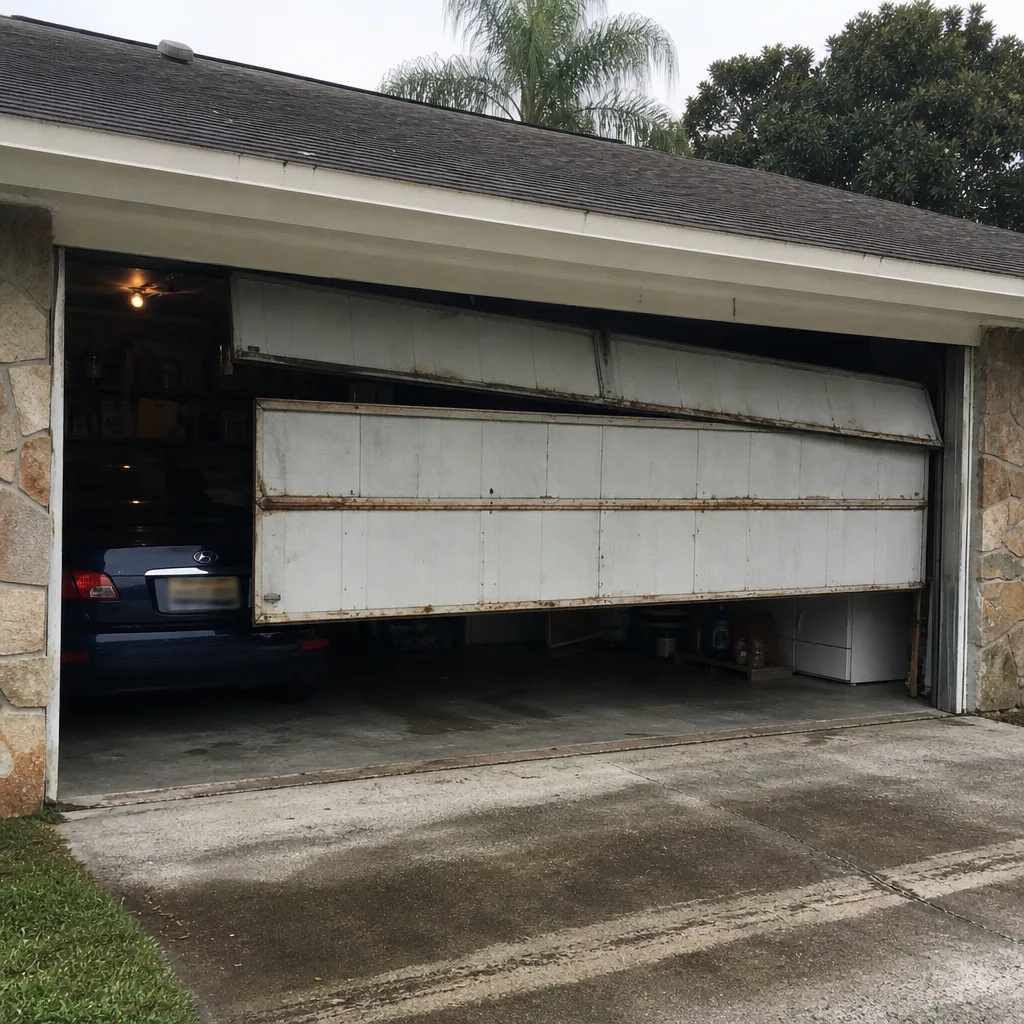
See the difference
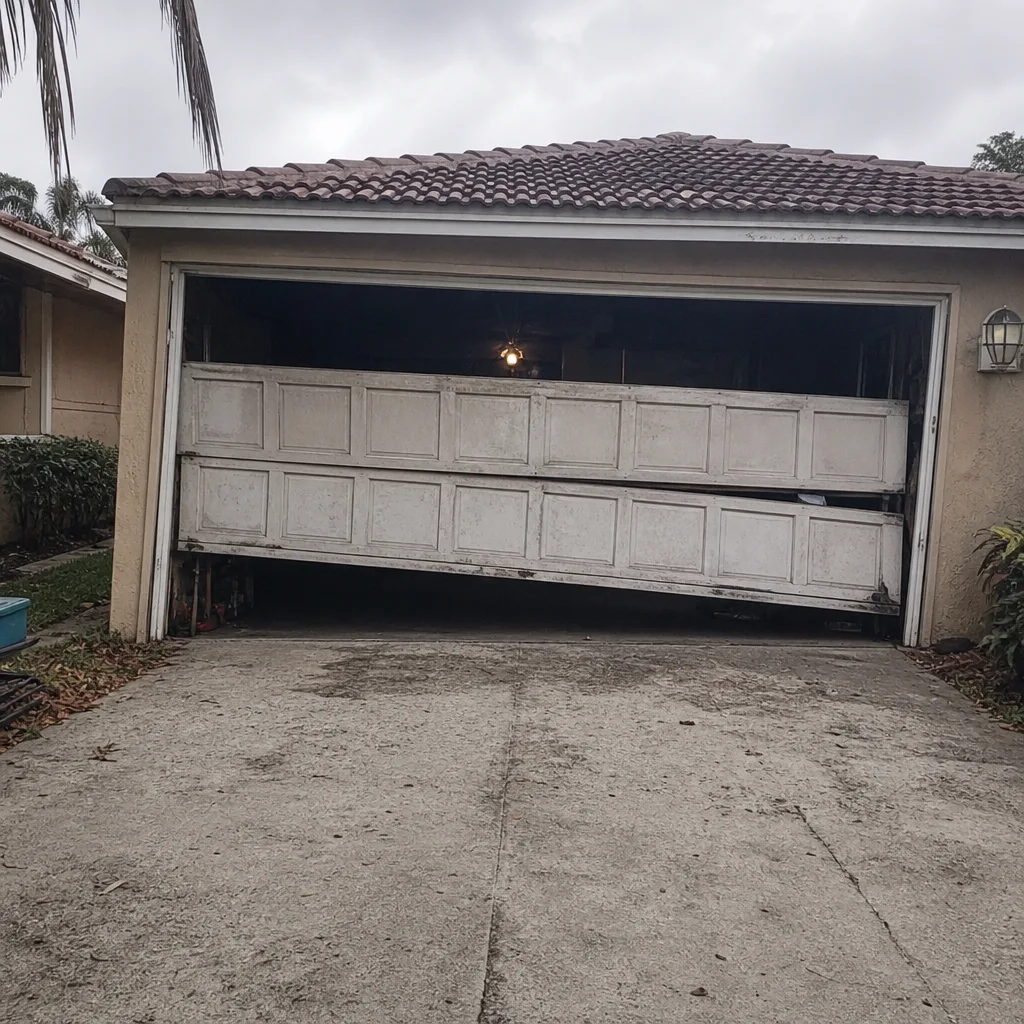 Before
 After
 Before
 After
 Before
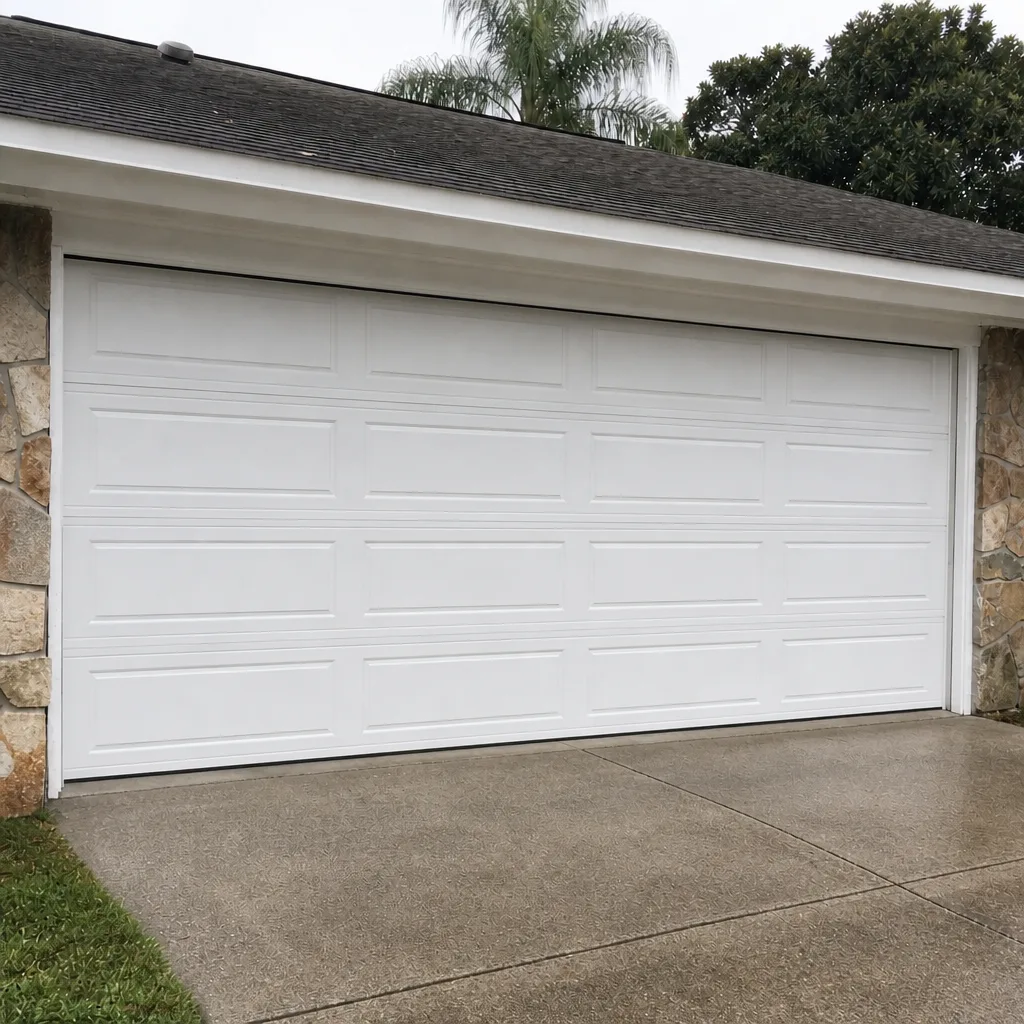 After
When to Call a Professional
Call a garage door professional in Weston when any of these is true: a torsion or extension spring has broken or gone slack; the door is hanging unevenly or has come off its track; an opener motor runs but won’t lift the door; the door reverses without an obstruction; you’re installing or replacing a full door or panel; or the door needs a permit of any kind. Any of those marks the outer edge of safe DIY. Also call when you’re unsure whether a symptom crosses the line – a quick diagnostic visit is cheaper than a botched repair. Garage Door Repair Weston Pros offers free estimates in Weston and connects you with a vetted local professional. Call (844) 930-4137. We answer 24/7. Fast dispatch from 7am to 7pm, Sunday through Friday. Our technicians have up to 8 years of experience, and we service LiftMaster, Chamberlain, Genie, Clopay, Amarr, Wayne Dalton, Craftsman, and Raynor equipment.
Frequently Asked Questions
No, not legally as a homeowner for a full garage door replacement. Broward County’s permit process for a door swap runs through a licensed contractor, and your Weston HOA will likely require the permit number plus NOA documentation before the install counts as approved. A licensed professional pulls the permit, closes it out, and hands you the paperwork your HOA wants. Call (844) 930-4137 for a free estimate on a Weston installation.
No. A wound torsion spring stores enough rotational energy to injure even experienced technicians, and it’s a stored-energy physics problem independent of your skill level. Springs are one of the two repair categories (the other being opener wiring) that should always go to a trained professional. If you see a broken spring, a gap in the coil, or a door that slams down, stop and call (844) 930-4137.
Lubrication, safety sensor alignment, bottom weather stripping, and remote or keypad reprogramming are genuinely safe and legal DIY tasks in Weston. None of them require a permit or a torque calculation. Everything involving springs, full door or panel replacement, track realignment, and opener motor work crosses into professional territory. When in doubt, call (844) 930-4137 and ask – the answer is free.
Rarely, and not in the way most homeowners expect. Florida Statute 489.103 allows a property owner some latitude for work on their own occupied property, but it doesn’t override the local building department’s permit requirements or your HOA’s architectural review. In Weston’s jurisdiction, the permit route for a door swap still runs through a licensed contractor. Call (844) 930-4137 if you want to talk through your specific situation.
A Notice of Acceptance is the Florida documentation proving a product meets state building code for its use, including the wind and impact standards that apply. Weston HOAs commonly ask for the NOA number as part of architectural review because it confirms the door being installed is code-compliant and legitimate. A professional who installs Clopay, Amarr, or Wayne Dalton doors here knows which products carry the right NOA. Call (844) 930-4137 for help sorting out the paperwork.
Yes, for repair work. Same-day service is available in Weston when a door is stuck, an opener has failed, or a spring has broken. Call (844) 930-4137. We answer 24/7. Fast dispatch from 7am to 7pm, Sunday through Friday. A call outside dispatch hours is booked into the next opening. Full installs are measured, ordered, and scheduled – not same-day – and the written estimate sets the price before anything starts.
The Bottom Line
In Weston, the DIY-vs-professional question for garage doors comes down to three lines: the maintenance line (lubrication, sensors, seals, remotes – genuinely yours), the stored-energy line (springs and opener wiring – always the professional), and the permit line (full door replacement, panel changes, anything your HOA reviews – the professional is the only route to an approved install). The permit line catches most homeowners by surprise, and it’s the one that matters most in a planned community. If your project touches springs, a permit, or architectural review, call us. If it’s routine maintenance, enjoy the project. And when you need garage door repair, a diagnosis, or a full install, call Garage Door Repair Weston Pros at (844) 930-4137 for a free estimate. We’re Garage Door Repair Weston Pros, and one call covers the opener, the springs, the panels, and the install.
Written by the team at Garage Door Repair Weston Pros.