
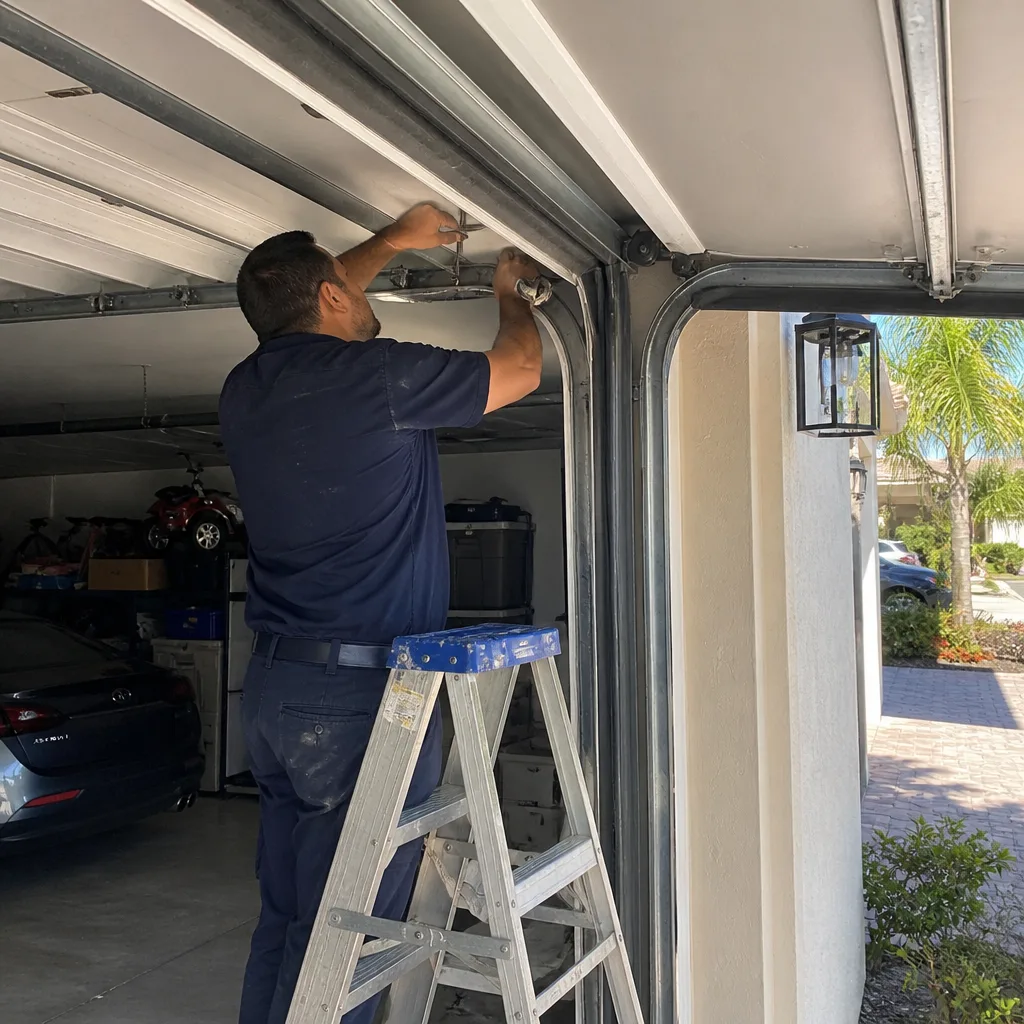
Last updated November 21, 2026
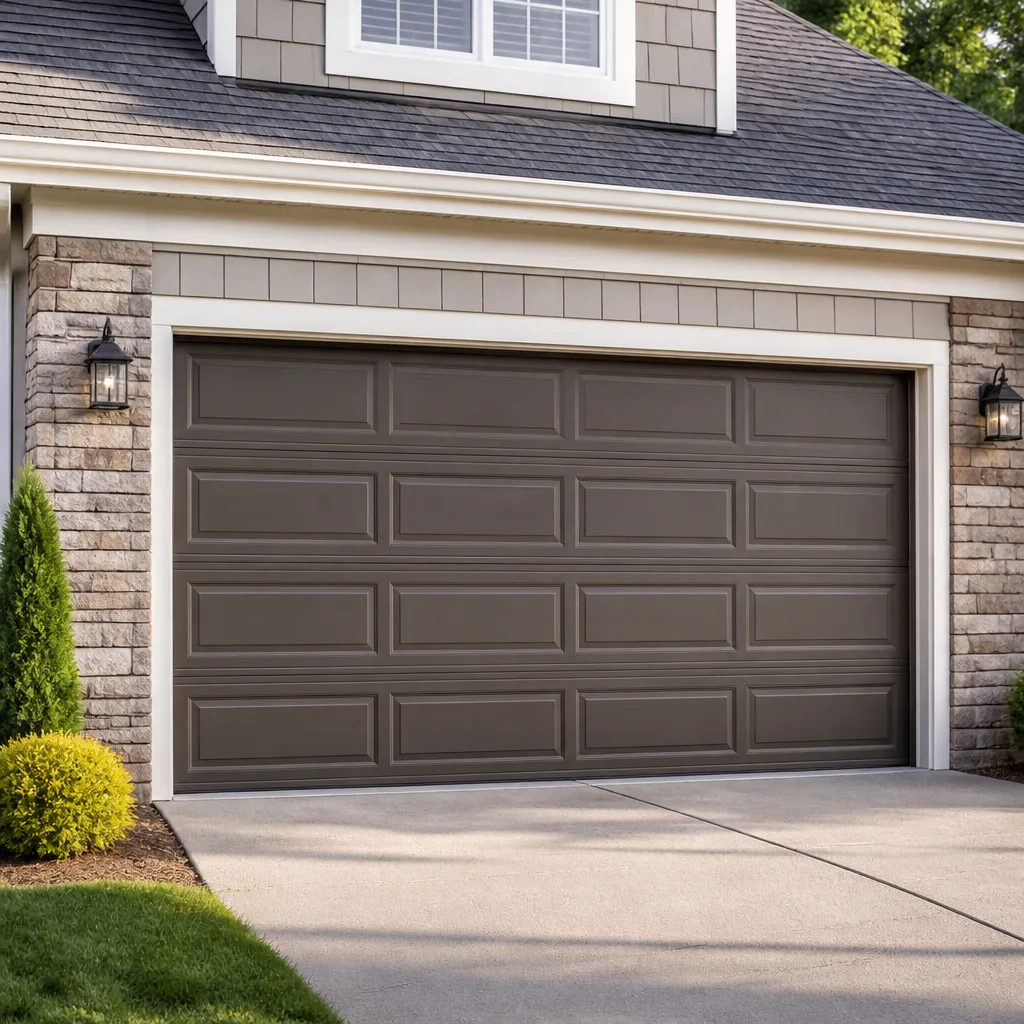 Raised-panel steel
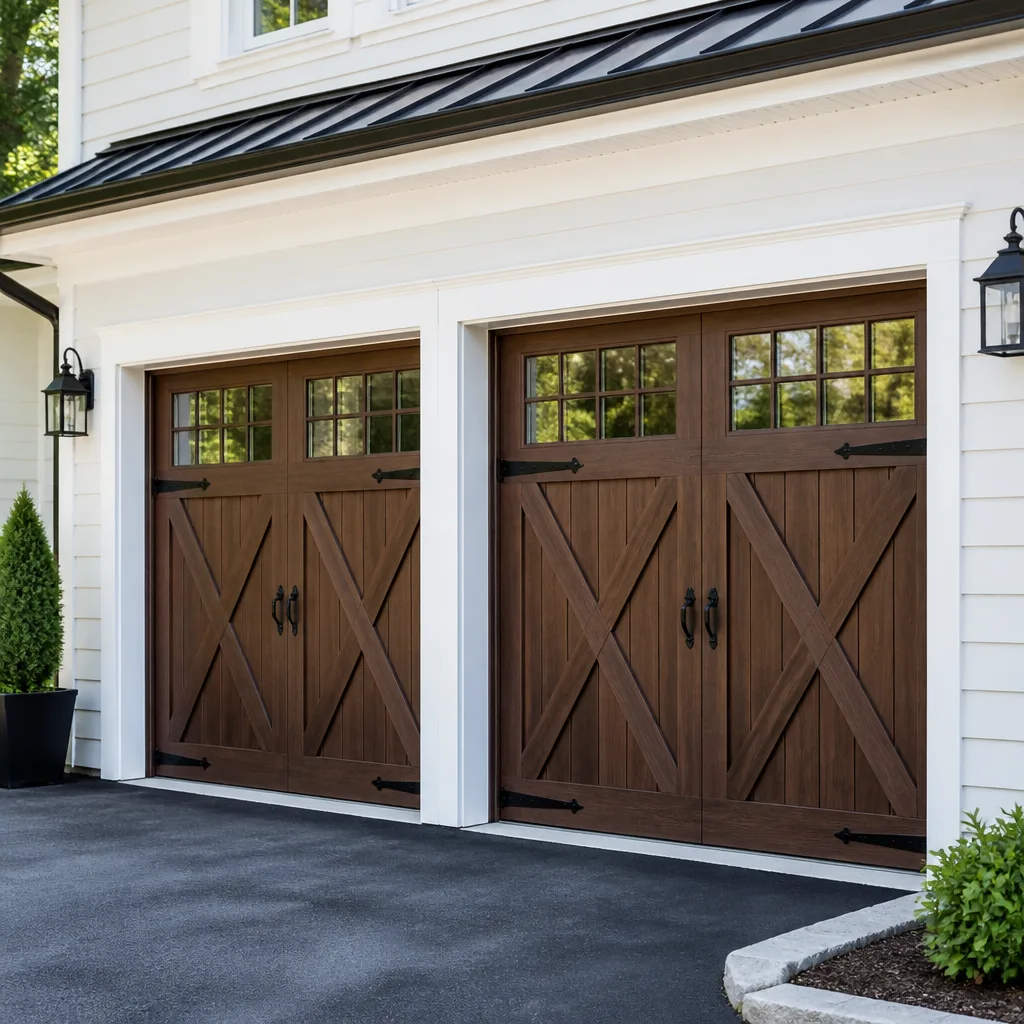 Carriage house
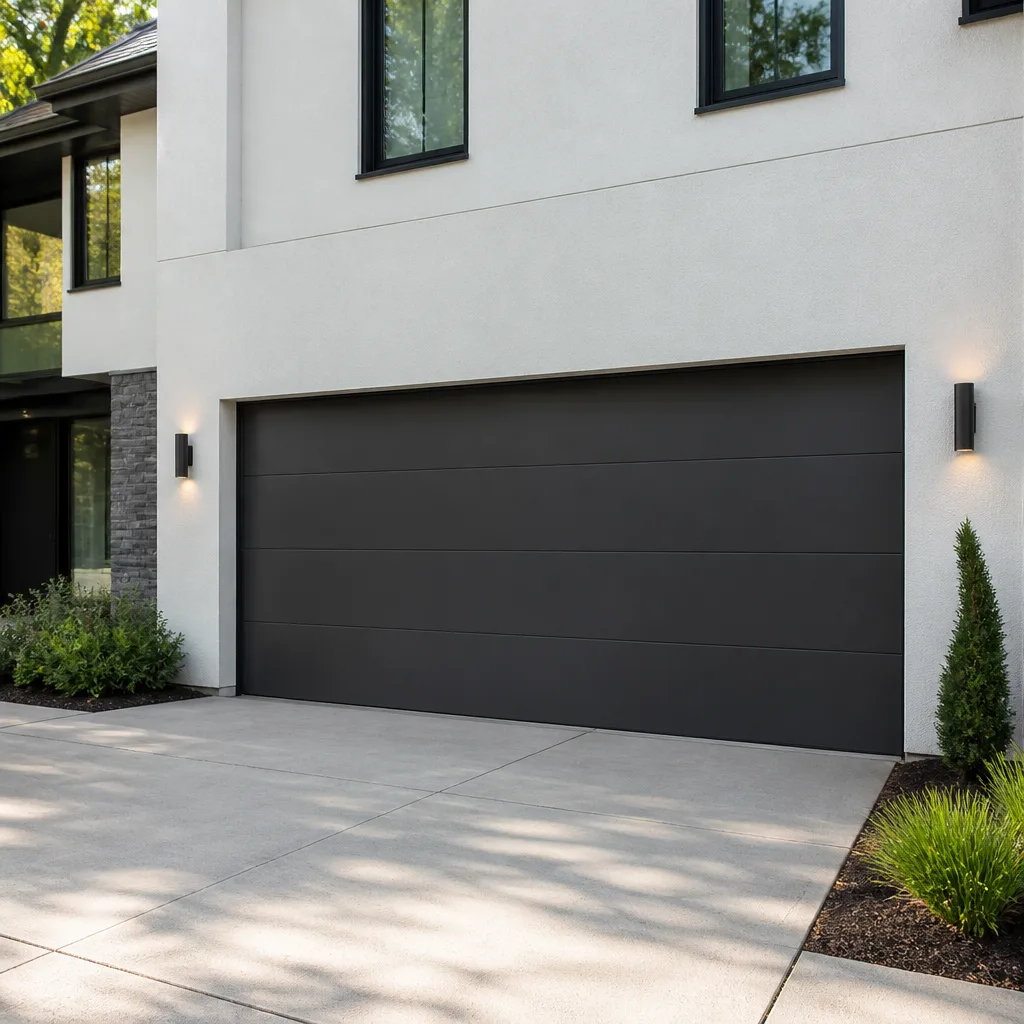 Modern flush
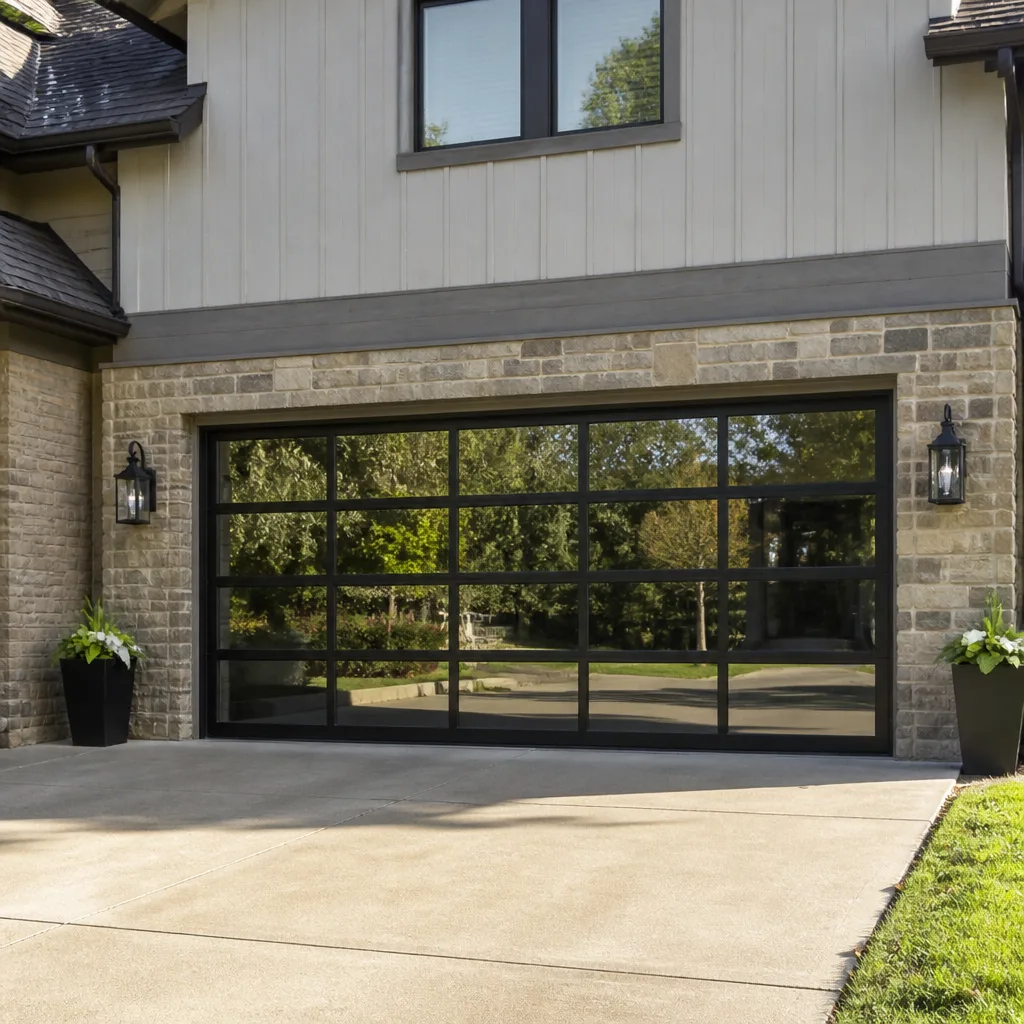 Full-view glass
 LiftMaster openers
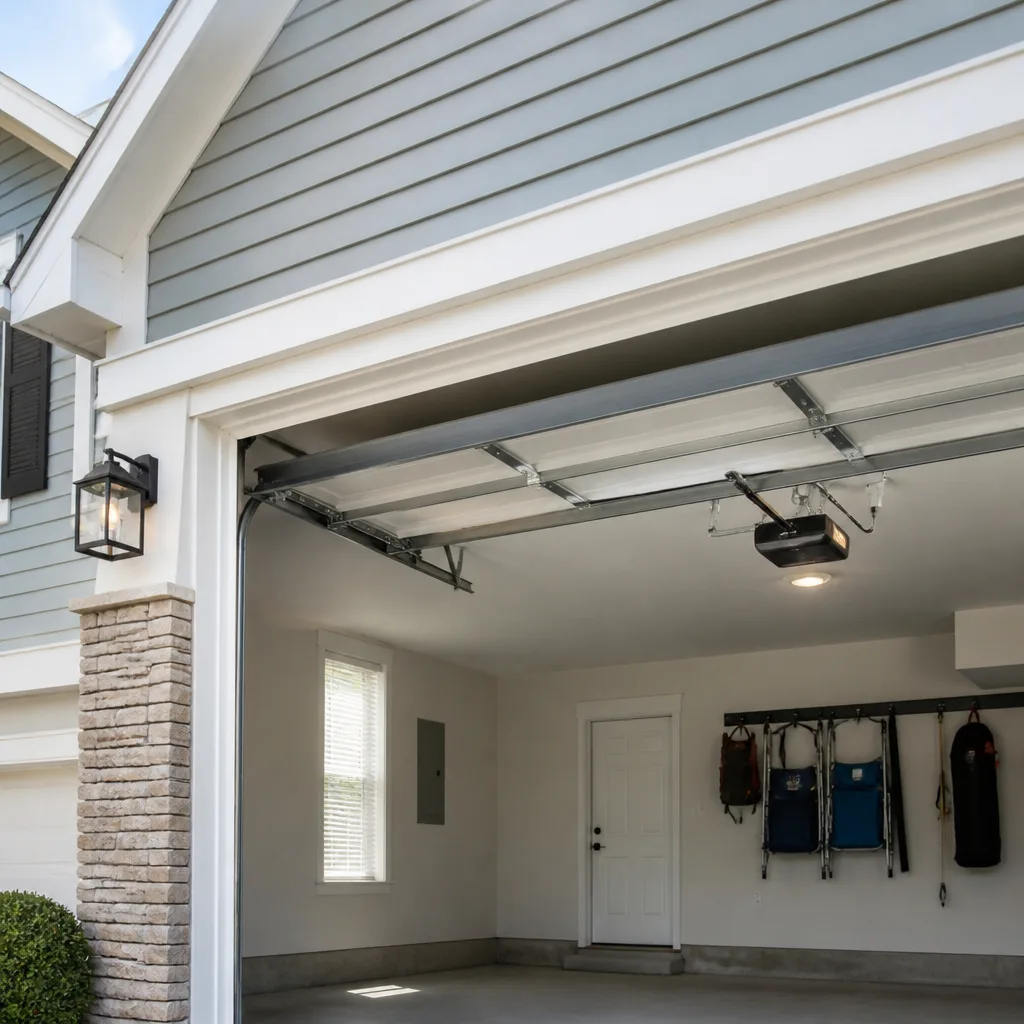 Chamberlain openers
Full 25-point door and opener safety check with every visit - springs, cables, rollers, tracks, and your LiftMaster or Chamberlain opener included
You get a price before we start. It does not change when the pro arrives.
Get your free estimateGarage Door Emergency Preparedness Guide for Weston Homes
Most people think of garage door emergencies as random bad luck. In our experience, they’re not. They fall into two categories with opposite preparation needs, and the homeowners who handle them calmly are the ones who made decisions in advance. The first category is mechanical: a torsion spring lets go at 10 PM before a work morning, and your car is trapped inside. That’s a parts-and-reachability problem, solved by knowing your opener, your door brand, and how to disengage the trolley safely. The second category is storm-driven, and it’s the opposite. When a Weston storm rolls through, the decisions you’ll wish you’d made are the ones you can’t make while the wind is picking up. This guide covers both: the three things to know before a spring fails, a hurricane-season checklist that goes beyond boarding up, and how to judge whether a storm-damaged door is safe to touch while you wait for a technician.
Quick Answer
Garage door emergency preparedness in Weston comes down to two tracks: mechanical readiness (know your opener model, door brand, spring size, and how to disengage the door manually) and storm readiness (test your battery backup every May, know how to secure the door from inside if you evacuate, and inspect before you operate after a storm). Do both before an emergency happens. Preparation is what separates a 45-minute fix from an 8-hour wait for a door that won’t move.
Styles & brands we work with
- Raised-panel steel
- Carriage house
- Modern flush
- Full-view glass
- LiftMaster openers
- Chamberlain openers
Table of Contents
- Why Mechanical and Storm Emergencies Need Opposite Preparation
- How to Move a Door Manually When the Opener Fails
- What to Document Before an Emergency
- The Pre-Storm Checklist for Weston Homes
- Testing Your Battery Backup Opener Every May
- Is the Door Safe to Operate After a Storm?
- When to Call and What to Expect
Why Mechanical and Storm Emergencies Need Opposite Preparation
Here’s the counterintuitive part. Mechanical failures and storm failures both leave you with a door that won’t close, but they reward different instincts. Mechanical failures happen on ordinary nights, with no warning, and are solved by information you carry in your head and a document in your phone. Storm failures usually arrive with a day or two of warning, so the preparation is physical and sits in the garage: a battery backup you’ve actually tested, a way to lock the door manually, and a clear head about what you’ll do before the wind arrives.
In Weston, this split matters more than people realize. Our storm season doesn’t announce itself gently, and the homes here sit on streets where a failed door after a power outage is a real security problem, not just an inconvenience. Broward County has specific garage door requirements for wind-borne debris protection, and a door that meets code is a door that was installed or retrofitted correctly. That’s one reason brand knowledge matters for any repair: knowing whether your door is a Clopay, Amarr, Wayne Dalton, or Craftsman model tells us immediately whether it’s a wind-rated product and what parts it needs.
The practical takeaway is that you should treat both tracks as separate checklists. Mechanical prep is a five-minute job you do once and revisit whenever you change openers or doors. Storm prep is a season-by-season ritual that starts before the first named storm and runs through the end of the season. Neither is difficult. Both are useless if you start them at 10 PM with the car trapped inside.
How to Move a Door Manually When the Opener Fails
When an opener fails, the first instinct is to yank the door open by hand. Don’t. A door attached to a broken spring can weigh what feels like several hundred pounds, and the disconnect between what you expect and what you feel is exactly how people get hurt. The safe sequence is specific, and the hand positions matter more than most folks realize. Here’s the order:
- Unplug the opener. Before you touch anything, pull the cord from the outlet. You don’t want the motor engaging while your hands are near the rail.
- Find the manual release cord. It hangs from the trolley, the carriage that slides along the rail. On most openers, it’s a rope with a red or neutral handle.
- Grip the door with your dominant hand and the release with the other. Stand to one side, not underneath. Keep your body clear of the door’s travel path.
- Pull the release down and slightly toward the door. You’ll hear or feel a click as the trolley disconnects. Do not pull the cord on an angle toward the wall or away from the door.
- Lift with your legs, not your back. Raise the door slowly and feel the weight. If it’s heavier than you can control with one hand, stop and lower it. That tells you the spring system is compromised and you should not open it manually again.
- Once open, prop it or leave it down. A door with a broken spring will not stay up on its own. Don’t walk away from an overhead door that’s holding position on a compromised spring.
The weight warning is the part we repeat most: a garage door with a broken spring is not a door you can muscle through. The springs carry the load. Without them, you’re lifting a door that was never designed to be lifted unsupported. For a door that’s stuck in the open position, a temporary prop and a call to us is the safer sequence than hours of trying to get it to close. If you’re checking this on a normal day, it’s also worth reviewing the difference between torsion and extension systems on our garage door spring repair page, so you know which type you have before any surprise.
What to Document Before an Emergency
Here’s a simple rule we repeat to every Weston homeowner: take five photos and type four lines of text, and you’ll save everyone an hour during a stress-filled repair. The reason is straightforward. When we know your opener model, door brand, spring size, and cable drum configuration, our technicians source the correct parts the first time instead of returning with a universal fit that doesn’t quite match. That’s why we work with the eight major brands: LiftMaster, Chamberlain, Genie, Clopay, Amarr, Wayne Dalton, Craftsman, and Raynor.
Take these four photos and store them in a note on your phone:
- The opener unit label. Look for the manufacturer’s sticker on the motor head. LiftMaster and Chamberlain units model-label in similar spots. Genie and Craftsman models are usually readable on the side. The model number is longer than the serial number and often longer than people expect.
- The spring, with the painted or stamped size visible. Torsion springs carry a size marked directly on the coil (for example, a stamped identifier with diameter and length). That single detail lets us bring the right spring the first time instead of measuring on arrival.
- The cable drums on each side. A photo shows whether you have standard drums or a low-headroom alternative. Extension-spring doors use cables and pulleys rather than drums, so a photo tells us immediately which system you have.
- The full door from outside and inside. Clopay, Amarr, Wayne Dalton, and Raynor panels often look similar from a distance but mount differently. The inside photo tells us the hinge and roller configuration.
Type four lines in the same note: the opener brand and model, the door brand if visible on the panel, your spring size from the stamped marking, and the year the door was installed if you know it. Keep the note where you can find it fast. During an emergency, you’ll be showing your phone to a technician who can read all four at a glance.
The Pre-Storm Checklist for Weston Homes
Boarding up is only part of the job. The garage door is the largest moving opening on most Weston homes, and it’s the one thing that can fail from the inside when the power goes out. The checklist below covers the things most homeowners miss. None of it takes more than an afternoon, and all of it should be done before a storm is named.
- Test the battery backup. Don’t just check that it’s installed. Trip the breaker that feeds the opener, then press the wall button. The door should run at full speed on battery. A successful test now prevents a failure later.
- Confirm your manual release works. Pull the trolley release with the door closed and the opener unplugged. Reengage it by hand. If the release sticks or the trolley won’t reconnect, that’s a repair to schedule before storm season, not during it.
- Check the door’s wind rating and labeling. Broward County garage door requirements for wind-borne debris are specific, and a compliant door usually carries a label from the manufacturer confirming the rating. If you can’t find a rating label, that’s worth asking about before a storm, not after one.
- Photograph the inside of the door. A clear photo of the spring, drums, hinges, and bottom brackets is your reference during a claim, if you have one, and your reference when you call for service afterward.
- Clear the door’s track path inside and out. Debris in the track during a storm can jam a door that’s trying to close, and a jammed door during wind pressure is a harder problem than a clear one.
- Plan the interior brace if you’re evacuating. If you’re leaving, and the door has no power backup, close it and engage any interior locking hardware the door is equipped with. If you don’t know what interior hardware your door has, that’s worth photographing and asking about.
One more thing: don’t test anything on the day of the storm. If the door is already misbehaving, call while the forecast is calm. When winds pick up, dispatching a technician isn’t safe for anyone. In our experience, the calls that go best are the ones made the week before, not the morning of.
Testing Your Battery Backup Opener Every May
Install is not the same as ready. A battery backup opener that’s never been tested is a battery in a housing, and batteries die quietly. That’s why we recommend testing yours every May, before the first named storm of the season. The test is simple: trip the breaker, press the opener button, and watch whether the door runs normally. A healthy backup runs at a slightly slower speed with a muted motor sound. A weak battery runs slowly and briefly before the door stalls, or it doesn’t move at all. A dead battery produces silence, usually with the opener’s LED status light flashing once or twice.
The confusing part is that a failed backup and a dead battery can sound similar. Here’s how to tell them apart:
- Dead battery: the opener stays silent, the wall button doesn’t respond, and the light on the opener is the only sign of life. Replace the battery, then retest by tripping the breaker.
- Failed backup circuit: the opener runs on main power but stumbles or reverses when the breaker is off. That’s a control board issue, not a battery issue, and it needs service.
- Failed transformer or wiring: the door works on main power, doesn’t run on backup, and the battery tests as charged with a meter. In that case, the fault is upstream and shouldn’t be chased further without a technician.
We see LiftMaster, Chamberlain, Genie, and Craftsman backups most often. Each has its own battery type and its own replace-and-reset routine, and getting the model right matters. This is one reason we ask for the model number on every call. A battery that fits a Chamberlain may not fit a Genie, and a wrong-fit battery reads as a dead battery every time.
Is the Door Safe to Operate After a Storm?
After a storm, the safest assumption is that the door needs checking before it opens. Two checks come first, and one signal means don’t touch it at all.
Check one: look at the tracks from both sides. They should be straight, plumb, and continuous. Even a small dent is enough to make a roller jump and a panel bind. Check two: look at the cable along each side. The cable should sit neatly on its drum or pulley. If either cable is off its track, sagging, or visibly frayed, close the door and leave it alone. A loose high-tension cable is a serious injury hazard. Do not try to guide a cable back onto a drum. Do not try to rewind one. That’s a trained technician’s job, and it’s a job we take on because many generalists won’t.
The one thing that means don’t touch it: a visibly bowed panel or a spring that’s hanging loose. A bowed door is one panel away from a structural failure. Close it if it’s already nearly closed, don’t force it, and wait for a technician. If the door is already up, prop it with something solid and keep the garage clear. Then call.
If you suspect storm damage and want to know what a repair involves before you call, our garage door repair page covers the common failure points in Weston homes. If the opener itself is the problem, the page on garage door opener repair explains the electronics side.
When to Call and What to Expect
Once the pre-checks are done, the remaining question is whether this is a call-now situation or a call-tomorrow one. If your door is stuck in the open position, call now. A door that won’t close is a security problem in every Weston neighborhood, and it’s one we can usually address the same day. If the door is closed and stable, the question is mechanical: if you pressed the button and heard a snap followed by a heavy drop, the spring has failed, and that’s a repair that should be scheduled the same day. A broken spring rarely gets better with sitting, and a door operated with one can damage the panels and opener.
When you call, we’ll ask for the four pieces of information from the checklist above. With the model and the spring size in hand, our technicians bring the right parts the first time. Our technicians have up to 8 years of experience across the eight major brands, and we work on both sides of the repair: the door side (Clopay, Amarr, Wayne Dalton, Raynor) and the opener side (LiftMaster, Chamberlain, Genie, Craftsman). We also handle full installation when a door is beyond repair. That means one call covers it all, even if the call comes after dark.
Common Mistakes to Avoid
- Pulling the manual release before unplugging the opener. If the motor engages while your hand is near the trolley, you can lose your grip or get a hand caught in the rail. Unplug first, every time.
- Lifting a broken-spring door by hand. A garage door with a failed spring is heavy enough to cause serious injury. If lifting feels like too much, that’s the signal to stop, not to try harder.
- Reinstalling a cable that hopped its drum. Cables are under high tension and have no safe DIY re-seat. Wait for a trained tech. This is one of the reasons we list spring work as a core service rather than passing it to a handyman.
- Assuming the battery backup is fine because it was installed. Test it with the breaker off every May. An untested backup is not a backup.
- Waiting until the storm is named to schedule a repair. In Weston, storm-season scheduling fills up. A door making noise before a storm is a door to fix before the storm, not after.
- Using universal parts on a branded door. A Clopay panel or Amarr hinge expects its own configuration. Brand knowledge saves a second trip and avoids a wobble that shows up weeks later.
- Ignoring the spring size because you’ll “just measure it later.” The size is stamped on the spring. Photograph it while you’re near the door. Later is usually when the door is stuck.
See the difference
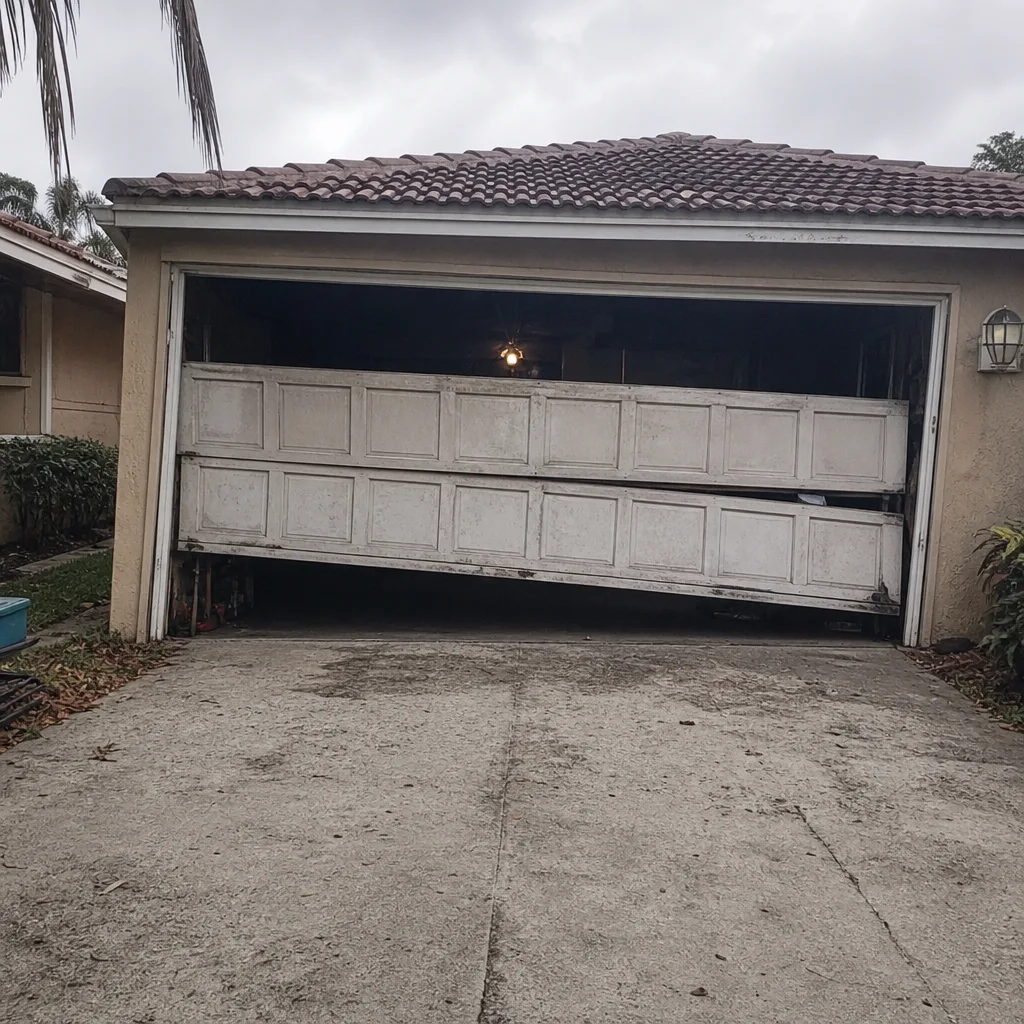 Before
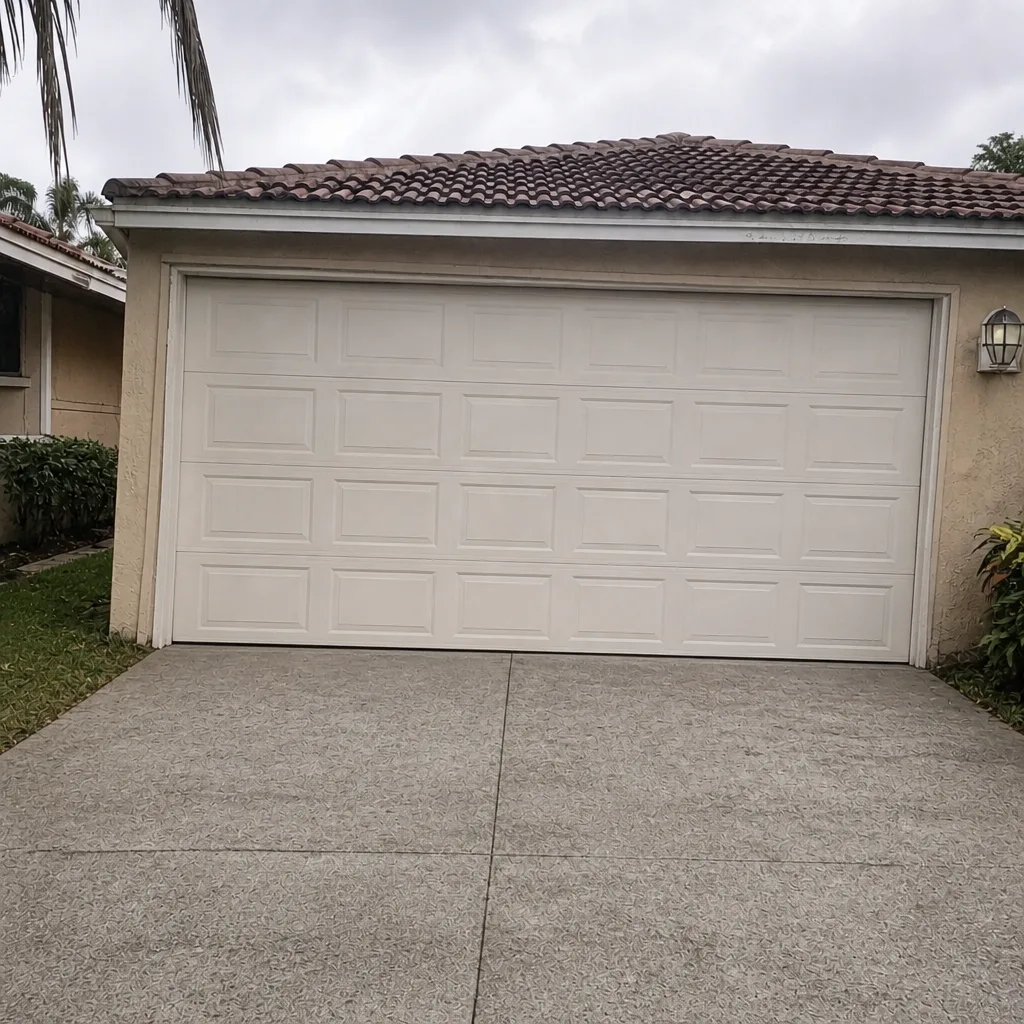 After
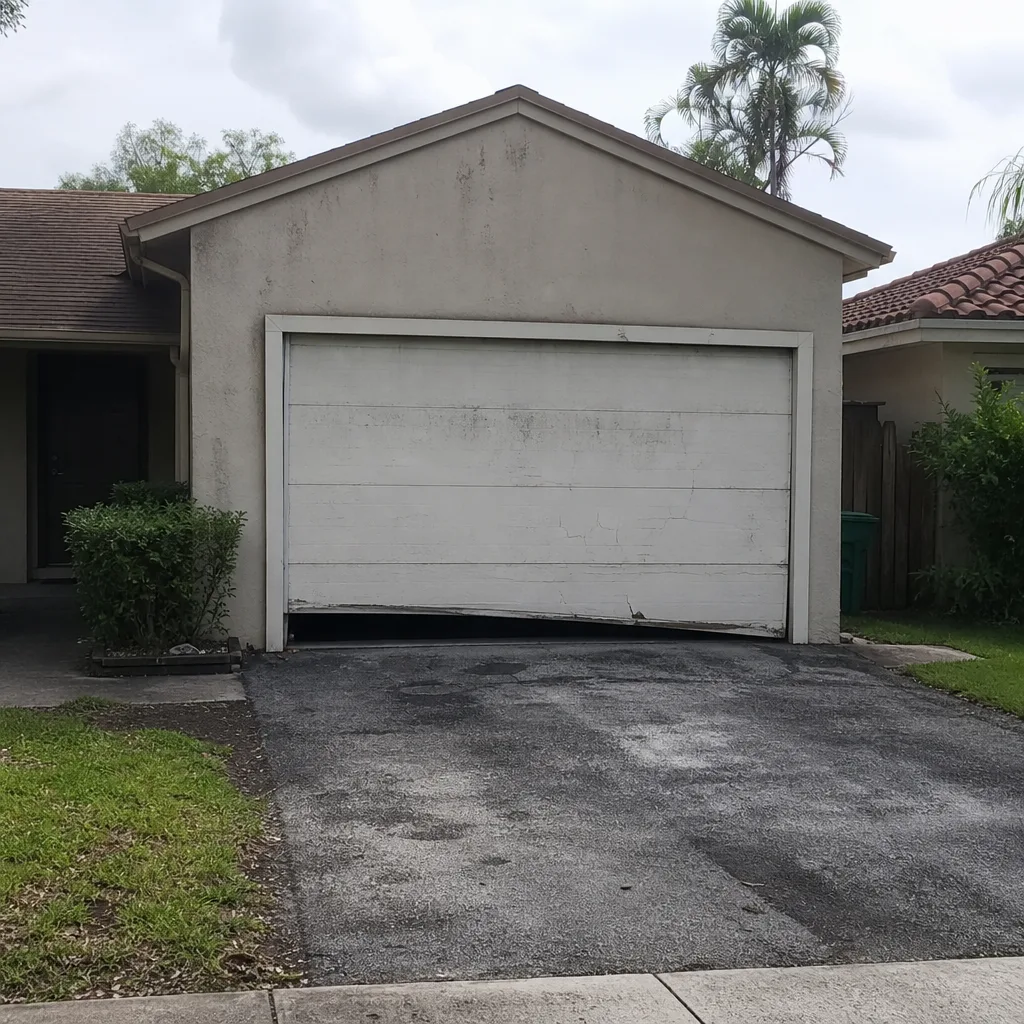 Before
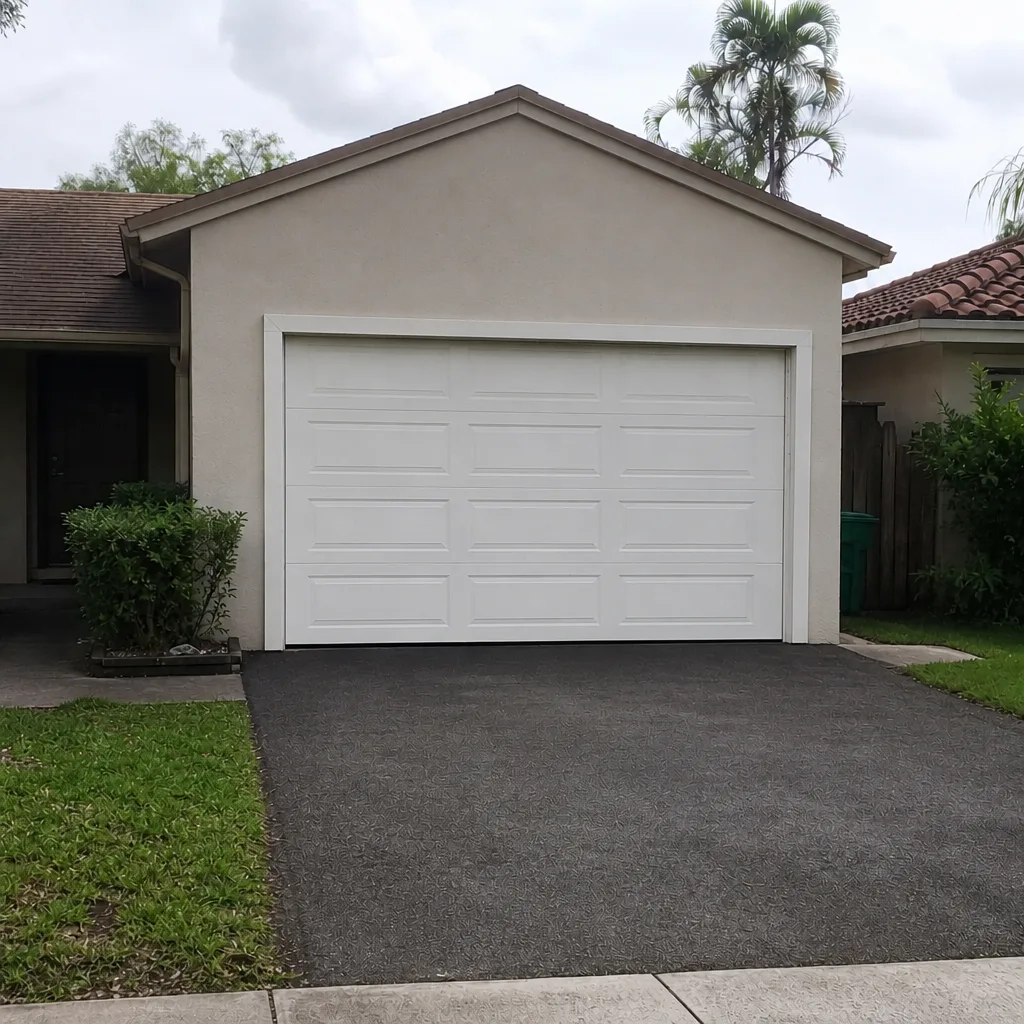 After
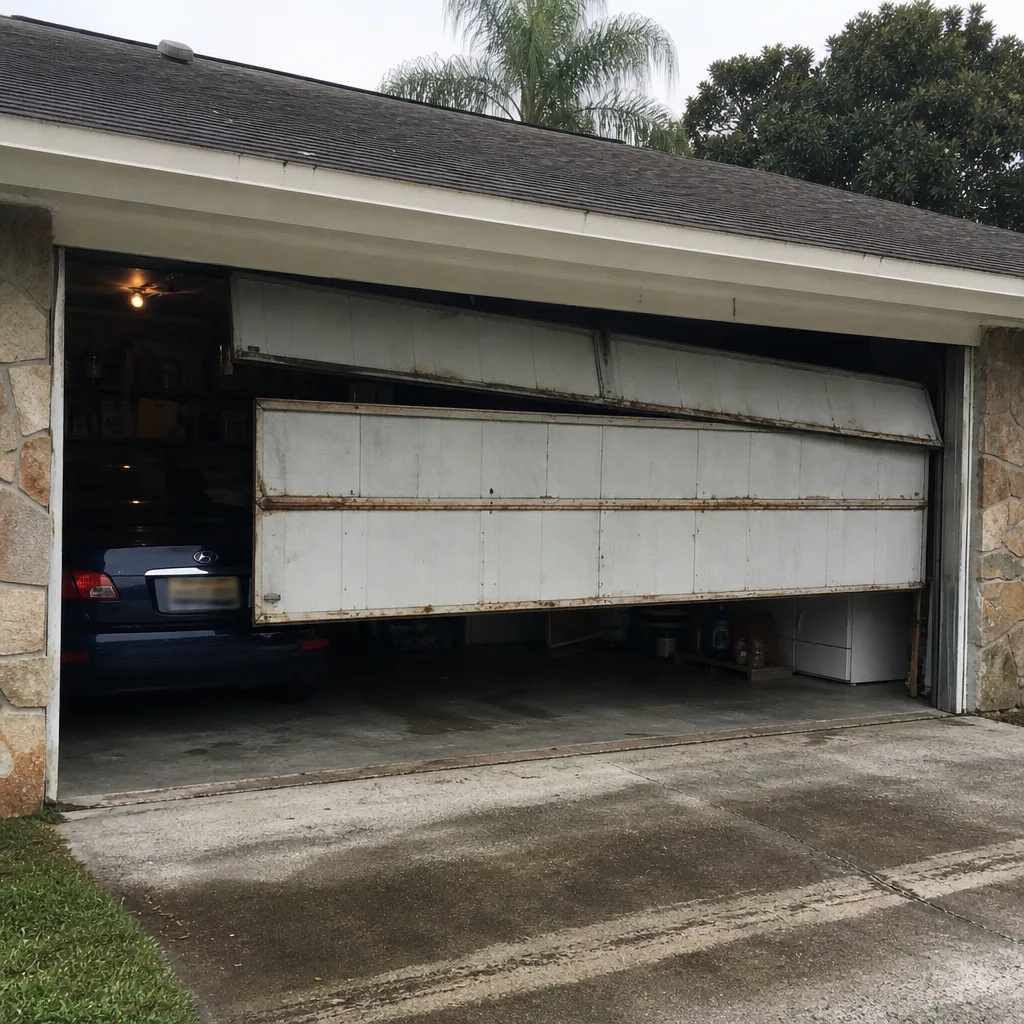 Before
 After
When to Call a Professional
Call a professional for anything involving high-tension springs, cables, or the opener’s control board. Those are the jobs where an injury risk or an electrical fault turns a routine repair into a serious one. Also call if your door is stuck open, if a spring has snapped, if a cable has left its drum, or if the door starts reversing on its own. If you’re not sure whether your storm-damaged door is safe to operate, that’s a call too. Garage Door Repair Weston Pros offers free estimates in Weston, and the estimate comes with a written price before any work starts. Call (844) 930-4137. We answer 24/7. Fast dispatch from 7am to 7pm, Sunday through Friday.
Frequently Asked Questions
Unplug the opener first, then pull the manual release cord on the trolley and lift the door by hand. If the door feels heavy or won’t stay up, a spring is likely broken, and you should not keep forcing it. In that case, call us and we’ll dispatch a technician the same day.
Most spring and opener repairs are done in a single visit, usually within 1-2 hours depending on the door type and parts availability. If your model number and spring size are already in your phone note, the tech can confirm parts before arriving, which keeps the repair to one trip.
The written estimate is the price, and we quote it before any work starts. If we find additional issues during the repair, we stop and give you a revised written estimate before continuing. You’ll never get an invoice that’s larger than what you agreed to.
Yes, a broken spring door should be treated as unsafe to operate. The spring carries the door’s weight, and without it, the panel load is far beyond a person’s control. Keep the garage clear, don’t run the opener, and schedule the repair the same day.
Broward County has wind-borne debris requirements for garage doors, and a compliant door generally carries a manufacturer’s rating label. If you can’t find that label, ask your city’s building department or have a technician check the door’s rating before storm season.
The local pros we connect you with are licensed and insured as their state requires. They’re trained on high-tension spring systems and the opener side, and they’re experienced across LiftMaster, Chamberlain, Genie, Clopay, Amarr, Wayne Dalton, Craftsman, and Raynor equipment.
The Bottom Line
Garage door emergencies in Weston come in two forms, and they ask for opposite preparation. Mechanical failures happen any night, and they’re managed by knowing three things before they happen: how to disengage the door safely, your opener model, and your spring size. Storm failures come with warning, and they’re managed by physical readiness: a tested battery backup, a clear track, a documented door, and a plan for the panel that might bow. Both tracks come down to a single habit: prepare while the door is working. If it stops working, call (844) 930-4137 for a free estimate. We work on your brand, and the price is set in writing before any work begins.
Written by the team at Garage Door Repair Weston Pros.