
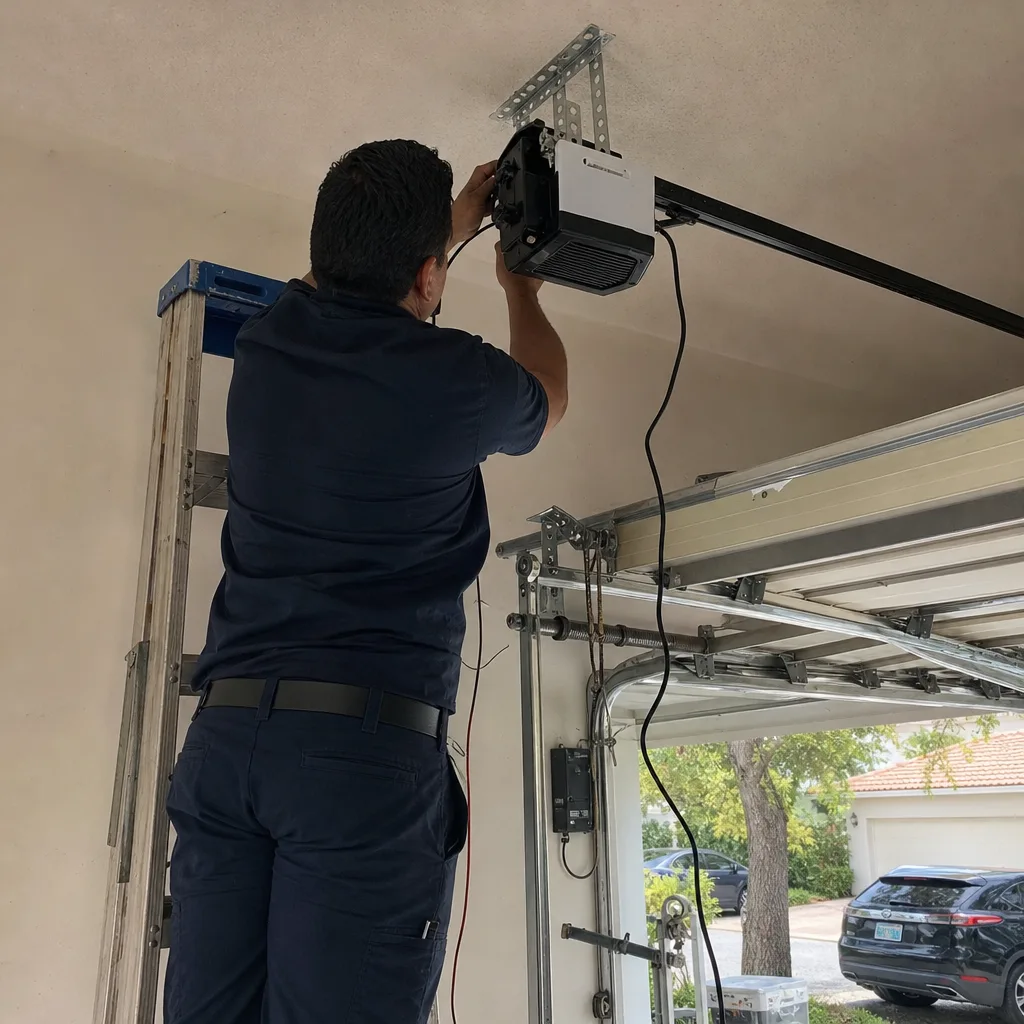
Last updated November 21, 2026
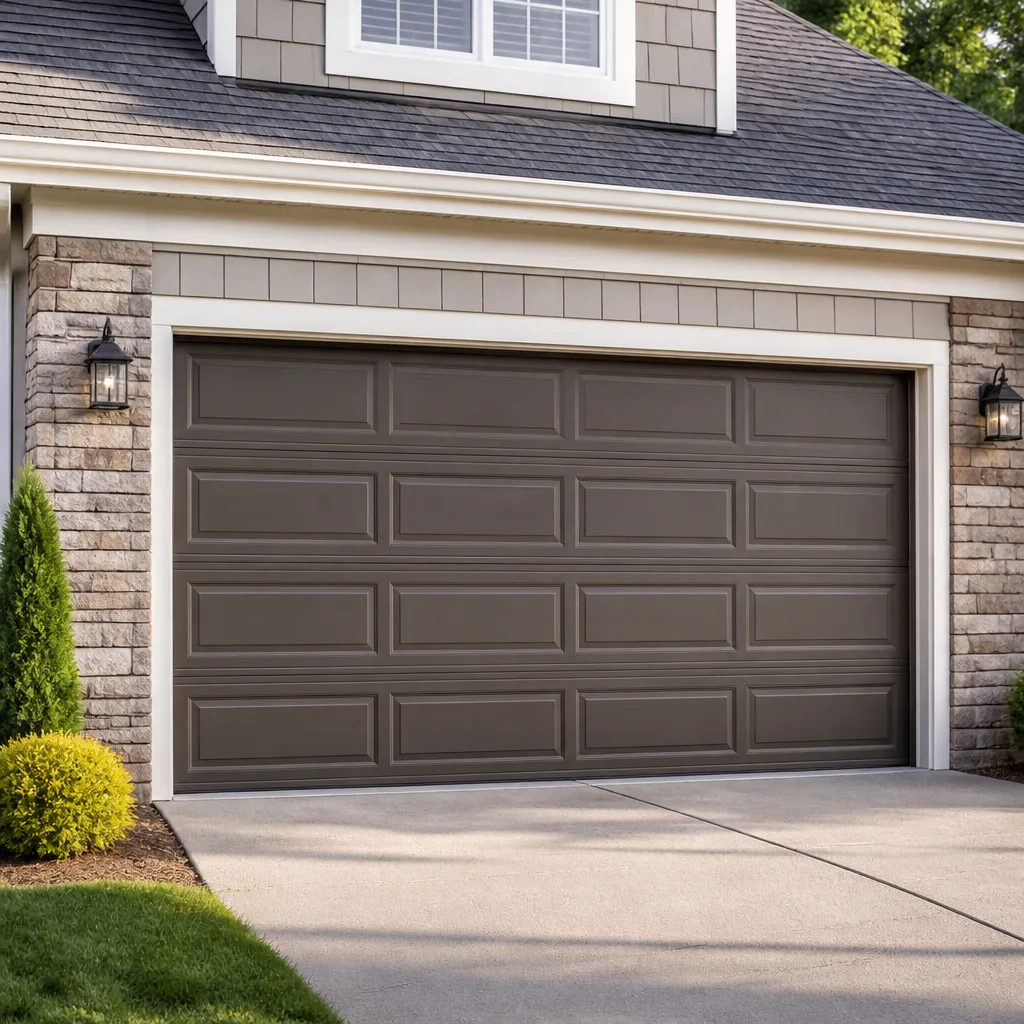 Raised-panel steel
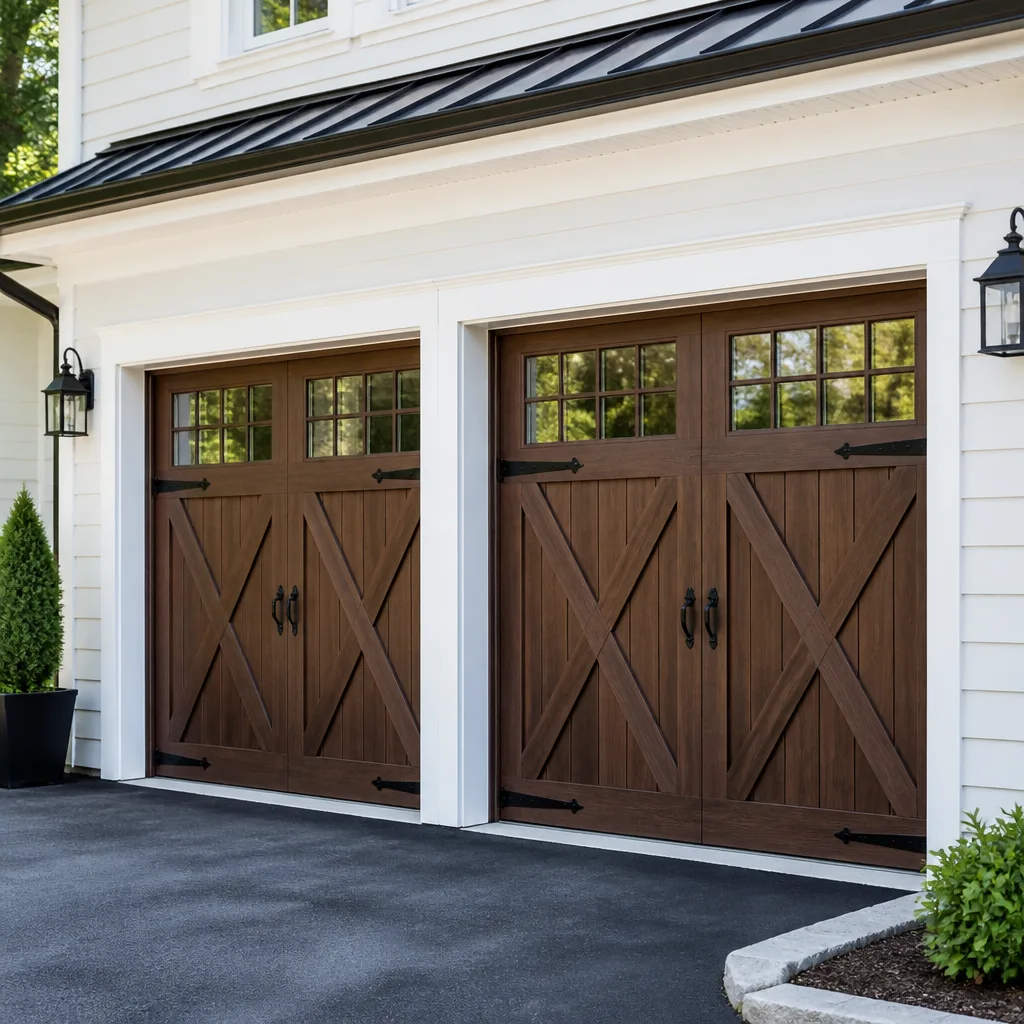 Carriage house
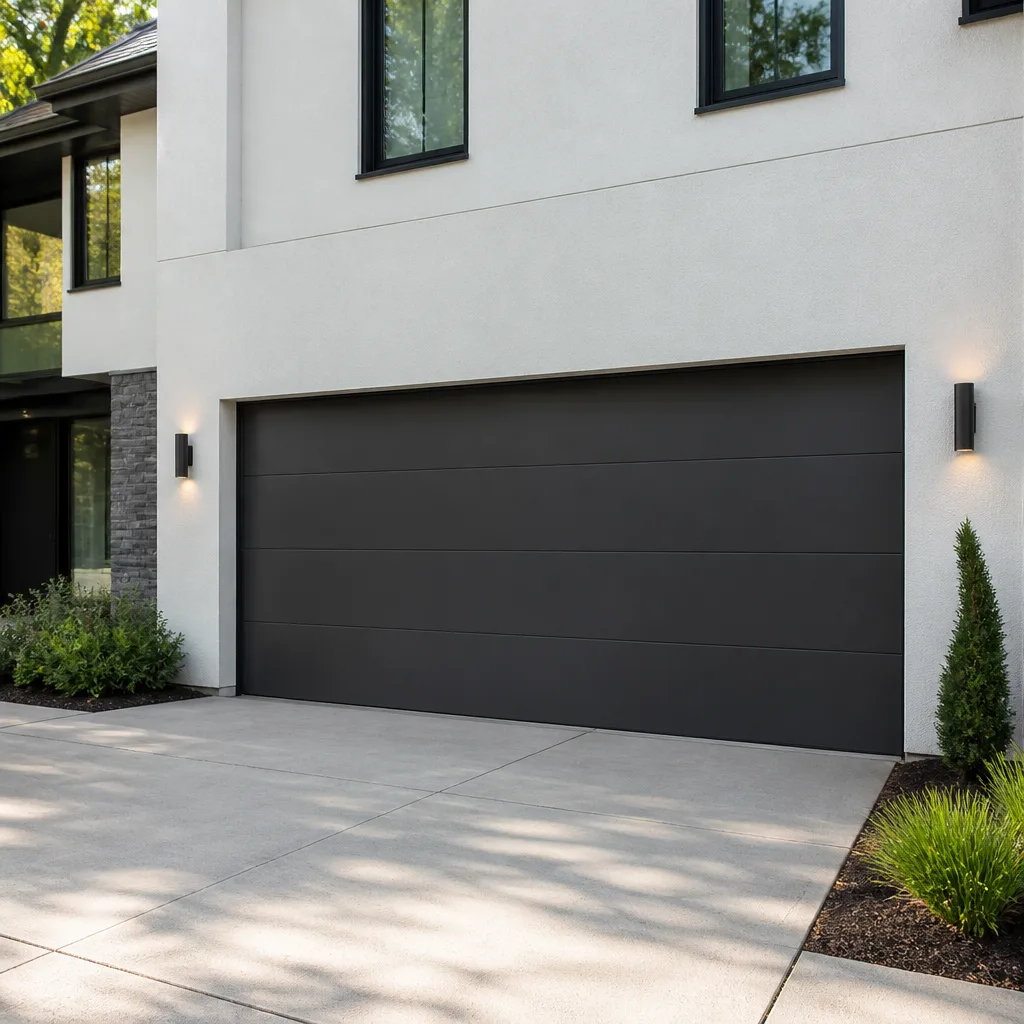 Modern flush
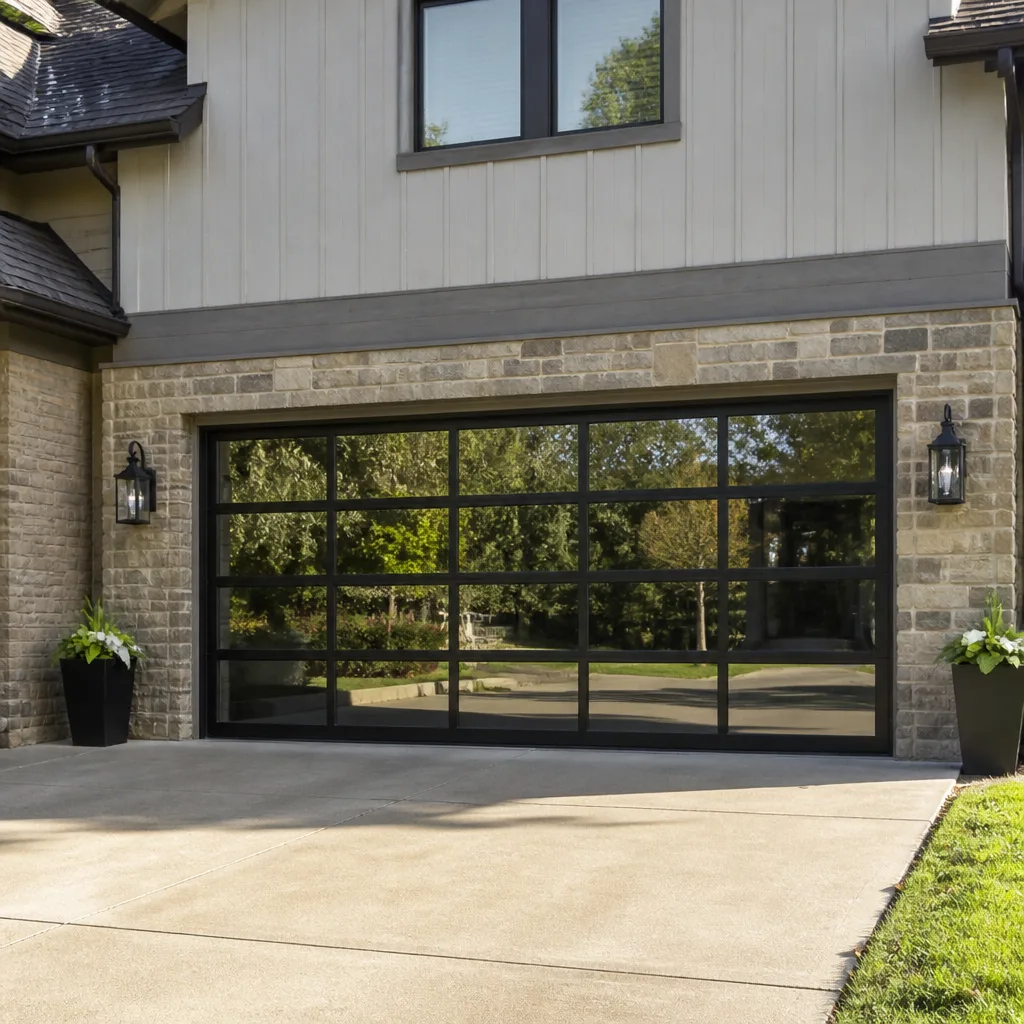 Full-view glass
 LiftMaster openers
 Chamberlain openers
Full 25-point door and opener safety check with every visit - springs, cables, rollers, tracks, and your LiftMaster or Chamberlain opener included
You get a price before we start. It does not change when the pro arrives.
Get your free estimateGarage Door Warning Signs: A Weston Homeowner’s Reference Guide
A garage door doesn’t snap a spring out of nowhere. Weeks before it fails, it starts telling you: a sound that doesn’t match last month’s sound, a wobble you notice in the shadow on the floor, a hesitation when you press the button. Most homeowners hear something off and file it away as “the door being a door.” Then the spring goes, the door jams open, and it’s midnight and the house is open to the street. At Garage Door Repair Weston Pros, we’ve found that the difference between a scheduled repair and a panicked call is usually just knowing which signals mean “this week” and which mean “today.” This guide walks you through what a failing door actually sounds like and does, so you can plan instead of react.
Quick Answer
The main early warning signs of a failing garage door are a creaking or grinding sound that’s new, a door that lifts unevenly (one side faster than the other), a door that stops partway up, an opener that hesitates intermittently, a roller that drags, and a wall button that works while the remote doesn’t. Most of these signal wear or misalignment that a technician can fix before a torsion spring, cable, or opener motor fails completely.
Styles & brands we work with
- Raised-panel steel
- Carriage house
- Modern flush
- Full-view glass
- LiftMaster openers
- Chamberlain openers
Table of Contents
- The Sound of a Healthy Door vs. a Torsion Spring Under Strain
- Why a Door That Opens Unevenly Is a Cable Problem, Not an Opener Problem
- Intermittent Opener Hesitation in Weston’s Summer Humidity
- Reading the Door’s Shadow to Catch a Seizing Roller
- When the Wall Button Works but the Remote Doesn’t
- What Brand-Specific Doors Tell You That Generic Repair Can’t
- Which Signs Mean This Week and Which Mean Today
The Sound of a Healthy Door vs. a Torsion Spring Under Strain
A torsion spring under uneven tension produces a lower, resonant creak or groan that comes on in the first few inches of travel and fades as the door rises. A normal operational creak is higher and consistent throughout the whole cycle. That difference matters: the consistent creak is usually rollers, hinges, or tracks, while the low groan on startup is the spring telling you it’s stretching unevenly. A healthy torsion spring does its work at a steady, silent tension; when it sounds, it’s usually because it’s aged, lost tension, or the drum has drifted off center.
You can test the sound from the ground without touching anything. Here’s a safe routine:
- Stand a few feet back from the door and keep your hands off it.
- Press the wall button and listen only to the first two seconds of travel.
- Listen for a difference between the start of the raise and the middle of it.
- Note whether the noise happens on the way up, the way down, or both.
- Write down what you hear so you can describe it accurately when you call.
What you must not do is climb a ladder to look at the torsion spring, touch the spring, or try to adjust tension with a bar. Torsion springs and their cables store an enormous amount of energy even when a door is down, and they’re the leading cause of serious garage door injuries. Watch and listen from the floor. That’s the whole test, and it’s enough for us to diagnose most spring problems over the phone. If the groan is new on your Weston door, it’s worth booking before it becomes a snapped spring.
Why a Door That Opens Unevenly Is a Cable Problem, Not an Opener Problem
If one side of the door rises faster than the other, the problem is almost never the opener motor. It’s almost always the two lift cables stretching at different rates, or one cable riding off its drum. An unbalanced door forces the opener to work harder than it’s rated for, which is why homeowners often hear a strain in the motor and blame the opener when the cables are actually the culprit. Left alone, an uneven door frays the cable on the lagging side, and a frayed cable is a snap waiting to happen.
Watch for these signs during a cycle:
- One side of the door visibly higher than the other when open.
- The door binding in the tracks on one side.
- A loud pop or banging sound as the opener engages.
- Frayed wire or a loose cable visible on the side of the door.
- A door that moves in a slight twist rather than a straight line.
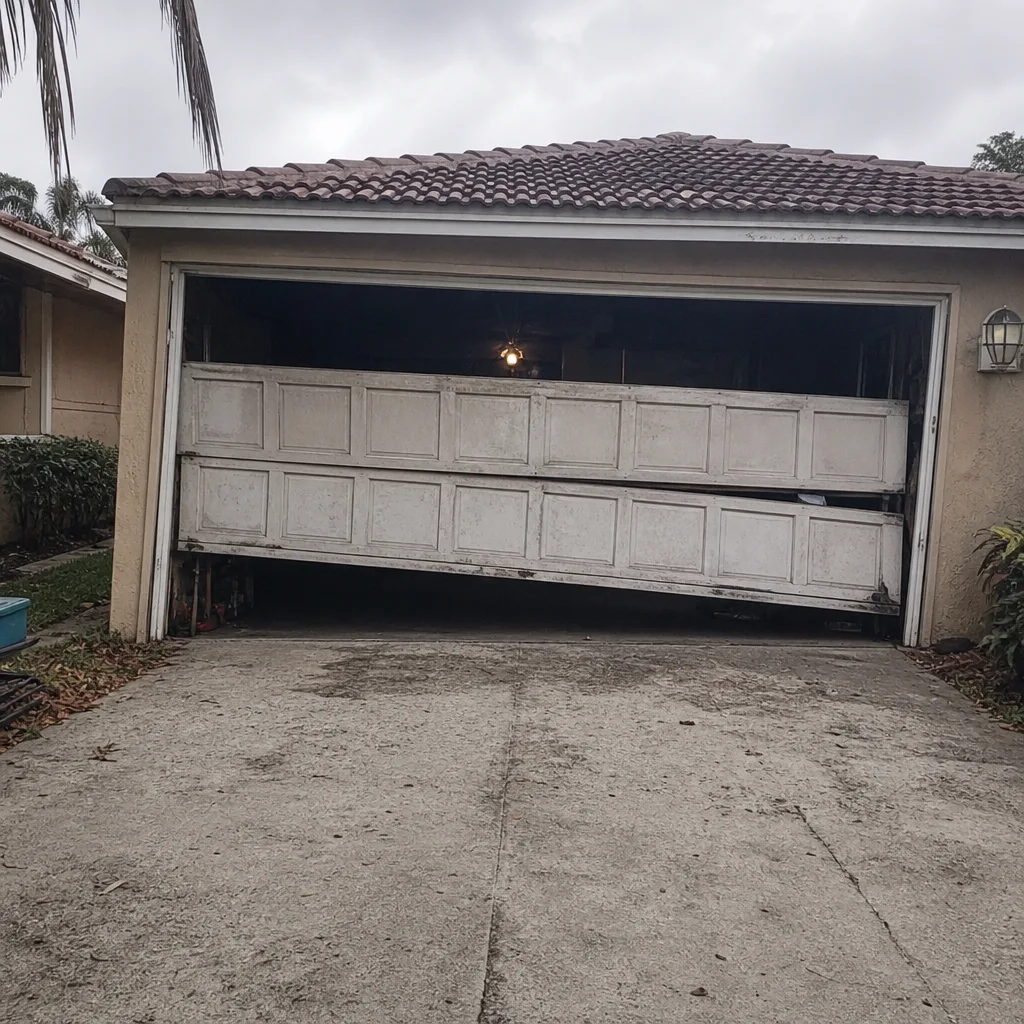
Uneven travel is one of the reasons we tell Weston homeowners to look at the door from across the driveway, not up close. From twenty feet away, the uneven lift is obvious: the door looks like it’s tilting. If you see that tilt, book garage door repair sooner rather than later. A cable that’s just starting to fray can usually be replaced before it fails, but once a cable snaps, the door is jammed and often can’t be closed safely until a technician arrives. Don’t power-cycle the door repeatedly to “see if it settles” – each cycle is another chance for the frayed cable to fail on your car.
Intermittent Opener Hesitation in Weston’s Summer Humidity
When a garage door opener hesitates for a second before it moves, then works fine on the next press, Weston homeowners tend to blame the remote. In summer humidity, the three most likely causes are all inside or on the opener itself: motor thermal cutoff, logic board corrosion, or a fogged safety sensor. Each one feels the same from the driver’s seat, but they mean very different things, and two of them get worse if you ignore them.
Here’s how they usually sort out:
- Motor thermal cutoff. The opener’s motor has overheated and shut itself off to protect the windings. This tends to happen after several back-to-back cycles or on a very hot afternoon, and it resolves when the motor cools. If it’s happening on a normal first press of the day, the motor is working too hard, and the door balance is usually the reason.
- Logic board corrosion. Humid air and small amounts of condensation on the board can cause electrical contact issues that come and go, especially on LiftMaster and Chamberlain units in a hot garage. If you hear the motor click but the door doesn’t move, that’s often the logic board, and it doesn’t fix itself.
- Safety sensor fog. The small photo-eye lenses at the bottom of the tracks can fog or hold a film of moisture, which makes the door stop and reverse. Wipe the lenses with a dry cloth; if the hesitation clears, the sensor was the problem.
The distinction matters for urgency. A fogged sensor is a two-minute check. A motor cutoff is a sign the door is unbalanced and needs adjustment. A failing logic board usually means the opener is on borrowed time and should be looked at before it stops mid-travel. If you’re in Weston and your opener is hesitating on an older Craftsman or Genie unit, call before the hesitation turns into a dead opener with your car trapped inside.
Reading the Door’s Shadow to Catch a Seizing Roller
Rollers are the cheapest part on a garage door and the most overlooked, partly because a seizing roller doesn’t make a dramatic sound. It drags. The trick to spotting it is watching the door’s shadow on the floor of the garage during a full open and close. A roller that’s starting to seize causes the door to jump slightly as it passes that hinge, which shows up in the shadow as a small hitch or flutter that doesn’t look right. If the shadow stutters, one of the rollers on that side is trying to lock up.
Catch the problem early and the fix is a roller and hinge replacement, which is quick and inexpensive. Miss it and the binding roller starts pulling the door off true in the track, which accelerates wear on the cables and the opener. To narrow it down without any tools:
- Turn on the garage light so the shadow is sharp.
- Watch the shadow on the floor while the door travels.
- Note the height where the shadow hitches.
- Look at the hinge closest to that height on each side.
- If you see red rust or flaking paint on a roller, it’s overdue.
Once a roller is seized outright, you’ll hear a squeal or see the door stall at that point in the cycle. At that stage, keep the door closed and call for service – repeated cycles will strip the hinge and damage the track. When we send a technician out, the first thing they’ll do is inspect the roller and hinge set on the binding side and confirm whether the tracks have been pushed out of alignment. That’s the kind of routine job that fits well into a free estimate visit. The same shadow trick works on Amarr and Wayne Dalton doors, since the geometry of the rollers and hinges is similar across most residential models.
When the Wall Button Works but the Remote Doesn’t
If the wall button opens the door but the remote doesn’t, the problem is almost never the opener motor; it’s the signal or the wiring. The wall button is hard-wired, so it will work even when the radio receiver or antenna can’t pick up a remote signal. The pattern you’re seeing – button works, remote fails – is one of the clearest early warning signs that something specific to the remote side is failing, and it splits into two different problems with two different urgency levels.
Wiring issue. If the wall button also fails sometimes, or if the opener responds only when you hold the button down, the wiring between the button and the opener may be loose, pinched, or damaged. That’s a lower-urgency issue but worth fixing because a loose button wire can eventually short the logic board.
Antenna issue. If the button is reliable and only the remote is failing, the opener’s antenna wire may be bent, cut, or pinned against metal inside the housing. On LiftMaster and Chamberlain units, the antenna is often a short wire hanging from the motor head, and it can get folded out of position during installation or repair work. If the remote works when you’re right at the door but not from the driveway, that’s classic antenna.
The urgency test is simple: press the wall button five times in a row. If it’s reliable every time, the door is safe and the remote is a signal problem. If the button hesitates even once, treat it as a wiring issue and book garage door opener repair. The one thing not to do is keep pressing the remote from the driveway hoping it’ll catch – an inconsistent remote means an inconsistent signal, and that’s not a door you want to be standing under while it’s mid-cycle.
What Brand-Specific Doors Tell You That Generic Repair Can’t
Brand matters when you’re reading warning signs, because the same symptom points to a different part depending on which opener or door you have. A hesitation on a Raynor opener tends to trace to the safety sensor circuit before anything else, while a hesitation on an older Craftsman often points at the logic board or the travel limits. On the door side, a binding door on an Amarr or Wayne Dalton panel section often means a specific hinge or roller type has worn out, and a generic replacement can reintroduce the same problem within a season because the geometry doesn’t match.
Our technicians are factory-familiar with the eight major brands that show up on Weston driveways most often: LiftMaster, Chamberlain, Genie, Clopay, Amarr, Wayne Dalton, Craftsman, and Raynor. That familiarity pays off in two places:
- Faster diagnosis. We know the failure patterns that are common to each brand’s torsion spring systems, motor drive types, and logic boards.
- Correct parts the first time. Brand-specific rollers, hinges, and springs are pulled to match, not universal components that fit roughly and wear out early.
The practical result is fewer repeat visits and fewer “it’s doing the same thing again” calls. If your door is an older model that no one seems to service anymore, that’s the exact kind of job we take. A Clopay door with a snapped extension spring is still a standard spring job, and a Genie opener with a failing limit switch is still a standard logic job, as long as the technician knows the brand. That’s the reasoning behind our full-range approach: same call handles the spring, the opener, the panels, and the new-door install, so you’re not trying to find a second company for the next stage.
Which Signs Mean This Week and Which Mean Today
Not every warning sign is an emergency, and treating a squeaky roller like a snapped spring wastes your time and money. The useful question is: does this sign mean the door could fail dangerously, or is it a wear item that’s calling in advance? Here’s how we sort the warning signs in the field.
Schedule this week:
- A low, resonant groan at the start of the raise (spring under strain).
- An uneven lift (cable stretching or riding off the drum).
- A roller drag or hitch in the shadow.
- An opener hesitating on a normal first press of the day.
- A wall button that’s occasionally slow or unreliable.
Call today:
- A frayed or clearly loose cable.
- A door that lifted unevenly and is now stuck partway.
- A loud bang from the door followed by a slack door (broken spring).
- A door that reversed and won’t re-close.
- A door off its track.
The differences matter because the “this week” signs are almost always fixable before the “today” signs happen. A spring that’s groaning today is a snapped spring next month. A cable that’s frayed today is a door that won’t open tonight. And the “today” list is where you stop pressing the button and call. Garage door spring repair is a named service for a reason: high-tension torsion and extension springs are the most dangerous part on the door, and we treat them that way. Never try to lift, prop, or force a door with a suspected broken spring; the door can fall if you release it.
Common Mistakes to Avoid
- Blaming the opener for a door problem. If the door is uneven or binding, the opener is a symptom, not a cause. Replacing it without fixing the door balance is a waste of money.
- Pressing the button repeatedly to “see if it’s better.” Every cycle of a straining door is one more chance for the cable or spring to fail on your car. If it’s groaning or uneven, stop and call.
- Climbing a ladder to look at the torsion spring. Don’t. Torsion springs are under tension even with the door down, and they’re the leading cause of serious garage door injuries. Listen from the floor and leave the ladder in the shed.
- Lubing a spring you suspect is failing. Lube is for rollers, hinges, and tracks. It won’t fix an uneven spring and can disguise the sound you’re using to diagnose it.
- Ignoring humidity hesitation in summer. In Weston’s summer climate, a hesitation is often the only early sign that the logic board or the safety sensor is starting to fail. Treat it as a check, not a quirk.
- Replacing a remote when the antenna is the problem. If the wall button works reliably and the remote doesn’t, buy a new remote only after the antenna is checked.
- Waiting until a door won’t close to book service. A door that opens a bit unevenly on Tuesday is often a door that jams by the weekend. Book the estimate while the door still moves.
See the difference
 Before
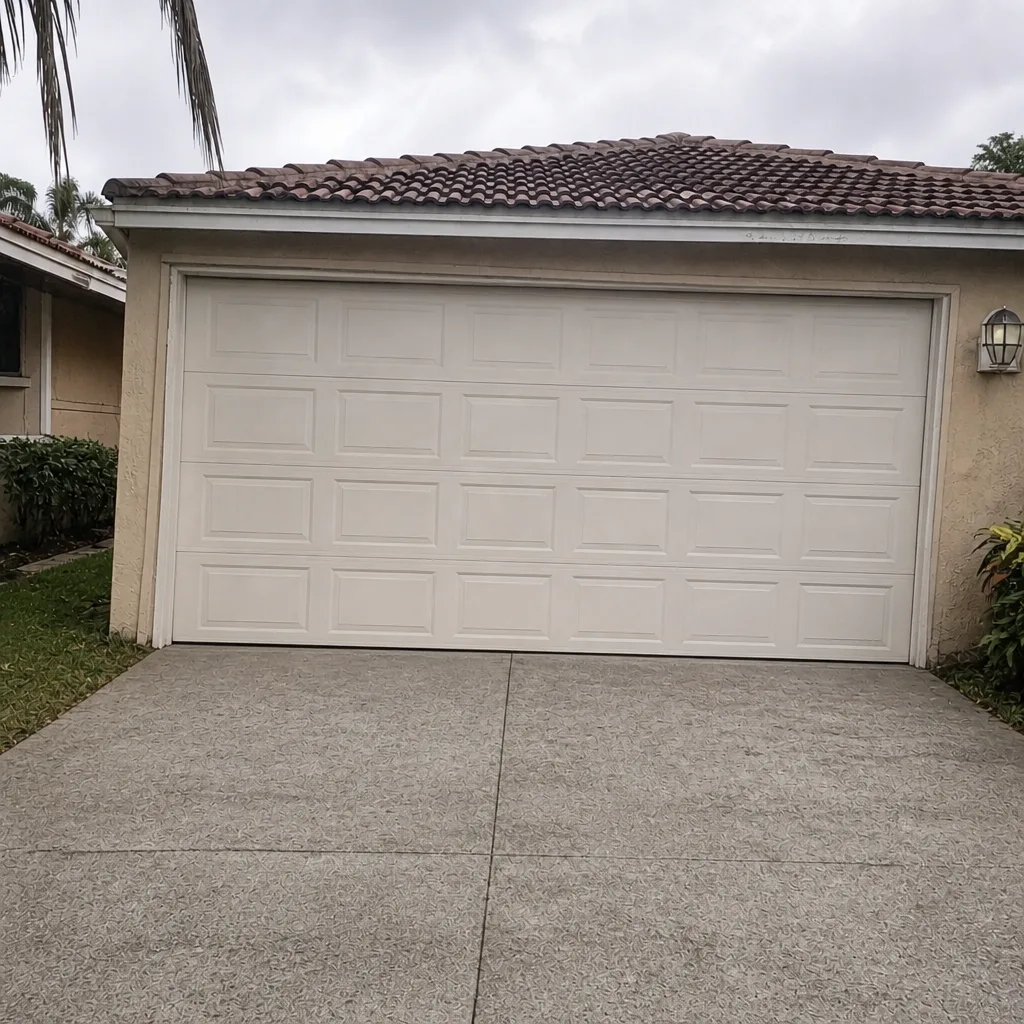 After
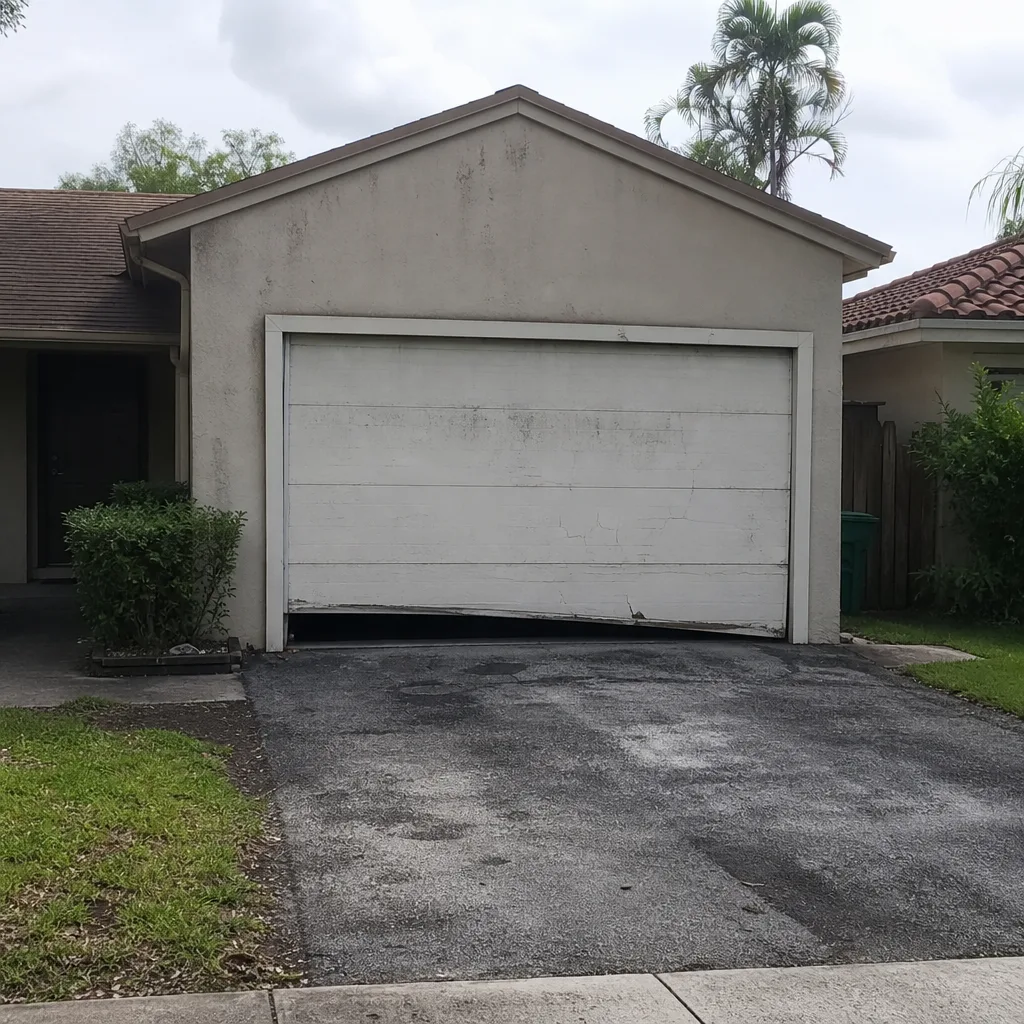 Before
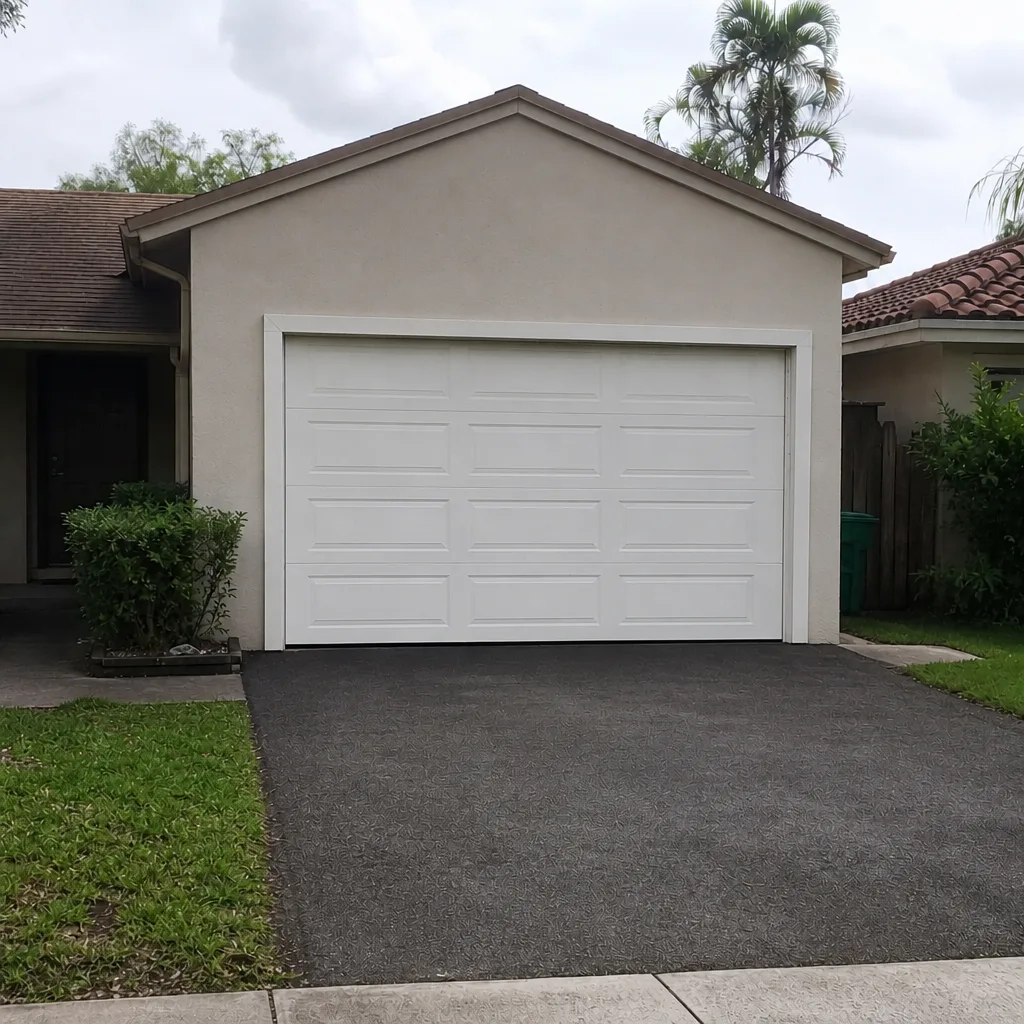 After
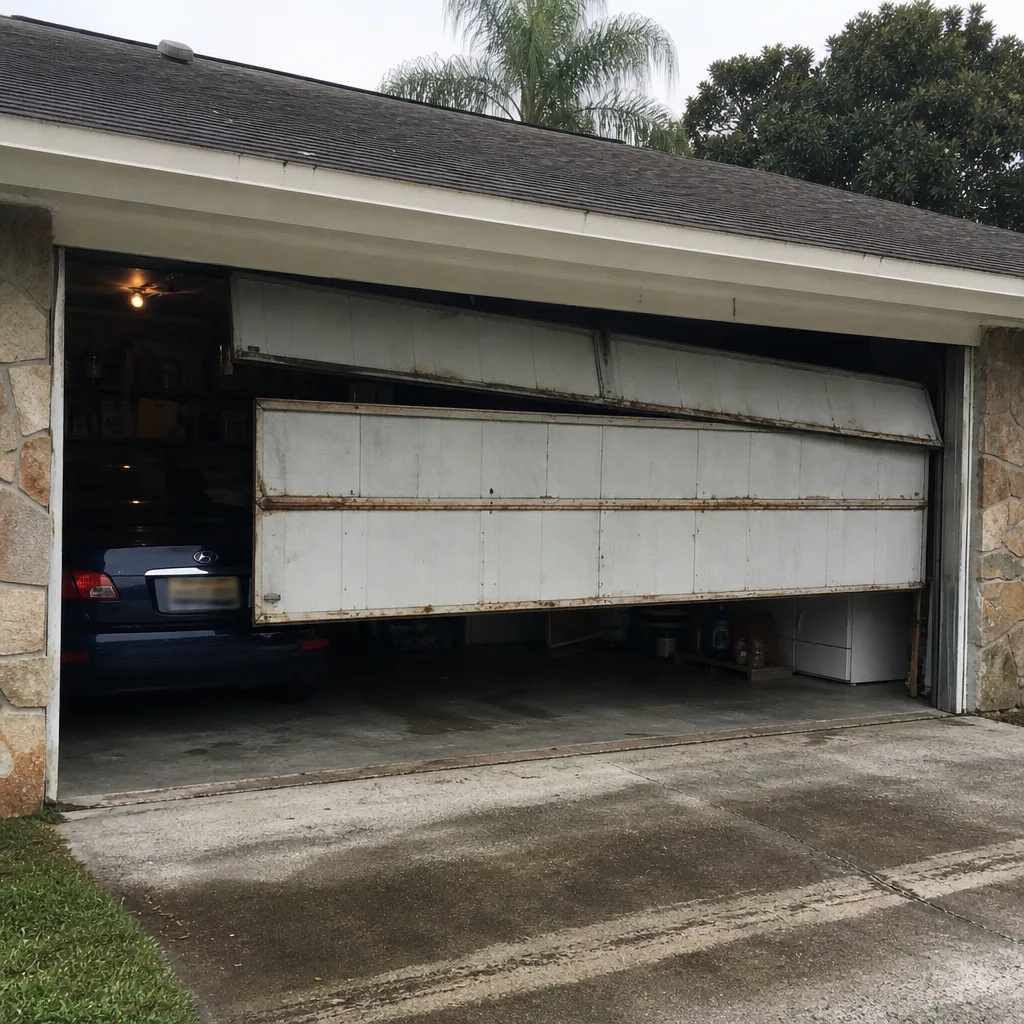 Before
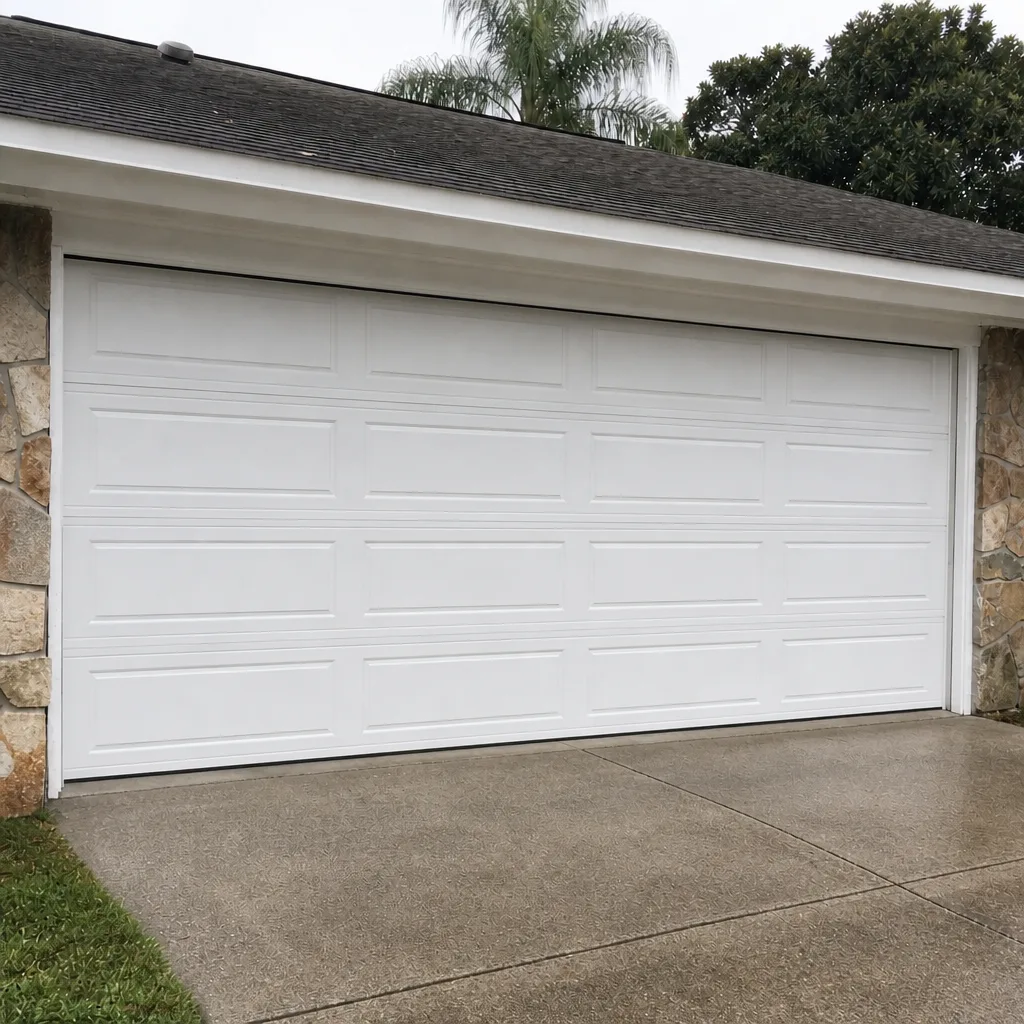 After
When to Call a Professional
Call a professional when you hear a new low groan at the start of a raise, when the door lifts unevenly, when a roller is visibly dragging, when the opener hesitates on a normal first press, when a remote fails while the wall button works, or whenever you see a frayed cable or a spring that’s visibly separated. Any of those signals means the door is no longer operating well enough to keep cycling safely. Also call if you’re not sure: a technician can inspect the torsion system, cables, rollers, tracks, and opener without touching anything dangerous, and diagnose the wear quickly. For a door that’s currently opening and closing, call for the “this week” list and get the ticket in before it becomes a “today.” Garage Door Repair Weston Pros offers free estimates in Weston, and the price is quoted and agreed in writing before any work starts. Call (844) 930-4137. We answer 24/7. Fast dispatch, 7am-7pm, Sunday through Friday.
Frequently Asked Questions
The first warning sign is almost always a change in sound: a low, resonant groan at the start of the raise that wasn’t there before. That sound usually means the torsion spring is under uneven tension and is starting to fail. Call (844) 930-4137 for a free estimate before it turns into a snapped spring.
No, an uneven door is not safe to keep cycling. When one side opens faster than the other, a cable is stretching or riding off its drum, and the door is being pulled off true in the track. That’s the condition that frays the cable and eventually snaps it. Book garage door repair before the cable fails, and call (844) 930-4137. Estimates are free.
Intermittent opener hesitation is usually one of three things: a motor thermal cutoff, a logic board showing corrosion, or a fogged safety sensor. The first is usually a sign the door is unbalanced; the second gets worse if ignored; the third is often a two-minute wipe. Call (844) 930-4137 and describe the hesitation – we can narrow it down before we arrive.
Yes. Older LiftMaster, Chamberlain, Genie, and Craftsman openers are still fully serviceable, and we work on all four brands plus the door-side brands Amarr, Wayne Dalton, Raynor, and Clopay. If you’ve been told your older opener is “not worth fixing,” call us for a second opinion. Free estimates in Weston. Call (844) 930-4137.
A standard residential door install is usually scheduled rather than same-day, since the door has to be measured and ordered first. If you’re replacing a warning-sign door, the measure and the written quote come first, so you know the price before the order goes in. Call (844) 930-4137 for a free measure and estimate.
Don’t force it, and don’t keep pressing the button. Get everyone clear of the door opening and call for emergency service. We answer 24/7, and dispatch runs 7am-7pm, Sunday through Friday. Call (844) 930-4137 and we’ll talk through whether the door can be safely closed or needs a technician on it today. Estimates are free.
The Bottom Line
A garage door is a slow-failing machine. It doesn’t snap a spring without warning; it groans, wobbles, hesitates, and hitches for weeks first. If you learn to listen for the low groan under load, watch the lift for unevenness, read the shadow for a dragging roller, and notice the button-versus-remote split, you can turn a midnight emergency into a scheduled repair. Every one of those signals points at a fixable part – the spring, the cable, the roller, the wiring. Catching them early is the whole game. Our technicians have up to 8 years of experience reading those exact signs, and we tell you what’s actually wrong instead of what’s dramatic. If your Weston door is doing something new, book it in this week.
Call Garage Door Repair Weston Pros at (844) 930-4137 for a free estimate. We answer 24/7. Fast dispatch from 7am to 7pm, Sunday through Friday. For a full view of how we can help, visit Garage Door Repair Weston Pros.
Written by the team at Garage Door Repair Weston Pros.