
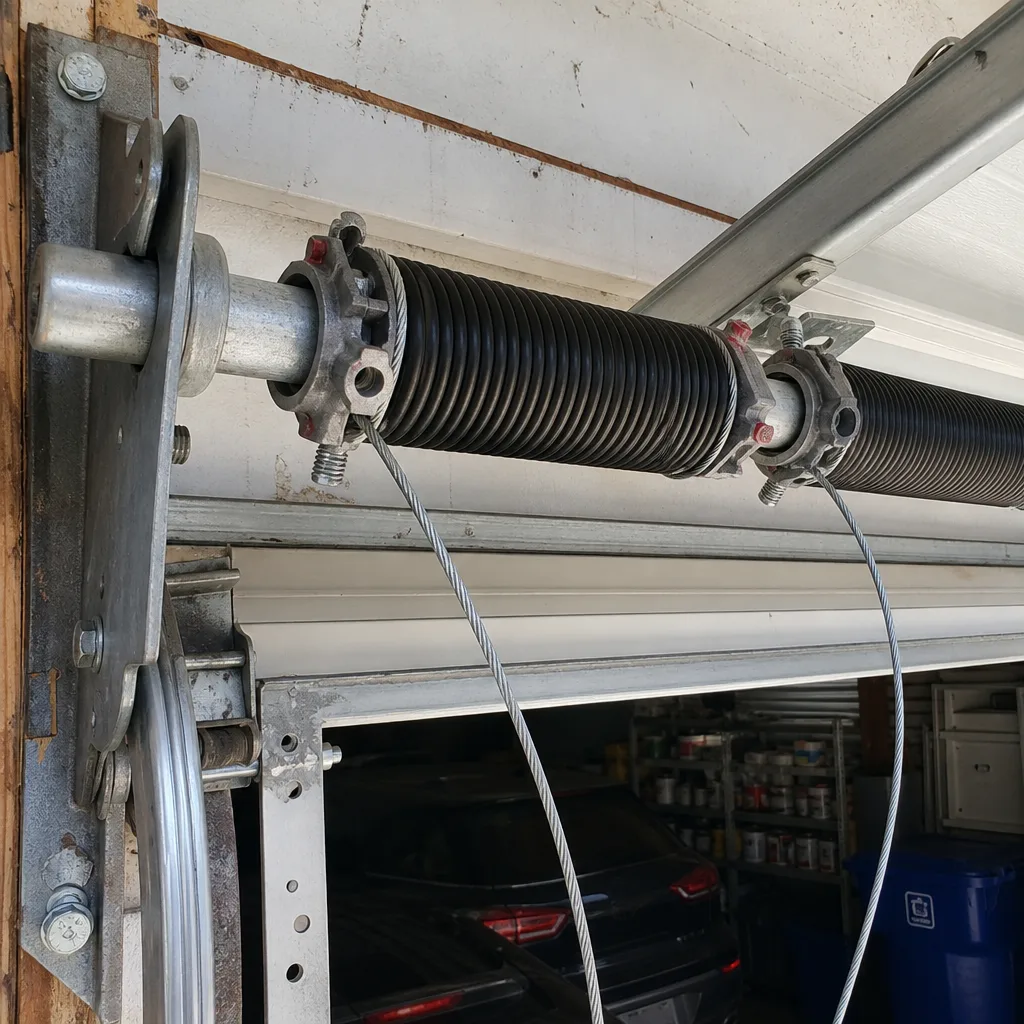
Last updated November 21, 2026
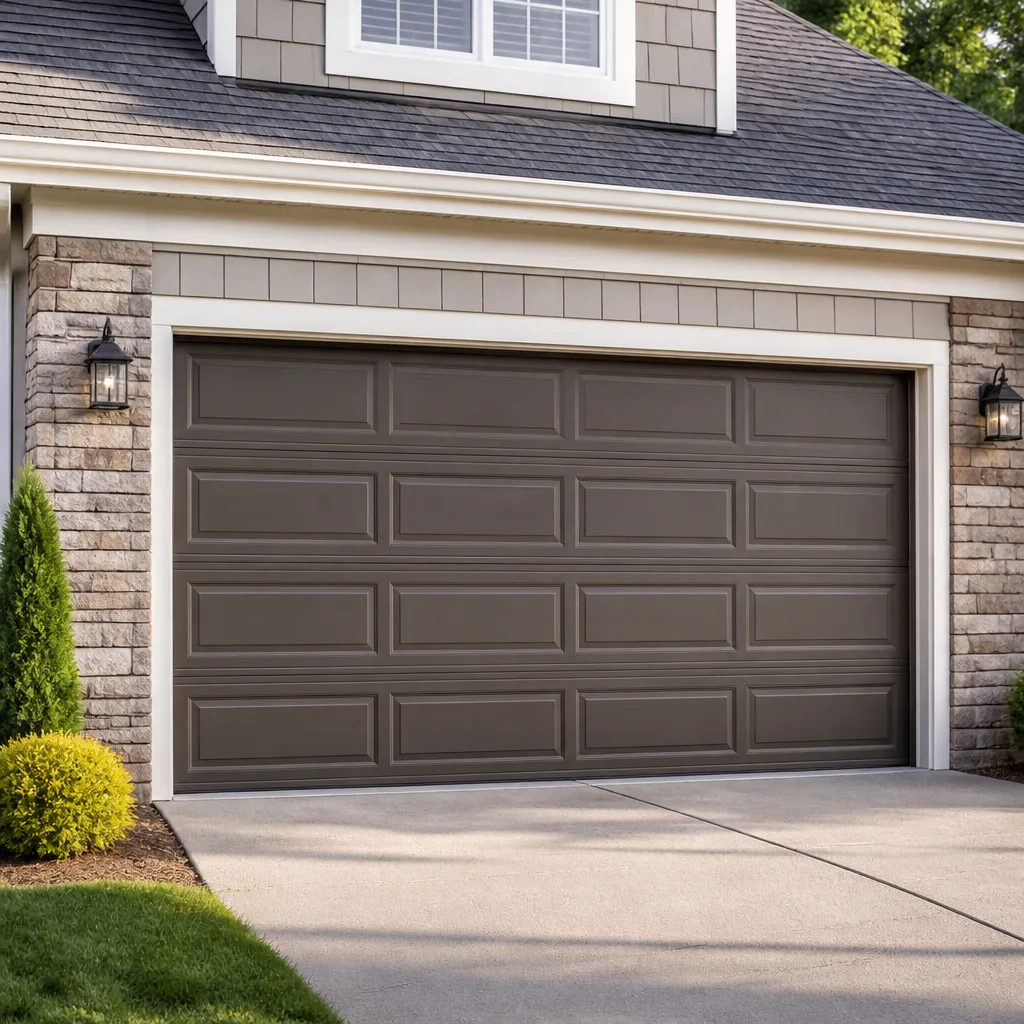 Raised-panel steel
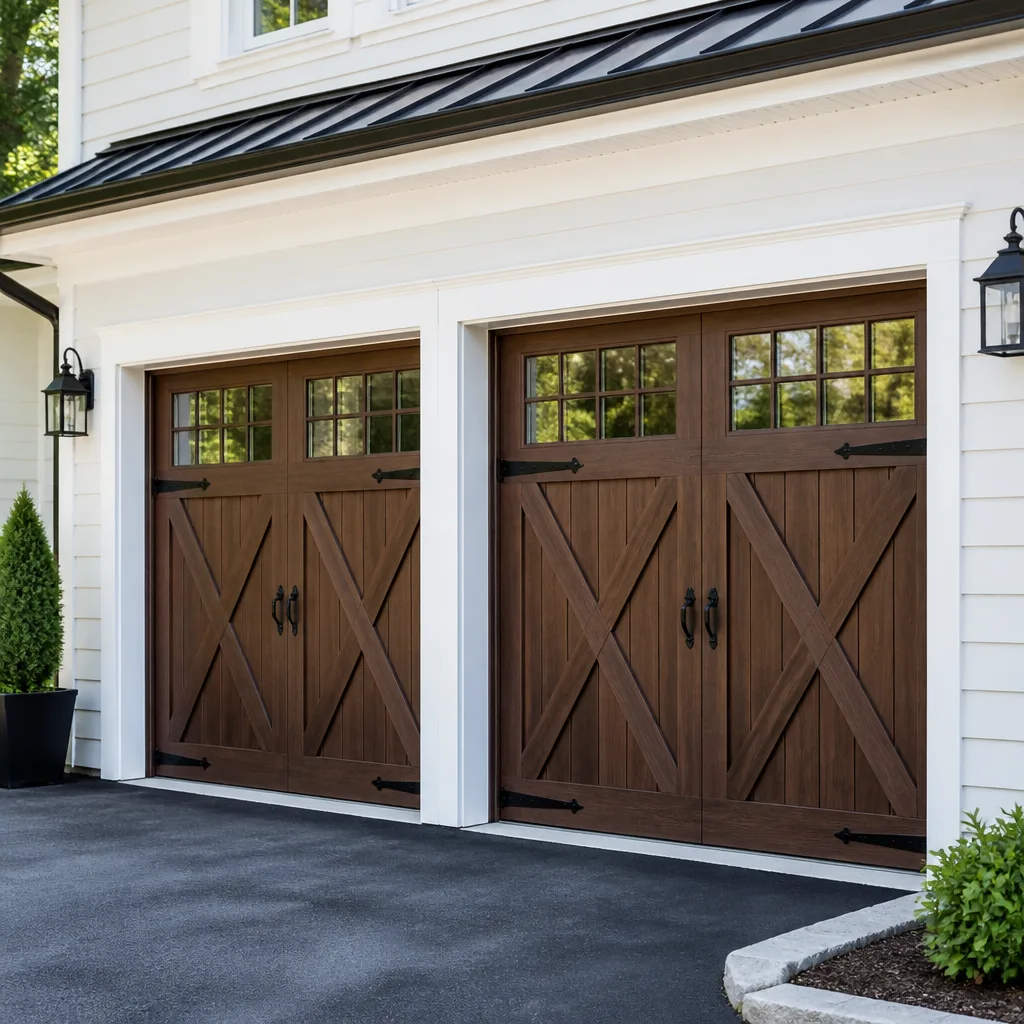 Carriage house
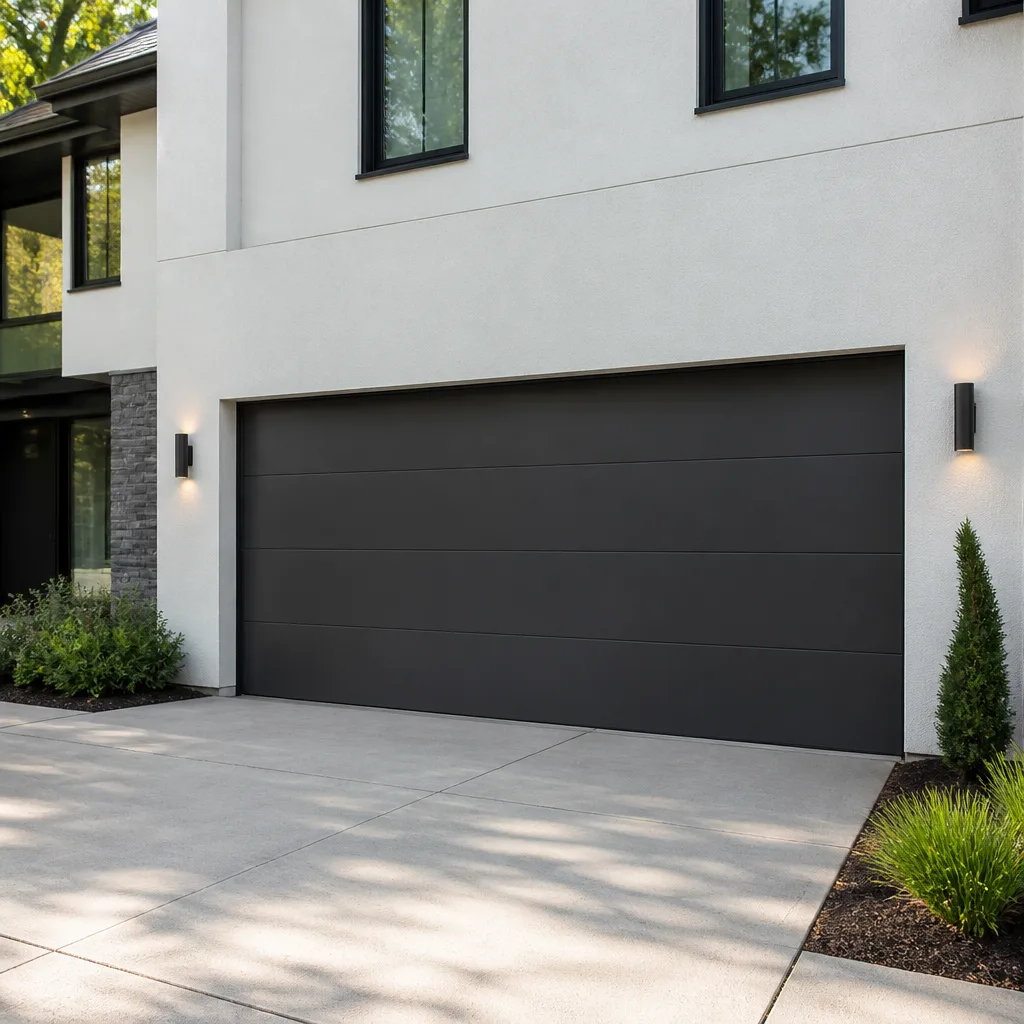 Modern flush
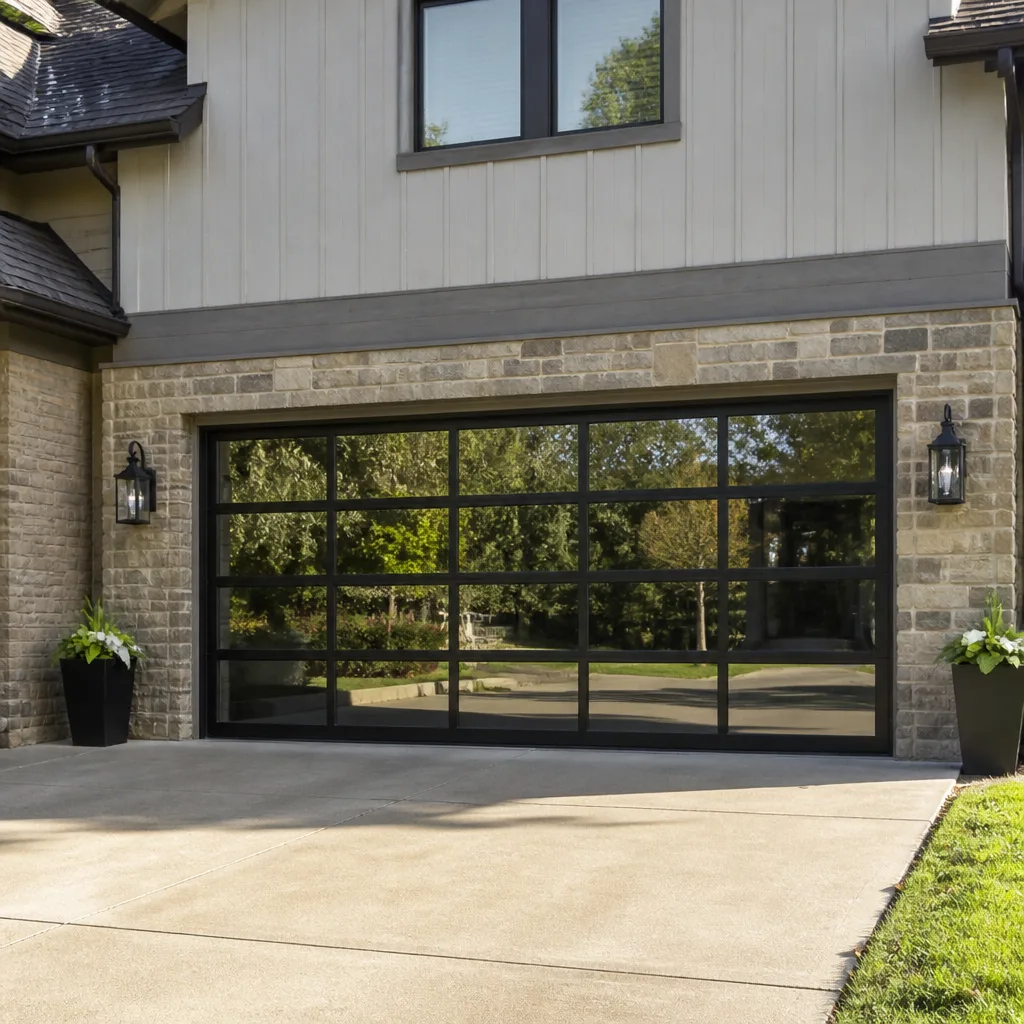 Full-view glass
 LiftMaster openers
 Chamberlain openers
Full 25-point door and opener safety check with every visit - springs, cables, rollers, tracks, and your LiftMaster or Chamberlain opener included
You get a price before we start. It does not change when the pro arrives.
Get your free estimateHow to Hire a Garage Door Contractor in Weston: A Step-by-Step Guide
The hardest part of hiring a garage door contractor in Weston isn’t finding someone who will take the job. It’s finding someone whose paperwork survives the permitting process, whose parts match your existing system, and whose license a Broward County inspector can actually verify. Most homeowners put all their attention on the price and none on those three things, which is backwards. A cheap door that can’t pass wind-load review, or a technician who guesses at your LiftMaster logic board instead of reading it, costs more in the end. This guide walks you through the questions, the fast license check, the HOA paperwork, and the quote comparison that separate a real local pro from a storm-chasing crew.
Quick Answer
To hire a garage door contractor in Weston, verify the contractor’s Florida license number on the DBPR site before anything else, confirm the company can pull a Broward County permit, ask for the three HOA documents (product spec sheet, NOA certificate, color match form) before install, and insist on a written itemized quote that states whether permit fees are included. Compare at least two quotes on those points, never on price alone. A contractor who hesitates on any of them is not the right fit for a Weston home.
Styles & brands we work with
- Raised-panel steel
- Carriage house
- Modern flush
- Full-view glass
- LiftMaster openers
- Chamberlain openers
Table of Contents
- Step 1: Verify the Contractor’s Florida License in 90 Seconds
- Step 2: Confirm Permit-Pulling Authority in Broward County
- Step 3: Collect the Three HOA Documents Before Install
- Step 4: Spot the Post-Storm Red Flags
- Step 5: Compare Quotes on Equal Terms
- Step 6: Test Whether They Actually Know Your System
- What You Should Never Diagnose Yourself
- Common Mistakes to Avoid
- When to Call a Professional
Step 1: Verify the Contractor’s Florida License in 90 Seconds
Open the Florida Department of Business and Professional Regulation (DBPR) license lookup, type in the license number, and read what comes back. That’s the whole process, and it takes under two minutes. A garage door installation in Weston is a structural change to the building envelope, and the state regulates who is allowed to make those changes. A Certified General Contractor (CGC) or Certified Residential Contractor (CRC) license is what gives a company standing to pull permits and be accountable for the work.
Here’s what the lookup tells you that a business card doesn’t:
- License status. “Current, Active” is what you want. “Null and Void,” “Suspended,” or no result at all ends the conversation.
- License type. CGC or CRC are the classes that carry permit authority. A handyman or “general maintenance” credential is not the same thing.
- Qualifying agent. The name attached to the license is the person legally responsible. If that person isn’t associated with the company you’re talking to, ask why.
- Address on file. A Broward County business address is a good sign. A post office box in another county, or nothing at all, deserves a question.
In our experience, the crews that show up after a storm and hand out cash-price install quotes don’t want you looking this up. The lookup is public, free, and doesn’t require an account. Do it once, save a screenshot, and you’ve eliminated the single largest category of risk in this whole process. You’re not being paranoid. You’re doing what any careful Weston homeowner would do before the biggest opening in the house gets replaced.
Step 2: Confirm Permit-Pulling Authority in Broward County
Ask the contractor, in plain words, “Will you pull the permit, and is the permit fee included in your quote?” If the answer is vague, or if they suggest the homeowner pull it themselves, that’s a problem. Garage door replacement requires a permit in most Florida jurisdictions, and Broward County is not an exception. The permit exists so the installation gets inspected for wind-load compliance. Skip it and you’ve installed an unpermitted opening in a house that will eventually be appraised, sold, or insured.
A licensed contractor with permit authority handles the filing, the inspection scheduling, and the sign-off. There are three practical consequences worth understanding:
- The inspector checks the anchoring, not the door panel. Wind-load rating means the door and its track system are approved for the design pressure the local code assigns, and the installer uses the correct fasteners into the correct framing. A contractor who knows the process anticipates what the inspector will look at and installs accordingly.
- Permit fees vary by scope. A basic door swap and a new opening with new tracks are not priced the same. Ask the contractor to itemize the permit line separately so you can see it.
- A permit means an inspection record exists. That record is useful when you sell the home, when your insurer asks for documentation, and when you need to prove the work was done to code.
For questions about specific requirements on your property, call the City of Weston building department directly. They will tell you what they need. For a replacement door, most cities require a permit, and it’s the contractor’s job to know which forms to file. If a Weston contractor can’t answer the permit question without calling someone else, that’s a signal about how the rest of the project will go.
Step 3: Collect the Three HOA Documentation Items Before Install
Weston has a large number of deed-restricted communities, and most of them have an architectural review committee. Before any garage door install begins, that committee will want documentation, and the contractor is the one who supplies it. Ask for these three items in writing before you sign anything:
- Product spec sheet. The manufacturer’s specification document for the specific door model, showing panel style, color, insulation value, and construction. The HOA uses it to confirm the model matches the approved list.
- NOA certificate. A Notice of Acceptance is the Florida document confirming a product meets the state’s wind-load requirements for a given design pressure. Without a valid NOA, the door cannot be permitted and cannot pass inspection.
- Color match form. Most HOA architectural guidelines require the new door color to match or complement the existing palette. The color match form documents the approved color so the review committee can sign off.
These three documents together are what the committee actually reviews. A contractor who can’t produce them isn’t unfamiliar with Weston; they’re unfamiliar with the process, which means your install gets delayed while you chase paperwork. In our experience, brand-familiar contractors who regularly install Amarr or Wayne Dalton doors know the NOA documentation is attached to the product file and can send it the same day you ask. Crews from out of the area, working a post-storm surge, often cannot.
Timing matters too. Architectural review can take a couple of weeks depending on the community. Build that into your project schedule and don’t blame the contractor for a delay that’s actually the HOA’s review calendar.
Step 4: Spot the Post-Storm Red Flags
After a named storm, out-of-area crews arrive in Weston offering cash-price garage door installs. Some of them do competent work. Many of them do not, and the failure mode is predictable. They install, they get paid, and they’re in Georgia before the inspection is scheduled. You’re left with a door that has no permit, no inspection record, and possibly a voided insurance rider on the opening.
Watch for these specific red flags:
- No verifiable Broward County business address. You should be able to look up a physical address. A post office box or a phone-only operation is a hard stop.
- Payment in full upfront. A normal contract includes a deposit and a final payment on completion. Cash in full before the work starts removes all of your leverage if the job goes wrong.
- Verbal-only warranty. Get the warranty in writing, with the manufacturer’s name and the length of coverage for parts and labor stated separately. A verbal promise is worth what it costs you to enforce it, which is nothing.
- No permit offered, or a suggestion that you pull it. A licensed contractor with permit authority files it. A crew that can’t file it can’t pass inspection.
- Pressure to decide today. A real contractor will bid the job and let you think about it. If the price expires in an hour, that’s a sales technique, not a business practice.
This is where a company that services the same neighborhoods all year behaves differently from a surge crew. Local pros have to answer for their work next season. A crew that’s moving on doesn’t. When you’re comparing quotes, ask how the contractor handles the inspection and whether they’ll be on site for it. The answer tells you whether they plan to be around.
Step 5: Compare Quotes on Equal Terms
Two quotes for the same door can differ by several hundred dollars and still be for the same job, because one includes permit fees and one doesn’t, or one includes haul-away of the old door and one doesn’t. Before you compare bottom-line numbers, line up the line items. Here is how to normalize them:
- Door and hardware: confirm the model number, panel style, insulation, and color match. A different model explains a price gap entirely.
- Opener and drive system: if the quote includes an opener, confirm the brand and model. LiftMaster and Chamberlain are common; so is Genie. Each has different features and different replacement part timelines.
- Tracks, springs, and cables: new installation usually means new torsion springs. Confirm whether the quote uses torsion or extension springs and whether the springs are rated for the door weight.
- Permit fee: stated separately or not stated at all. This is the most common hidden gap in a quote comparison.
- Haul-away and disposal: often excluded and billed later. Ask.
- Labor and warranty: labor warranty length and parts warranty length stated separately in writing.
Once the quotes are on equal footing, compare the warranty and the permit line first. In our experience, the quote that’s $150 cheaper usually has a hidden permit exclusion or a shorter labor warranty, and the comparison flips when you put those two lines side by side. Ask each contractor to put the quote in writing with those line items broken out. If they won’t itemize, that’s your answer.
If the work you need is a repair rather than a replacement, the comparison looks different. A garage door repair quote should state what’s being fixed, what part is being replaced, and whether the diagnosis was done on site or over the phone. A phone diagnosis is a guess. An on-site diagnosis with a written quote is a commitment.
Step 6: Test Whether They Actually Know Your System
You don’t need to be a technician to figure out whether the person in front of you is one. Ask three specific questions about your existing equipment and listen to whether the answer is specific. If you have a Raynor door with a LiftMaster opener, the answer should reference the actual parts on your door, not a general summary of how garage doors work.
Here are the questions that separate real familiarity from a spec sheet read-aloud:
- “What type of spring does my door have, and how does the replacement get rated?” A knowledgeable technician knows torsion springs are rated by cycle life and door weight, and can explain the difference between torsion and extension systems on your specific door. A generalist handyman will tell you they’ll “match what’s there,” which doesn’t answer the question.
- “Do you carry parts for this brand, or do you order them?” Familiarity with Amarr, Clopay, Wayne Dalton, and Raynor door panels means the contractor knows which parts are standard and which are special order, and can tell you honestly which applies to your door.
- “What does the diagnostic look like for my opener?” LiftMaster, Chamberlain, Genie, and Craftsman openers all have different logic board behavior and different troubleshooting sequences. A contractor who works across brands knows the difference and can describe the diagnostic process.
This is where brand breadth pays off in real terms. A technician who works on Wayne Dalton and Amarr panels and LiftMaster and Chamberlain openers has seen enough failures to diagnose quickly, and knows what part to source so the second visit isn’t needed. If your opener is older and you’re worried nobody services it, ask the question directly: “Have you worked on this model?” The answer, in our experience, is usually honest. A contractor who hasn’t will tell you. A contractor who has will tell you which parts are still available.
If the opener is the problem and the door itself is fine, you don’t need a full installation. A garage door opener repair visit is a much smaller job, and the right contractor will suggest it instead of upselling a whole new door system.
What You Should Never Diagnose Yourself
There’s a line between routine homeowner maintenance and work that can hurt you. Know where it is before you pick up a tool. The following items should always go to a trained professional:
- Torsion springs and cables. These store enormous energy under tension. A torsion spring that lets go while you’re working on it can cause serious injury. This is not a job for a homeowner with a YouTube video.
- Track realignment on a loaded door. A door under spring tension can shift suddenly when a track bolt is loosened. Always have a professional handle track work.
- Opener logic board and wiring. Openers involve line voltage and low-voltage logic circuits in the same housing. A mistake can damage the board or create an electrical hazard.
- Spring replacement on an unfamiliar brand. Amarr, Clopay, Wayne Dalton, and Raynor doors have different spring configurations. The wrong spring rating means the door won’t balance and the opener will fail trying.
What you can do yourself: check the safety sensors by waving a hand in front of them, listen for unusual noise, look at the door during operation to see if it runs level, and test the manual release. If any of those checks fails, that’s a call to a professional, not a repair. A garage door spring repair visit is a routine call for a specialist and a genuine hazard for a homeowner. It’s the most common repair we handle in Weston and the one where the danger is least visible. Flag it early and let a trained technician handle it.
Common Mistakes to Avoid
- Hiring on price alone. The cheapest quote in Weston is often the one that excludes the permit fee and skips the inspection. When the door fails wind-load review, the savings disappear.
- Skipping the DBPR check. Two minutes on the state site confirms the license is active and the permit authority is real. Skipping it means taking the contractor’s word on something you can verify for free.
- Assuming the HOA will handle the paperwork. The architectural review committee reviews documents; it doesn’t produce them. The product spec sheet, NOA certificate, and color match form are the contractor’s responsibility, and you should request them before install begins.
- Ignoring a problem door during storm season. Weston summers bring high winds, and a door that’s been slow, noisy, or off-track is more likely to fail when it’s under stress. Get it inspected before the storm, not after.
- Not asking whether permit fees are included. This is the single most common line-item gap between two quotes. Ask directly and get the answer in writing.
- Letting a phone diagnosis become a repair quote. A repair quote given over the phone is a guess. Insist on an on-site diagnosis and a written quote before approving any work.
- Accepting a verbal warranty. Get the warranty in writing with parts and labor stated separately. A promise you can’t produce in a dispute is worth nothing.
When to Call a Professional
Some situations are clearly professional work and some are on the edge. The following are the ones where we’d tell any Weston homeowner to stop and call a specialist rather than keep poking at it:
- The door won’t open or close, or it opens partway and stops. A door that’s stuck in the open position is a security issue, not a tomorrow problem.
- A torsion spring has snapped. It’s usually a loud bang followed by a door that feels weightless when you lift it. Do not try to open it.
- The opener hums but the door doesn’t move, or the door reverses for no reason. Those are logic board or safety sensor issues that need a trained eye.
- The door is off its track or hanging unevenly. A loaded door can shift without warning during adjustment.
- You’re planning a new installation and need a permit, HOA documentation, and a written quote from a licensed contractor.
Garage Door Repair Weston Pros offers free estimates in Weston. Call (844) 930-4137. Our technicians have up to 8 years of experience, and we work on the brands you already have: LiftMaster, Chamberlain, Genie, Clopay, Amarr, Wayne Dalton, Craftsman, and Raynor. Whether it’s a repair, an opener issue, a spring, or a full new door install, one call covers it. We answer 24/7. Fast dispatch from 7am to 7pm, Sunday through Friday.
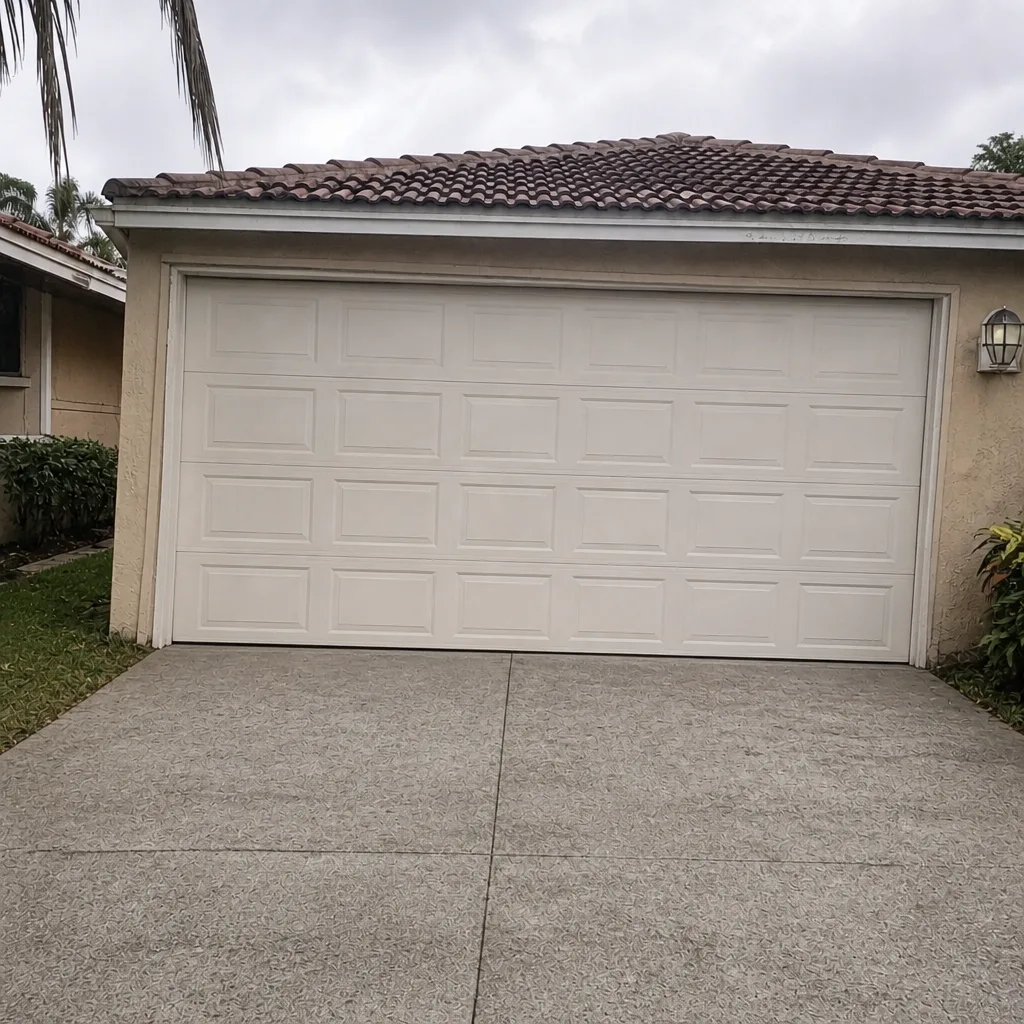
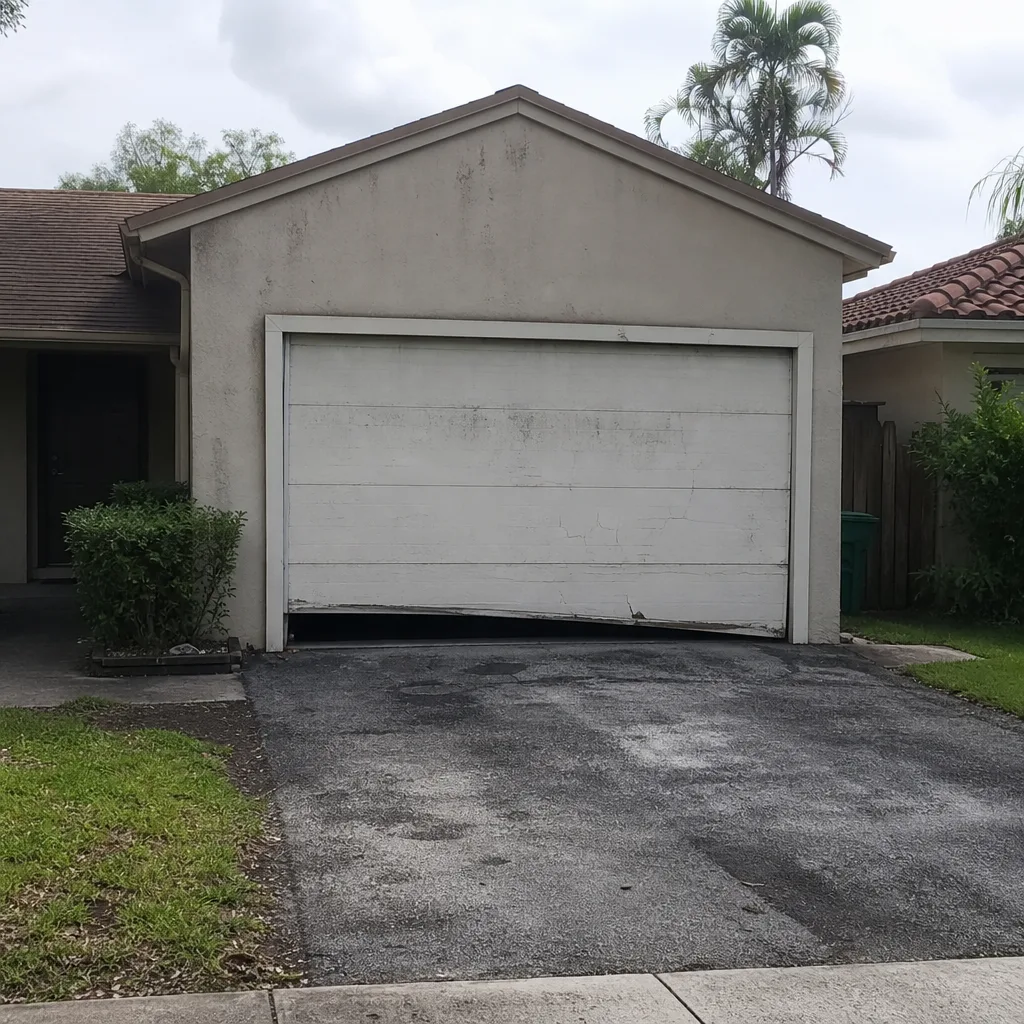
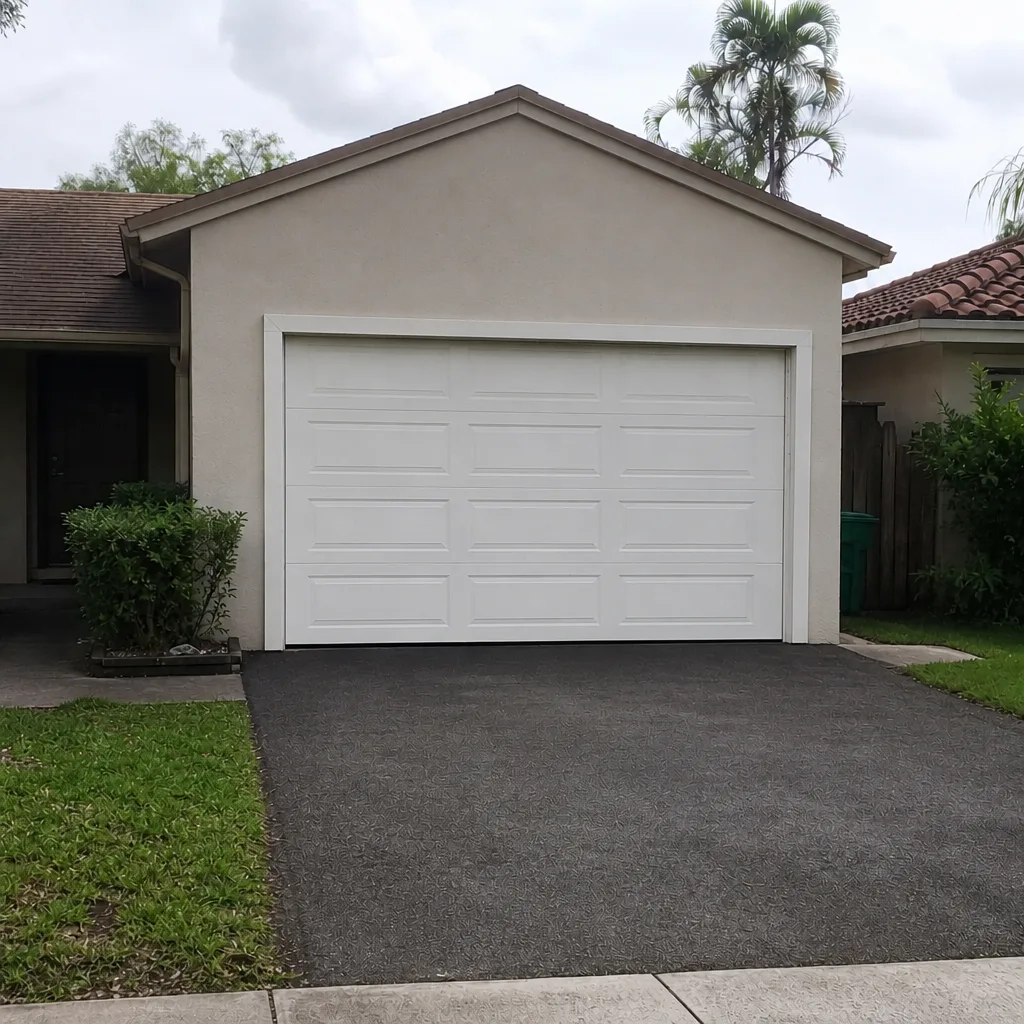
See the difference
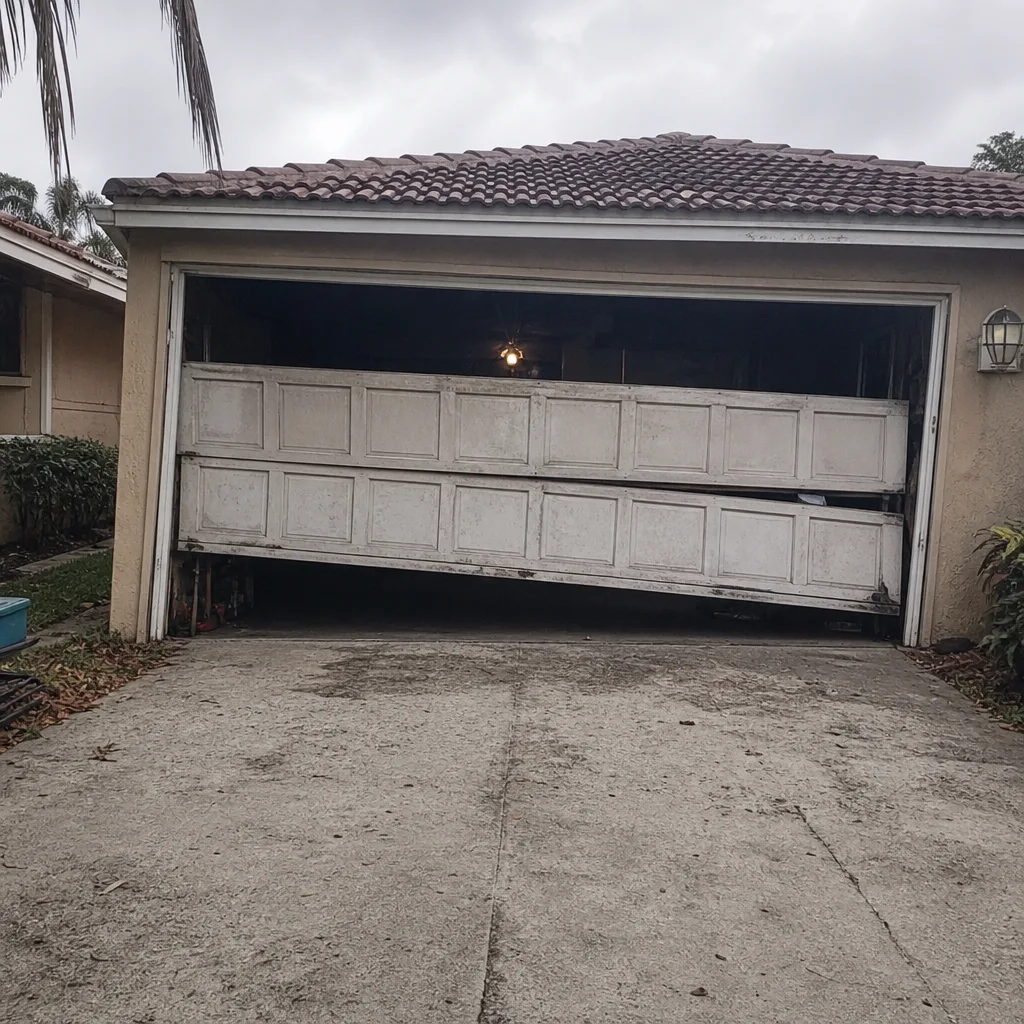 Before
 After
 Before
 After
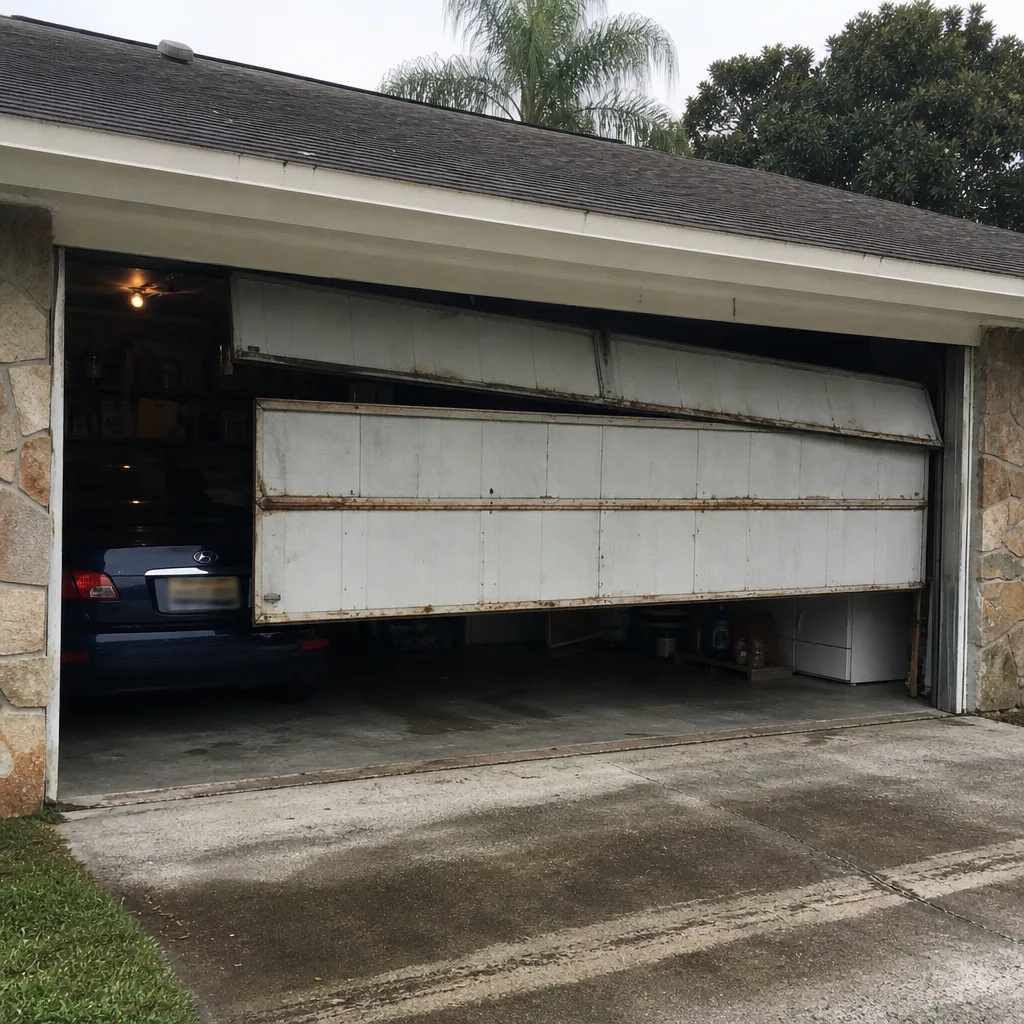 Before
 After
Frequently Asked Questions
Look up the license number on the Florida DBPR website. You’re checking for an active CGC or CRC license, the qualifying agent’s name, and a Broward County business address. The check is free and takes about 90 seconds. If the license is inactive or missing, stop there and call the next contractor on your list. Call (844) 930-4137 for a free estimate from a licensed local pro.
Yes, in most cases. Broward County and the City of Weston require a permit for garage door replacement because the opening is part of the building envelope and must meet wind-load requirements. A licensed contractor with permit authority files it, schedules the inspection, and stands behind the result. If a contractor offers to install without a permit, that’s a red flag. Call your city’s building department for the specific forms for your property.
The three documents are a product spec sheet, a NOA certificate, and a color match form. The spec sheet identifies the door model and construction, the NOA confirms wind-load compliance, and the color match form documents the approved color. Architectural review committees in Weston’s deed-restricted communities use these to approve the install. Ask for them in writing before you sign anything.
Repair costs depend on the part and the door system, so the price is set per job by a written estimate. Spring replacement, opener repair, and track realignment are all different line items, and the written quote you approve before work starts is the number you pay. Estimates are free. Call (844) 930-4137 for an exact quote.
No. The price is quoted and agreed before any work starts, and the written estimate sets the final price. If the on-site diagnosis reveals something different from what was discussed, the technician will explain it and get approval before proceeding. You won’t be surprised by an invoice larger than the quote. Call (844) 930-4137 for a free estimate.
Three signals: no verifiable Broward County business address, payment in full upfront, and a verbal-only warranty. A legitimate contractor will give you a physical address, take a deposit rather than full payment, and put the warranty in writing. If they pressure you to decide the same day the quote expires, that’s a sales tactic. Get a second quote from a licensed local contractor before committing.
Yes. We work on LiftMaster, Chamberlain, Genie, Clopay, Amarr, Wayne Dalton, Craftsman, and Raynor equipment. Older openers sometimes need a special-order part, which is a normal part of the job. The technician will confirm the model on site and tell you what’s available before ordering anything. Call (844) 930-4137 for a free estimate on your opener.
The Bottom Line
Hiring a garage door contractor in Weston comes down to proof, not promises. Verify the license on DBPR, confirm the contractor can pull a Broward County permit, request the three HOA documents in writing before install, and compare quotes on equal line items with the permit fee stated separately. Ask a brand-specific question about your existing door or opener and listen for a specific answer. A contractor who clears those checks is a contractor whose work will survive an inspection, and a Weston home deserves that. The bar isn’t high, but it’s specific, and now you know where it is. Call (844) 930-4137 to get a free estimate from our team.
Written by the team at Garage Door Repair Weston Pros.